

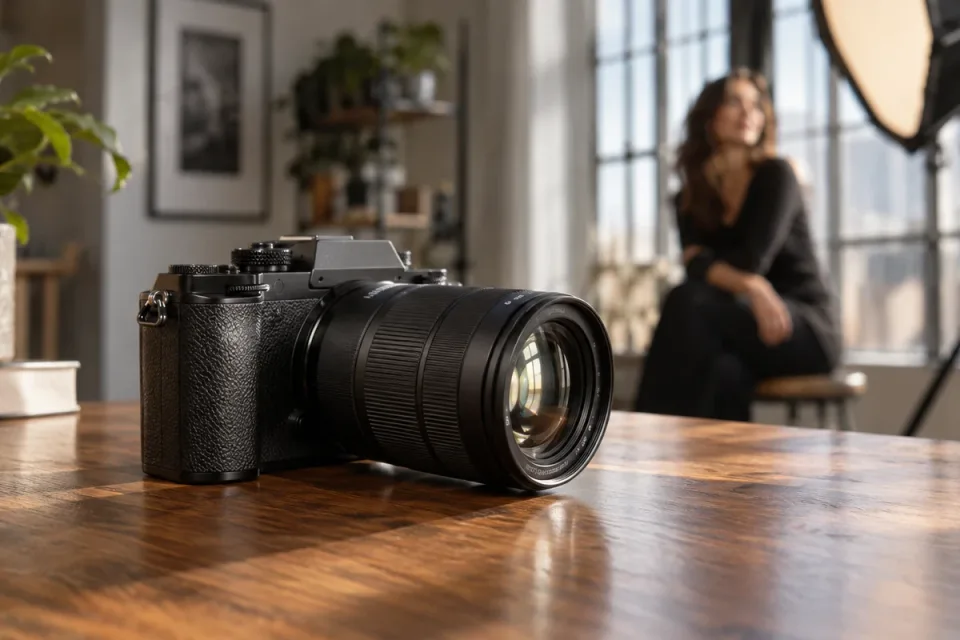
A telezoom for the portraits and events you actually shoot
If your APS-C kit handles wide scenes but struggles with tighter portraits or indoor events, Sigma’s new telezoom offers a promising way to extend it without carrying a full-frame-sized lens. Sigma America announced the 50-120mm F2.8 DC OS Contemporary on October 8, with a planned October 22, 2026 US launch at $799. That is an announced manufacturer price, not an Amazon offer or confirmation of stock.
The appeal is a constant f/2.8 aperture and a compact stabilized lens. Whether it delivers the tracking, rendering and handling you need remains a question for independent tests. This is a first look based on documents, not a field review.
The cover and product images are AI-generated hyperrealistic illustrations with approximate equipment appearance. They are not manufacturer photographs or examples captured with this lens.
What differs between the three mounts?
Sigma’s technical page lists three APS-C versions. Buy for your camera mount, not just the model name.
| Version | Diameter × length | Weight | Approximate full-frame-equivalent framing |
|---|---|---|---|
| Sony E | 66.8 × 99.0mm / 2.6 × 3.9in | 390g / 13.8oz | 75-180mm |
| Fujifilm X | 66.8 × 99.3mm / 2.6 × 3.9in | 390g / 13.8oz | 75-180mm |
| Canon RF | 69.0 × 97.0mm / 2.7 × 3.8in | 410g / 14.5oz | About 80-192mm |
Framing values are calculations using 1.5x and 1.6x crop factors. A further video crop can narrow the view. The Canon RF model is an APS-C lens, not a lens covering the full-frame sensor simply because it uses RF mount.
The documented features include HLA linear autofocus, an aperture ring, a 55mm filter thread, and an optical design intended to reduce focus breathing. Sigma rates stabilization at 6.5 stops at 50mm and 4.5 stops at 120mm under CIPA guidelines. Those are manufacturer claims, not measured results here. The dust- and splash-resistant construction is not waterproof.
Sigma 50-120mm vs full-frame 70-200mm F2.8: what changes?
For portability, the difference is substantial. The figures below compare manufacturers’ published dimensions and weights, not complete camera kits or matched accessories.
| Lens | Format and framing on its intended sensor | Published length | Published weight | Practical difference |
|---|---|---|---|---|
| Sigma 50-120mm F2.8, Sony E | APS-C; 75-180mm equivalent | 99mm / 3.9in | 390g / 13.8oz | Small kit for portraits, events and travel |
| Sony FE 70-200mm F2.8 GM OSS II | Full frame; 70-200mm | 200mm / 7.88in | 1,045g / 36.9oz, without tripod mount | Wider endpoints on full frame; accepts Sony’s listed teleconverters |
| Sigma 70-200mm F2.8 DG DN OS Sports, Sony E | Full frame; 70-200mm | 207mm / 8.1in | 1,335g / 47.1oz | Full-frame coverage and more physical controls |
Sources: Sony USA specifications and Sigma Sports specifications. Accessory treatment differs: Sony explicitly excludes the tripod mount, while Sigma’s cited table does not state a matching exclusion. Do not read these as weighed, accessory-matched kits.
Calculated from these figures, the compact Sigma is 655g lighter than the Sony and 945g lighter than the Sony E Sigma Sports. Its published barrel length is roughly half theirs. That can matter if a large telezoom is the piece of gear you routinely leave at home.
But the focal ranges are not identical. On full frame, 70-200mm starts wider and reaches farther than a 75-180mm-equivalent zoom. On a Sony APS-C body, that same 70-200mm frames like 105-300mm, which serves a different job. The 50-120mm is an alternative to the classic portrait-and-event role, not an exact substitute for every 70-200mm use.
There is also a depth-of-field distinction. At matched framing and viewing conditions, APS-C f/2.8 corresponds approximately to full-frame f/4.2 at 1.5x crop, or f/4.5 at 1.6x. Exposure stays f/2.8. Do not expect the same background blur merely because both lens barrels say F2.8.
Why removing the AF and OS switches may divide users
Sigma removes the physical focus-mode and stabilization switches while adding an aperture ring. A simpler barrel has fewer switches to bump when taking the camera from a bag. Photographers who set aperture directly on a lens may welcome the dedicated ring.
The trade-off is access. During an event, a quick AF-to-MF change or a stabilization adjustment may require the camera’s controls rather than a lens switch. Before buying, check whether your exact body and firmware expose the settings you use and whether you can reach them comfortably. We have not verified a single procedure across all three systems, or a clickless aperture function for video.
For video, reduced breathing is a useful design goal for focus pulls, but it is not a promise of zero breathing. Gimbal balance also depends on the body, rig and shooting configuration. Compact dimensions alone do not establish compatibility.
Portraits, indoor sports and a three-lens travel kit
For portraits and events, the focal range suggests useful working distance without an oversized kit. For indoor sports, f/2.8 may help maintain a faster shutter speed than a slower zoom under the same light, but the AF motor specification cannot establish tracking performance. Stabilization reduces camera shake; it cannot freeze a player moving through the frame.
Sigma’s launch notice positions this model alongside the 10-18mm and 18-50mm F2.8 DC DN Contemporary, with the three lenses together weighing less than 1kg. That is a manufacturer statement about lenses, not a complete camera bag. Existing 18-50mm owners have a particularly clear reason to consider the telezoom if they regularly need tighter framing. There is no need to buy the full trio for subjects you never shoot.
Should you buy, wait, or keep your current lens?
- Consider it if you already shoot APS-C, your present telezoom limits indoor exposure or weighs too much to carry, and this framing matches your portraits or events.
- Wait for independent tests if reliable sports tracking, breathing behavior or edge sharpness is essential to paid work. Confirm body compatibility and US delivery before ordering.
- Keep your current lens if it already produces the pictures you want. For moving subjects, improving shutter-speed choices, available light and AF technique may help more than stabilization or a new lens.
The three product guides below separate the mount choices. Their Amazon buttons open clearly labeled searches because no exact Amazon US ASIN is confirmed. Search results may show other lenses or mounts; they do not establish launch stock. The supplied hood, pouch and caps do not need to be added to a shopping list, and no extra accessory is necessary by default.
Recommended gear
Find your next piece of gear
Find the setup that fits your plans, then explore prices and buying options on Amazon.
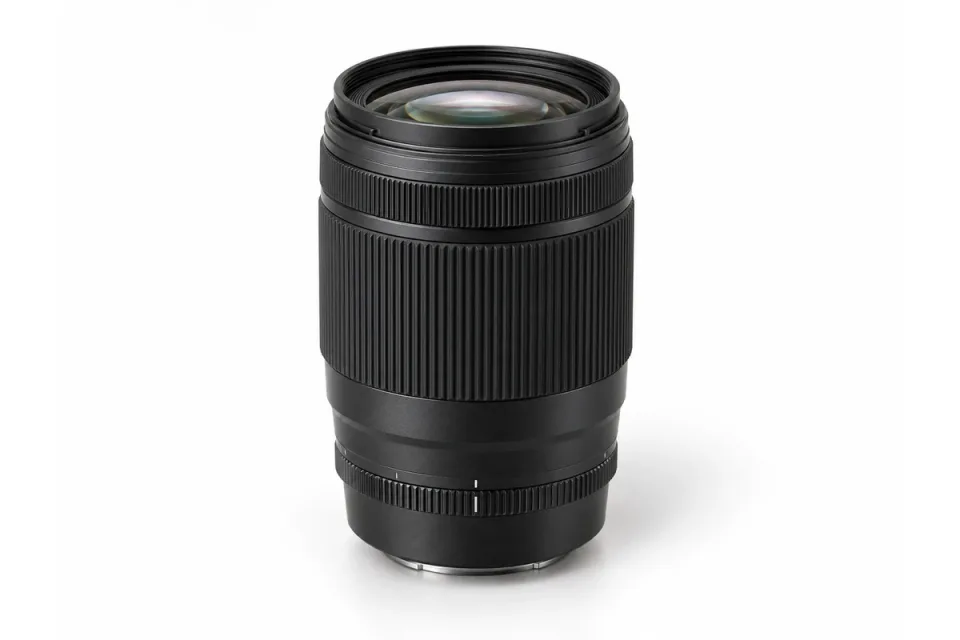
AI-generated product illustration
Based on a reference by Senkōra / AI-generated. Original hyperrealistic conceptual studio illustration. Approximate appearance, not an exact manufacturer photograph or proof of compatibility.
Sigma
Sigma 50-120mm F2.8 DC OS Contemporary Sony E
Best for: Compact Sony E APS-C portrait and event kit
390 g; 75-180mm equivalent framing. APS-C only; check body compatibility. October 22 launch is planned, US stock and exact Amazon ASIN unconfirmed.
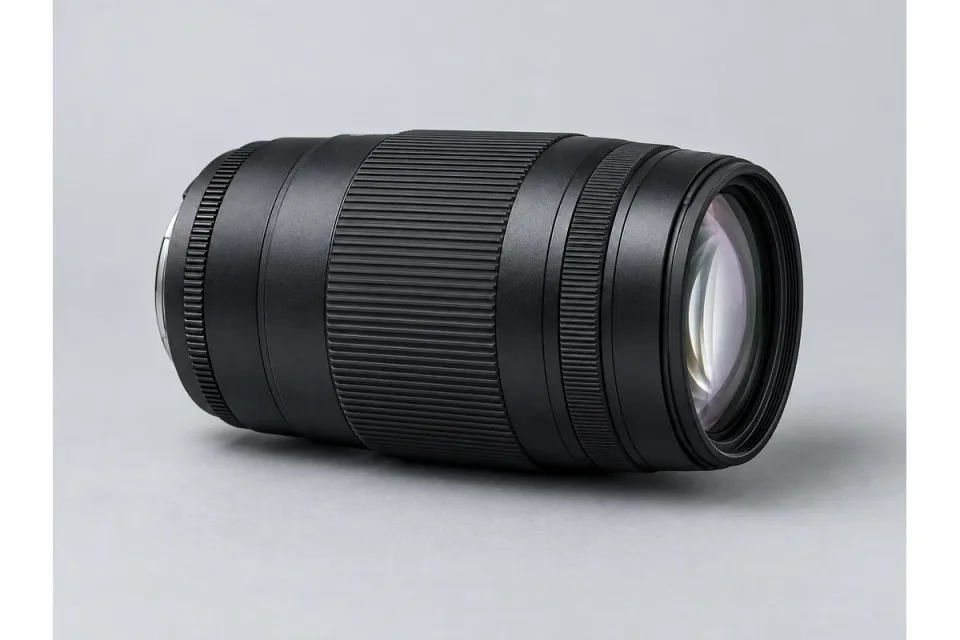
AI-generated product illustration
Based on a reference by Senkōra / AI-generated. Original hyperrealistic conceptual studio illustration. Approximate appearance, not an exact manufacturer photograph or proof of compatibility.
Sigma
Sigma 50-120mm F2.8 DC OS Contemporary Fujifilm X
Best for: Compact Fujifilm X APS-C portrait and event kit
390 g; 75-180mm equivalent framing. APS-C only; check body compatibility. October 22 launch is planned, US stock and exact Amazon ASIN unconfirmed.
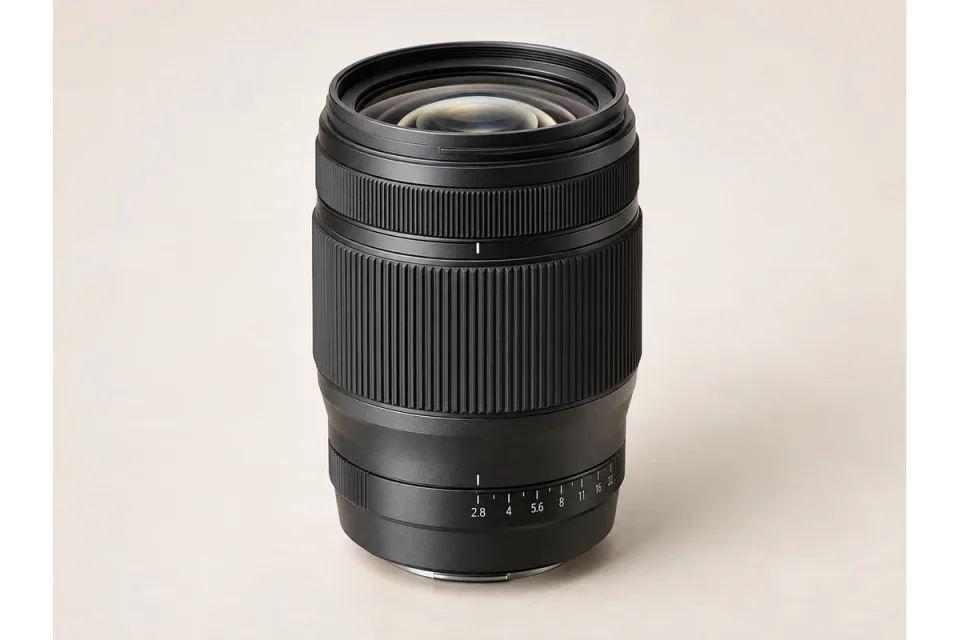
AI-generated product illustration
Based on a reference by Senkōra / AI-generated. Original hyperrealistic conceptual studio illustration. Approximate appearance, not an exact manufacturer photograph or proof of compatibility.
Sigma
Sigma 50-120mm F2.8 DC OS Contemporary Canon RF
Best for: Compact Canon RF APS-C portrait and event kit
410 g; about 80-192mm equivalent framing. APS-C only; check body compatibility. October 22 launch is planned, US stock and exact Amazon ASIN unconfirmed.
Transparent evidence
Method and limitations
Source-based announcement analysis, checked October 9, 2026, using Sigma America, Sigma technical documentation and Sony USA specifications. Crop equivalence and weight differences are calculated. No field test. Cover and product illustrations are AI-generated, hyperrealistic and conceptual; they do not show actual lens image quality or establish exact appearance.
- No confirmed US merchant inventory or exact Amazon US ASIN.
- Stabilization and reduced breathing are manufacturer claims, not Senkōra measurements.
- Camera-specific AF/OS control behavior and firmware compatibility require verification.
Five key takeaways
- US launch is planned for October 22 at an announced $799; merchant stock is unconfirmed.
- Equivalent framing is 75-180mm on Sony/Fujifilm APS-C and about 80-192mm on Canon APS-C.
- Sony E and Fujifilm X weigh 390g; Canon RF weighs 410g.
- AF and stabilization switches are absent; check your camera controls before buying.
- This is announcement analysis, with no measured sharpness, sports AF or breathing results.
Frequently asked questions
When does the Sigma 50-120mm F2.8 launch in the US?
Sigma America announces October 22, 2026, at $799. That is a scheduled launch and manufacturer price, not verified retailer stock or an Amazon offer.
Is the Canon RF version a full-frame lens?
No. DC denotes APS-C coverage. On Canon APS-C its 50-120mm range gives approximately 80-192mm equivalent framing; it is not a full-frame RF 70-200mm replacement.
Does it have AF and OS switches?
Sigma says it removes the physical focus-mode and optical-stabilization switches. Check the controls and firmware of your exact camera; this article does not verify a universal menu procedure.
Does APS-C f/2.8 give the same background blur as full-frame f/2.8?
Not automatically. At matched framing and viewing conditions, depth-of-field equivalence is approximately f/4.2 at 1.5x or f/4.5 at 1.6x crop. Exposure remains f/2.8.
Primary sources
- press.sigmaphoto.com · Verified 2026-10-09
- sigma-global.com · Verified 2026-10-09
- sigma-global.com · Verified 2026-10-09
- sony.com · Verified 2026-10-09
- sigma-global.com · Verified 2026-10-09