
The short answer
Choose Seestar S30 for minimum size, S50 for a larger-aperture all-in-one path, or DWARF 3 for wide-field and daytime flexibility.
Decide whether you want to look through an eyepiece
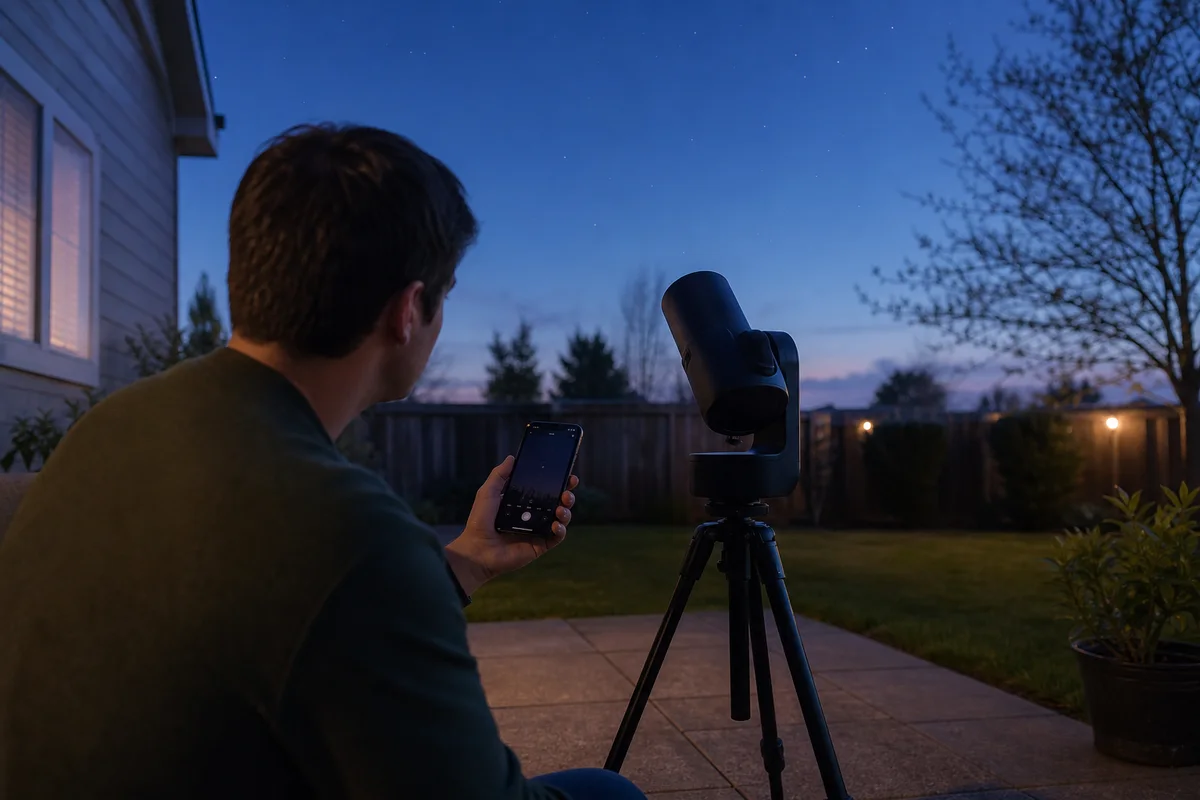
Seestar S30, Seestar S50, and DWARF 3 are screen-based imaging devices. They locate and build images through an app rather than provide the direct eyepiece experience of a visual telescope. Choose them for shared screen viewing and saved images, not because you expect a tiny observatory-style view of every planet.
Match the field of view to the target
S30 favors minimum bulk and wider framing. S50 has the larger aperture of the two Seestars, while DWARF 3 adds wide-field and daytime uses. Check sample framing for the objects that interest you and plan a stable support, charged device, and unobstructed sky. Bright surroundings and short sessions still limit results.
The models and their tradeoffs
ZWO Seestar S30
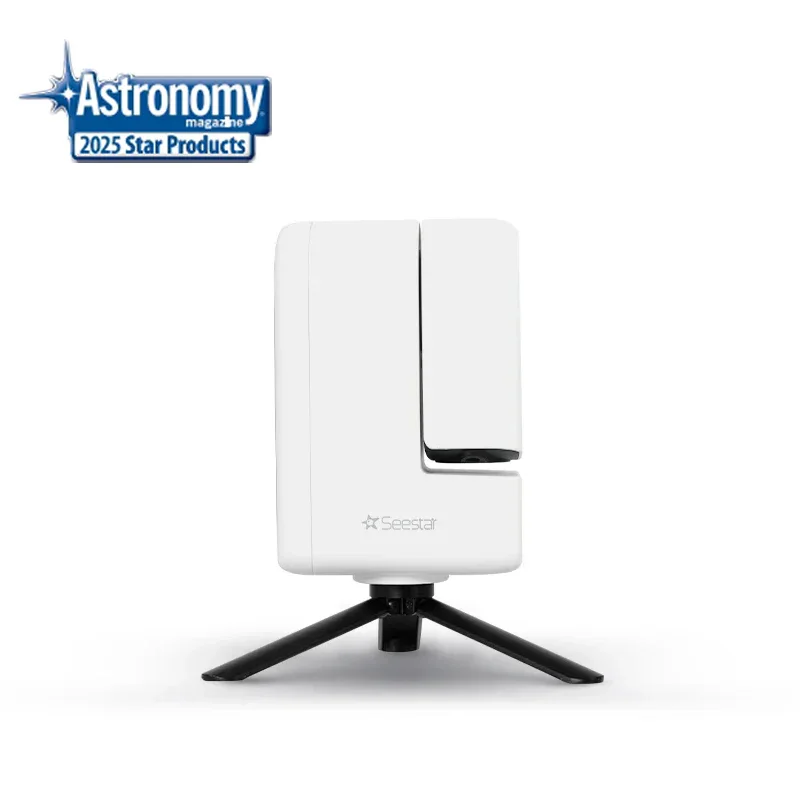
The ZWO Seestar S30 combines a 30mm aperture with a compact app-operated imaging system. Its wider view and smaller package suit travel and larger deep-sky targets.
Main limitation: It is a screen-based telescope camera, not a direct eyepiece instrument or a high-detail planetary specialist.
See the exact configuration and specifications.
ZWO Seestar S50
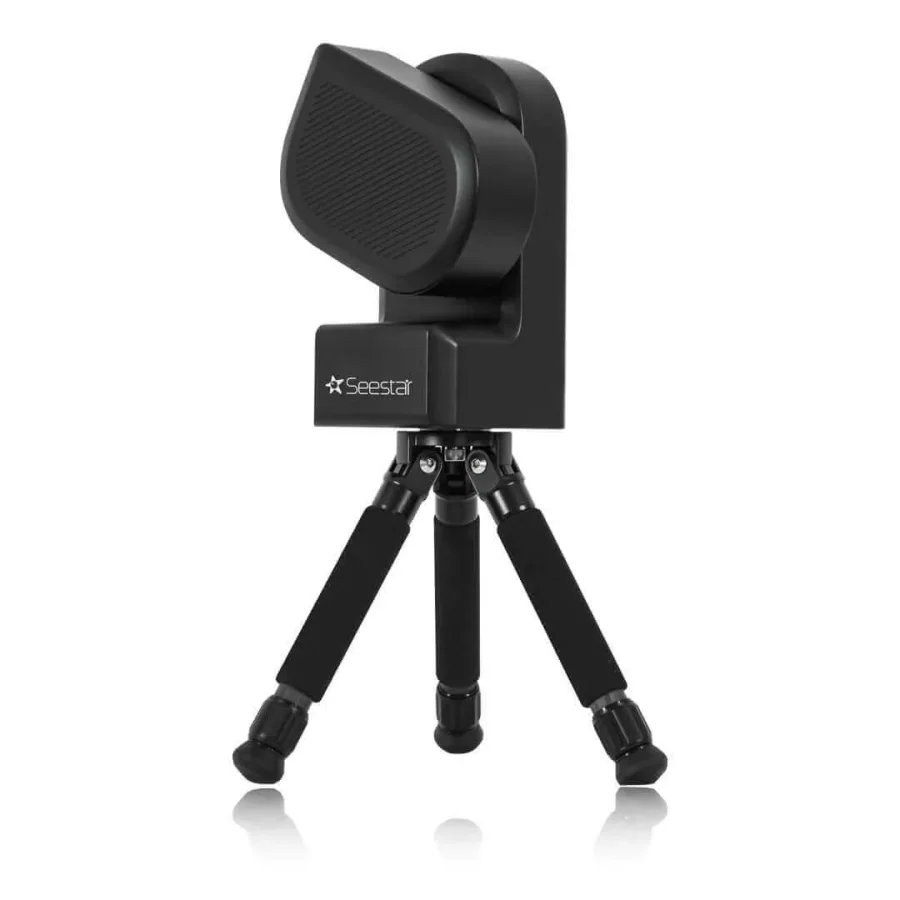
The ZWO Seestar S50 is a 50mm all-in-one telescope camera for app-guided astronomy and stacked images. It is the larger-aperture option beside the smaller S30.
Main limitation: Its narrower framing does not fit every large target, and image stacking requires time under suitable skies.
See the exact configuration and specifications.
DWARFLAB DWARF 3
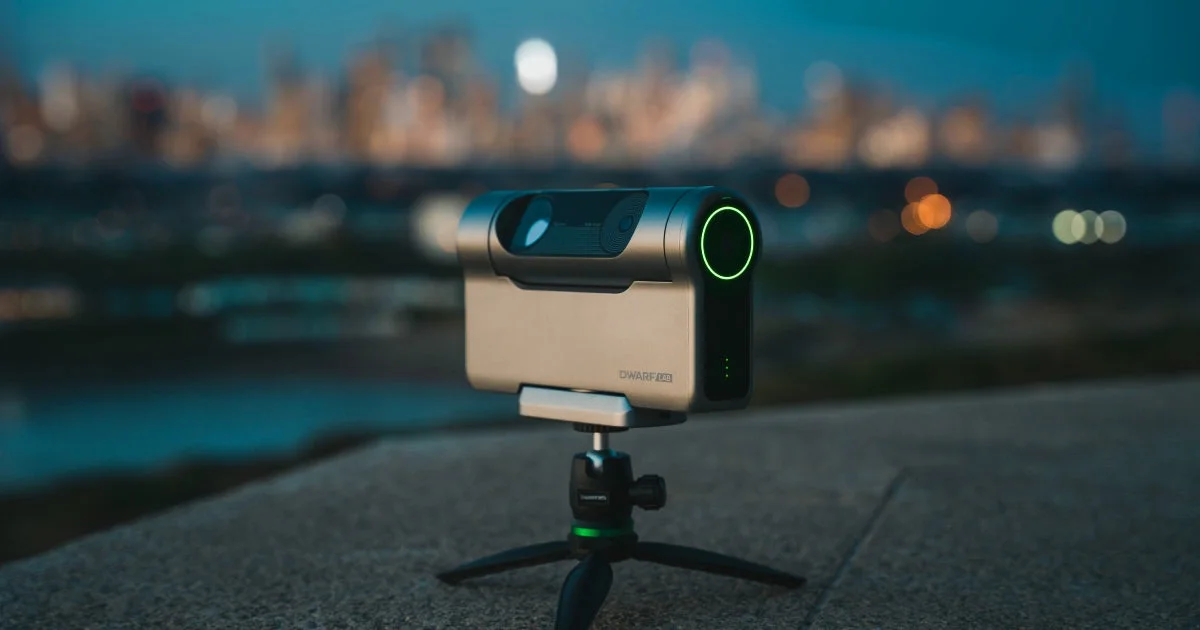
The DWARFLAB DWARF 3 combines wide and telephoto imaging in a compact, app-operated device for astronomy and daytime subjects. It is relevant when both roles matter on a trip.
Main limitation: Its small optics do not replace a large visual telescope, and learning the capture modes is part of ownership.
See the exact configuration and specifications.
How we reached this recommendation
This is an editorial comparison of the documented products and their intended uses, not a hands-on test. The manufacturer references listed below support the specifications; the recommendations describe practical tradeoffs rather than measured performance. We do not reproduce retailer prices or guarantee availability.
Compare the exact configurations
| Product | Configuration | Before you choose |
|---|---|---|
| ZWO Seestar S30 | Overseas/US 30mm all-in-one smart telescope with tripod and case | Choose the overseas version suitable for US activation and verify app, phone and power compatibility. |
| ZWO Seestar S50 | Overseas/US 50mm all-in-one smart telescope with tripod and case | Check the original S50 model rather than a Pro variant, plus tripod and charging contents. |
| DWARFLAB DWARF 3 | Black smart telescope with carrying bag and solar filters | Confirm the DWARF 3 generation, app support and included filters and mounting accessories. |
Recommended gear
Explore the products in this guide
Review the key fit for each recommendation, then confirm the current offer and seller details directly on Amazon.
ZWO
ZWO Seestar S30
The ZWO Seestar S30 combines a 30mm aperture with a compact app-operated imaging system. Its wider view and smaller package suit travel and larger deep-sky targets.
ZWO
ZWO Seestar S50
The ZWO Seestar S50 is a 50mm all-in-one telescope camera for app-guided astronomy and stacked images. It is the larger-aperture option beside the smaller S30.
DWARFLAB
DWARFLAB DWARF 3
The DWARFLAB DWARF 3 combines wide and telephoto imaging in a compact, app-operated device for astronomy and daytime subjects. It is relevant when both roles matter on a trip.
Five key takeaways
- These three devices display images on a screen rather than through an eyepiece.
- S30 favors compact wide framing; S50 offers a larger aperture.
- DWARF 3 is worth considering for daytime as well as night-sky imaging.
Frequently asked questions
Will a smart telescope show planets like the pictures in a space mission gallery?
No. These compact systems are better judged by their framing of the Moon, star fields, and deep-sky objects. Small bright planets are a demanding, different target.
Can I use one without preparing anything?
You still need a charged compatible device, stable support, a clear view of the sky, and time for setup and image collection. Automatic locating does not remove those needs.
Primary sources
- us.seestar.com · Verified 2026-07-22
- us.seestar.com · Verified 2026-07-22
- dwarflab.com · Verified 2026-07-22