
Start with the observing experience
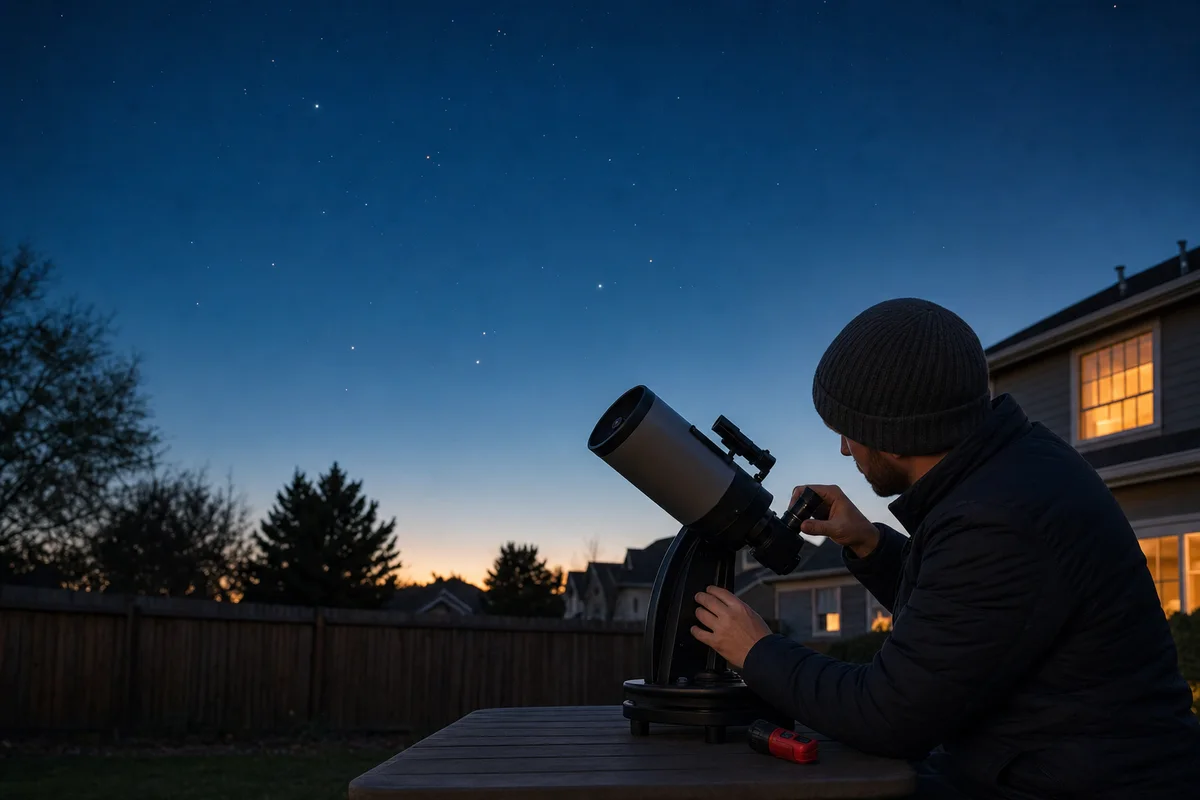
Traditional telescopes let you look through an eyepiece. Smart telescopes use a camera, software, and image stacking to show a processed view on a screen. Both can teach astronomy, but they are different experiences.
For visual beginners, we prioritize aperture and a stable mount. For digital beginners, we prioritize transparent app and power requirements.
Quick selection
| Best fit | Telescope | Complete weight | Main strength | Main limitation |
|---|---|---|---|---|
| Best simple visual starter | Sky-Watcher Heritage 130 | 13.7 lb working figure | 130mm aperture, compact tabletop design | Needs a stable table and collimation |
| Best phone-assisted visual starter | Celestron StarSense Explorer DX 130AZ | 18 lb | Full-height mount and pointing assistance | Larger to store and transport |
| Best digital starter | Seestar S30 | 3.64 lb body | Compact automated imaging | No eyepiece; app and battery dependent |
Sky-Watcher Heritage 130
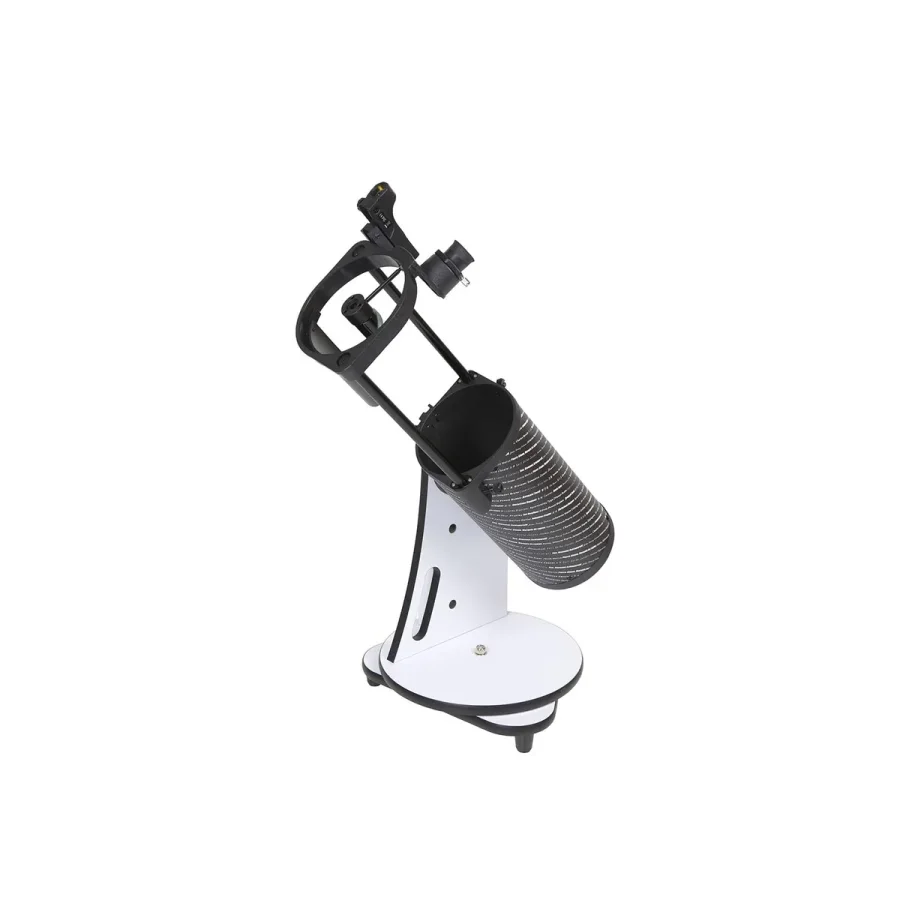
The Heritage 130 uses a 130mm Newtonian optical tube on a simple tabletop Dobsonian base. The design offers useful aperture without a complex motorized mount. It is a strong platform for learning manual pointing, focus, and basic collimation.
The base must sit on a solid elevated surface. A shaky patio table undermines the design. The open collapsible tube also benefits from careful stray-light management and protection from dust.
Celestron StarSense Explorer DX 130AZ
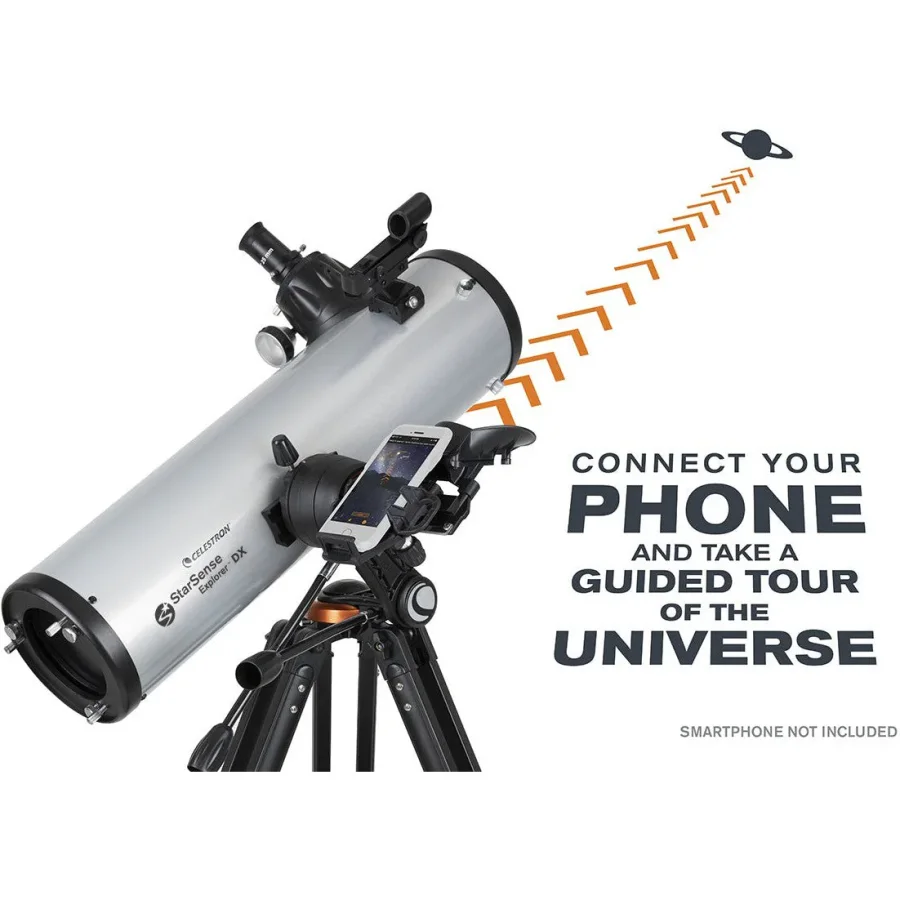
The DX 130AZ pairs a 130mm reflector with a full-height manual alt-azimuth mount and Celestron’s phone-based StarSense Explorer guidance. It can reduce the frustration of locating early targets while preserving direct eyepiece observing.
At 18 pounds for the complete kit, it needs more storage and transport space than the Heritage. Phone compatibility and app access should be checked before purchase.
Seestar S30 as a digital alternative
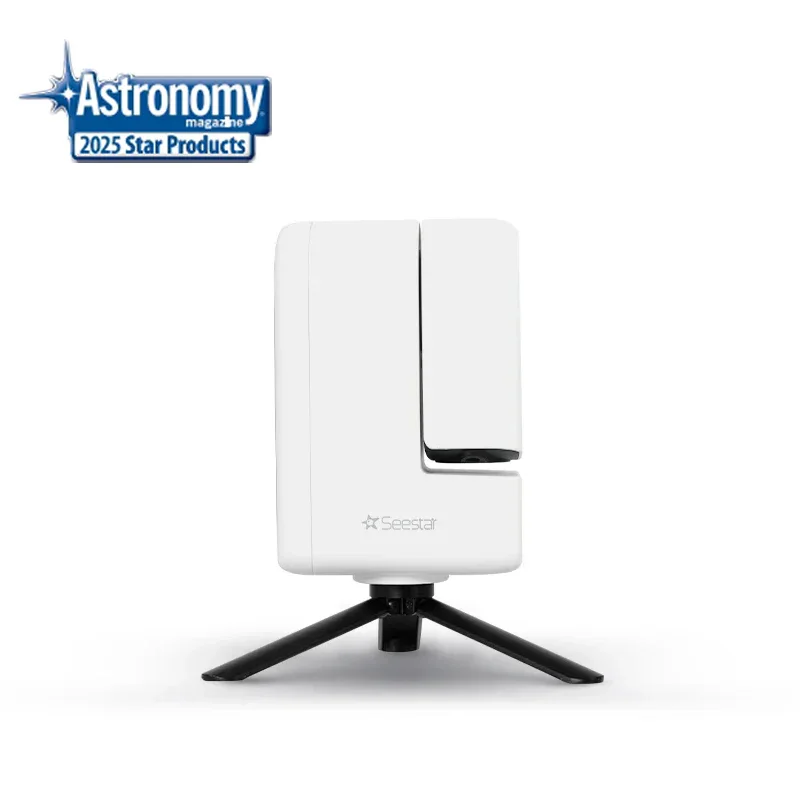
The Seestar S30 is a 30mm app-controlled imaging instrument with a built-in camera, mount, battery, storage, and filters. It can create stacked images of suitable celestial objects and is much easier to carry.
It does not provide an eyepiece view. Its small aperture, screen-based workflow, regional activation, firmware, and app dependence must be understood before calling it a beginner telescope.
Avoid magnification marketing
High magnification does not create detail that the aperture, optics, atmosphere, and mount cannot support. A stable 130mm reflector at moderate power is more useful than a small telescope on a shaky mount advertised with an extreme number.
Safety
Never point any telescope at the Sun unless a proper front-mounted solar filter made for that exact instrument is fitted and inspected. An eyepiece solar filter is not an acceptable substitute. Supervise children.
How we evaluated
Manufacturer pages and manuals were checked July 19, 2026. The LT 114AZ remained outside the selection because its transport dimensions were unresolved. No backyard observation was performed by Senkōra for this guide.
Plan a place to observe
Use the Senkōra Stargazing Finder to compare documented US night-access arrangements before packing. The first-trip optics guide helps decide whether to bring binoculars, a personal telescope, or simply attend a hosted session.
Compare the exact configurations
| Product | Configuration | Before you choose |
|---|---|---|
| Celestron StarSense Explorer 130AZ | 130mm Newtonian reflector with manual alt-azimuth mount and smartphone dock | Check the exact 130AZ bundle, phone support and the space needed for the assembled mount. |
| Sky-Watcher Heritage 130 Tabletop Dobsonian | 130mm collapsible Newtonian tabletop Dobsonian | Plan a stable support surface and learn the basic collimation checks for the reflector. |
| ZWO Seestar S30 | Overseas/US 30mm all-in-one smart telescope with tripod and case | Choose the overseas version suitable for US activation and verify app, phone and power compatibility. |
Recommended gear
Explore the products in this guide
Review the key fit for each recommendation, then confirm the current offer and seller details directly on Amazon.
Celestron
Celestron StarSense Explorer 130AZ
The Celestron StarSense Explorer 130AZ offers a 130mm reflector with phone-assisted finding and direct eyepiece viewing. It is a step toward a fuller backyard observing setup.
Sky-Watcher
Sky-Watcher Heritage 130 Tabletop Dobsonian
The Sky-Watcher Heritage 130 is a manually operated tabletop Dobsonian with a collapsible optical tube. It suits a beginner who wants direct viewing and is willing to learn sky navigation.
ZWO
ZWO Seestar S30
The ZWO Seestar S30 combines a 30mm aperture with a compact app-operated imaging system. Its wider view and smaller package suit travel and larger deep-sky targets.
Five key takeaways
- Mount stability matters more than advertised magnification.
- A 130mm reflector is a strong visual starting aperture.
- Tabletop Dobsonians require a stable elevated surface.
- Smart telescopes create digital images and are not substitutes for eyepiece observing.
- Never observe the Sun without a correctly fitted, undamaged solar filter designed for the instrument.
Frequently asked questions
What can a beginner see from a backyard?
The Moon, bright planets, double stars, and brighter clusters or nebulae are realistic targets. Light pollution and atmospheric conditions strongly affect the view.
How much magnification do I need?
Useful magnification depends on aperture, optics, mount stability, and seeing. Ignore extreme marketing numbers.
Is a phone-assisted telescope automatic?
Not necessarily. Celestron's StarSense Explorer assists pointing, but the DX 130AZ mount is moved manually.
Is a smart telescope good for planets?
Small smart telescopes are generally oriented toward electronically assisted wide-field and deep-sky imaging, not traditional high-magnification planetary viewing.
Primary sources
- celestron.com · Verified 2026-07-19
- skywatcherusa.com · Verified 2026-07-19
- us.seestar.com · Verified 2026-07-19