
Choose the view you want
For a broad sweep of constellations, begin without an instrument. A telescope narrows your field of view: it is useful for studying a small object, but it does not improve every kind of observing. The colorful images associated with astronomy often result from long exposures and processing. An eyepiece view is a different experience.
Before choosing equipment, find a place with the right night access. A hosted evening at Lowell Observatory or Naylor Observatory lets you try a real telescope without buying one. At an independent park stop, the whole kit is your responsibility.
| Your goal | Start here | Main limitation |
|---|---|---|
| Learn constellations | Naked eye, a chart and a comfortable chair | Clouds, Moon and artificial light hide faint stars |
| Explore broad star fields | Existing 7x–10x binoculars | Hand shake and neck fatigue |
| See more lunar or planetary detail | A hosted telescope session | Program dates, queues and weather |
| Revisit selected objects from camp | A practiced visual telescope kit | Support, aiming, transport and setup time |
| Photograph the Milky Way over a landscape | Camera and tripod | A telescope is usually the wrong first tool |
Use the binoculars you already own
Try your existing birding or travel pair before buying a special astronomy model. Sit down, support your elbows and adjust the eyecups and central hinge until you see one comfortable circular image. Focus carefully on a bright star. An unstable high-magnification view may reveal less in practice than a steadier lower-magnification one.
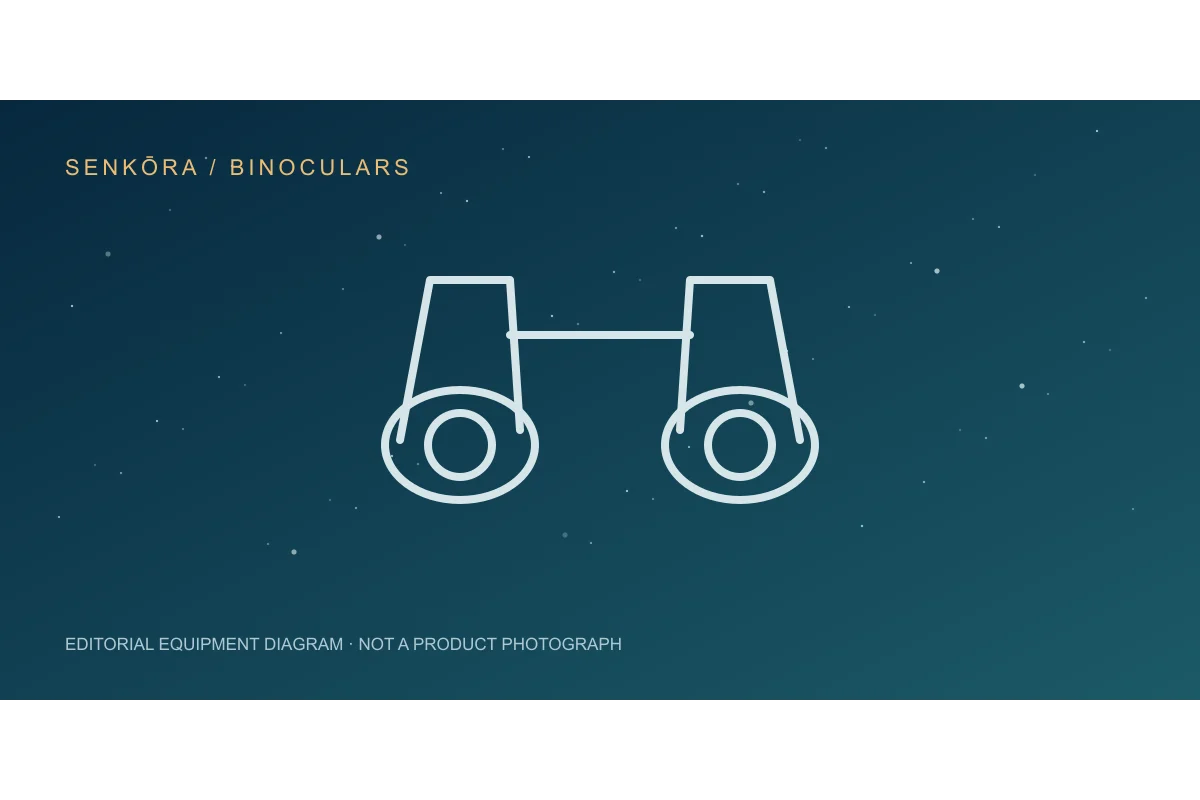
If you need a starting candidate, Celestron’s official Cometron 7x50 specification confirms 7x magnification, 50mm objectives and tripod adaptability. Those specifications explain its role as a simple wide-sky binocular; they do not establish how comfortably it fits your face or glasses. Check the published eye-relief figure and try the fit where possible. A tripod adapter is an additional compatibility check, not automatically an included accessory.
Do not buy larger binoculars solely because they collect more light. Their weight and magnification may make a tripod essential, removing much of the convenience that made binoculars attractive in the first place.
When a tabletop telescope makes sense
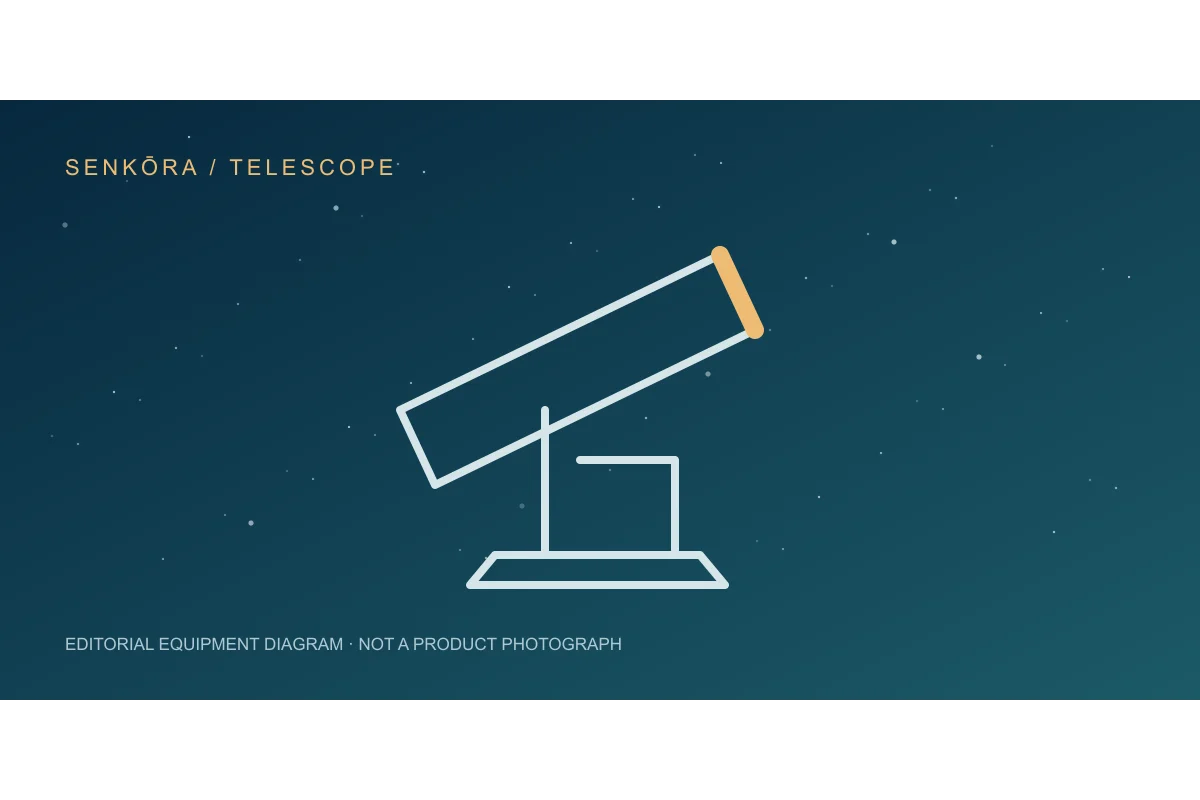
The Sky-Watcher Heritage 130 is a 130mm reflector on a tabletop Dobsonian base. That makes the support surface part of the telescope system. A shared picnic table can transmit every movement of another person; a wobbly folding table is not a reliable solution.
Practice extending the tube, aiming, focusing and changing eyepieces at home. Start at low magnification. Confirm how to check optical alignment using the manufacturer’s instructions, and pack the components in an order that avoids assembly by bright light beside other observers.
For Kartchner camping, a small visual telescope can make sense if the reserved site has a usable sky view and you bring a rigid support. For a walk from parking to an overlook, binoculars may be a more practical choice. Our portable telescope guide examines the broader system tradeoffs.
Skip these purchases for now
A high-magnification eyepiece, a large accessory case and an imaging adapter will not solve an unstable mount or unfamiliar aiming. A smart telescope primarily produces images on a screen and should not be bought as a substitute for the eyepiece experience without understanding that difference. Start with one objective for the evening.
For a hosted event, ask before bringing your own instrument. The best upgrade may simply be another session with people who can help you use the equipment you own.
Before leaving
Read the place’s entry instructions, download a chart, charge lights and carry appropriate layers. The packing guide covers that foundation. Once a comfortable evening feels routine, use what you learned about carrying distance and favorite targets to decide whether an optical purchase would solve a real problem.
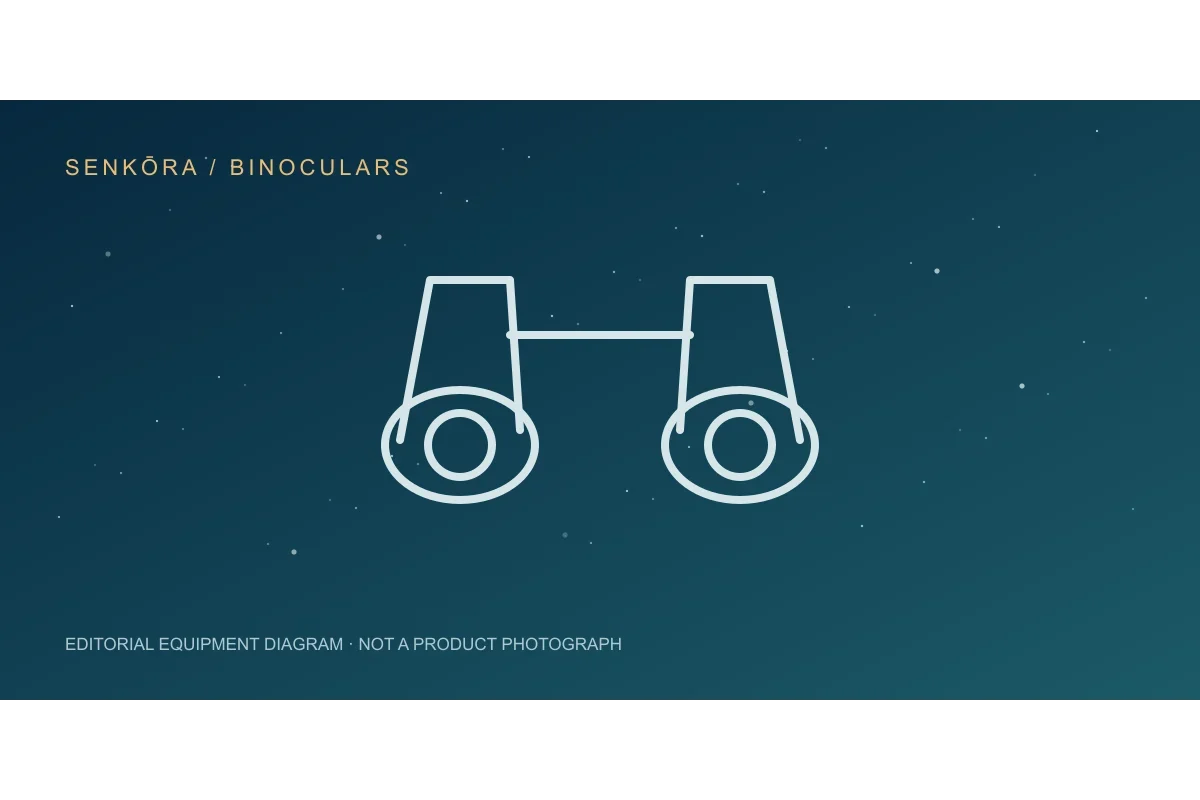
The illustrations are original Senkōra diagrams, not product photographs. Manufacturer pages were checked September 13, 2026. Amazon links below are model searches; confirm the exact configuration and seller in the results.
Recommended gear
Explore the products in this guide
Review the key fit for each recommendation, then confirm the current offer and seller details directly on Amazon.
Celestron
Celestron Cometron 7x50
Best for: An uncomplicated binocular start when you do not already own a pair
The manufacturer specifies 7x magnification and 50mm objectives. Check eye relief and comfort before choosing; this is not a weatherproof premium binocular recommendation.
Sky-Watcher
Sky-Watcher Heritage 130 Tabletop Dobsonian
Best for: Visual observing at a campsite with a rigid raised support
The 130mm reflector uses a tabletop base. Budget space for its support and practice manual aiming before the trip. It is not a wide-field Milky Way camera system.
Transparent evidence
Method and limitations
Documentary comparison of official manufacturer specifications and published visitor guidance. No field test or site visit is claimed.
- No exact Amazon US ASIN is confirmed for these candidates; links are clearly labeled searches.
- Comfort, collimation and setup stability were not tested.
Five key takeaways
- The naked eye is the best starting point for constellations and wide sky views.
- Binoculars are quick to use but high magnification makes hand shake more obvious.
- A telescope needs a stable mount, a safe setup area and practice.
- Hosted observatory sessions let you try the experience without buying equipment.
- Manufacturer specifications do not establish field performance.
Primary sources
- celestron.com · Verified 2026-09-13
- skywatcherusa.com · Verified 2026-09-13
- nps.gov · Verified 2026-09-13
- lowell.edu · Verified 2026-09-13