
The Deity PR-4 is shipping, with Deity’s US store showing $449 and in-stock availability on September 15, 2026. Battery and SD card are separate purchases. This is a dated manufacturer-store observation, not an Amazon offer or a complete rig total. Deity US store
The buying angle is timely following CineD’s September 14 IBC presentation, but this is not the recorder’s first announcement. For interviews, weddings and small documentary crews, the question is whether combining recording, an automatic reference mix and timecode simplifies the equipment you carry.
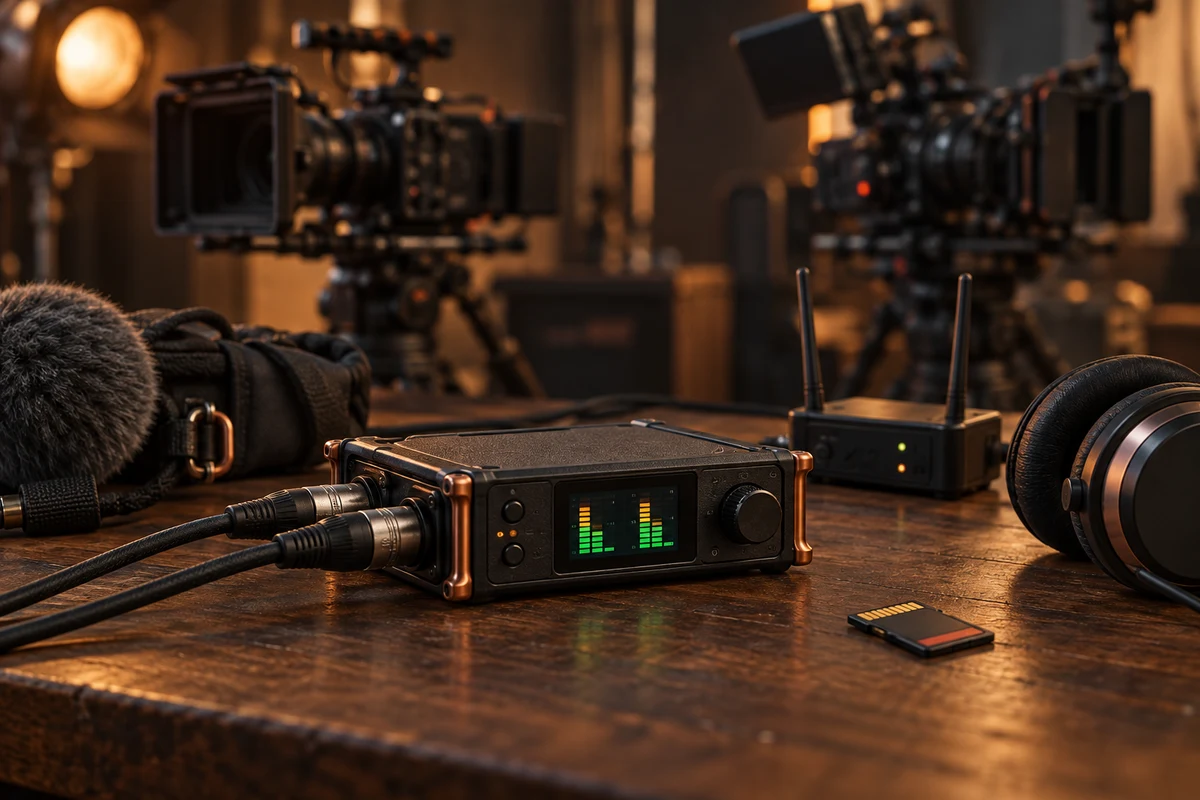
Cover: AI-generated conceptual audio-workflow illustration. It does not depict the exact PR-4. The product card below uses an official Deity image.
What the PR-4 records
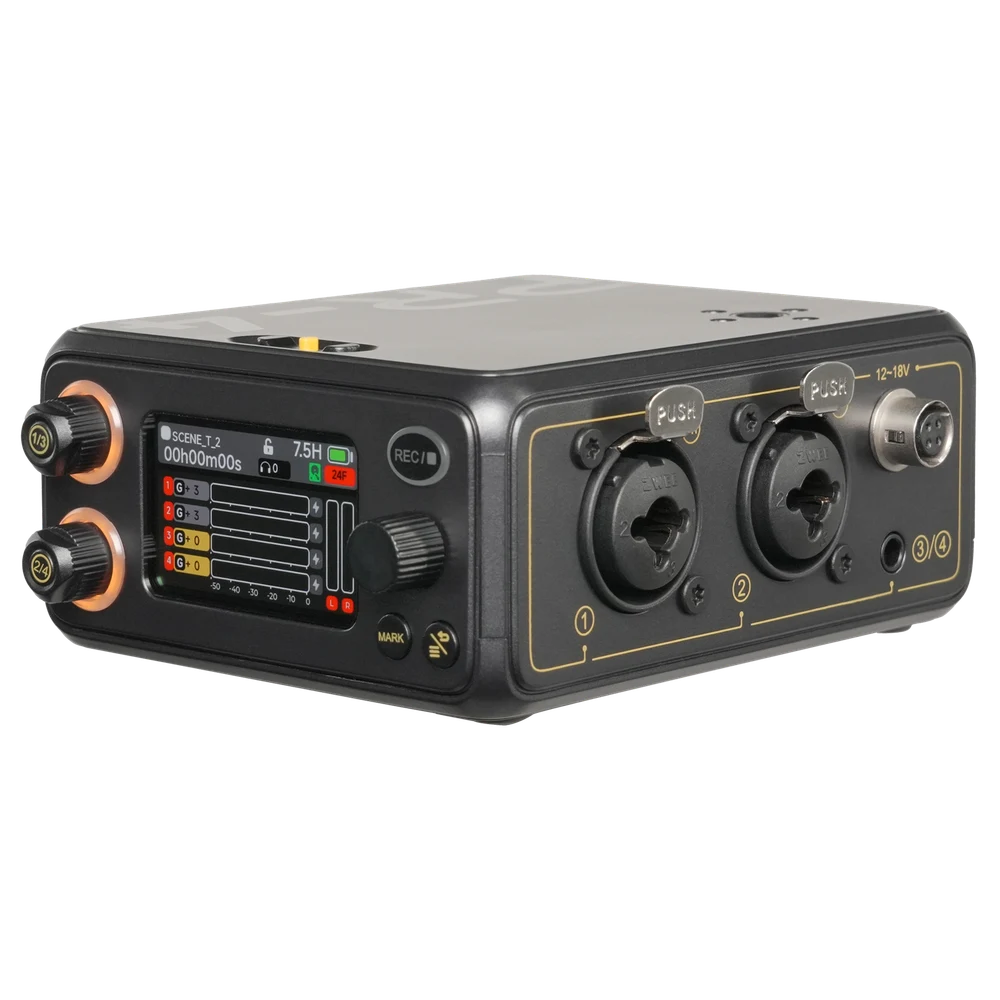
The PR-4 provides four isolated tracks plus a stereo mix. Its two XLR inputs support mic, 48V phantom, line, AES3 and AES42; a stereo 3.5mm TRS input serves analog channels 3 and 4. Recording options include 24-bit, 32-bit and 32-bit float, up to 192 kHz. Audio can be written simultaneously to an SD card and the internal 64GB SSD. Deity also documents wireless timecode with compatible devices, a wired timecode connection and Sidus Audio control. Official specifications
Two restrictions determine the setup: digital input mode disables the analog 3.5mm input, and Automix is limited to 48 kHz and unavailable in AES42. Decide on the input mode before planning your microphone count.
Three situations where the extra channels matter
A boom and two wireless lavaliers
For a two-person interview, use an XLR input for the boom and the stereo analog input for a compatible dual-channel wireless receiver. Configure the receiver to send each lavalier to a separate left or right channel, then check input levels and routing. A summed mono receiver output cannot become two isolated voices simply because the recorder has spare tracks.
This is the practical advantage over a two-input recorder: retaining the boom and both lavaliers separately gives the editor a choice when clothing noise or a missed boom position affects one source. It still requires compatible receiver outputs and the correct cable.
A wedding with no second take
Two recording destinations provide a second copy if a card is damaged or misplaced. They do not protect against every failure: power loss, a wrong input assignment or a disconnected microphone can affect both copies. Before leaving the venue, play back representative files and copy the audio onto separate storage.
A small multicamera documentary
Wireless timecode can simplify a crew already using compatible Deity devices. It does not mean every camera receives timecode wirelessly on its own. Check the camera’s timecode support, receiver or timecode-box requirements, connectors and frame-rate settings. Timecode helps align recordings in post; it does not replace monitoring the audio.
Deity PR-4 vs Zoom F3: start with the source count
The Zoom F3 is a two-input recorder with 32-bit float recording up to 192 kHz and microSD storage. Zoom now lists its separate TCA-1 adapter for timecode; do not assume that function is included in the recorder alone.
| Your recording plan | What to consider |
|---|---|
| One boom and one lavalier | Two inputs may cover the job; compare handling and the complete power and timecode kit. |
| One boom and two isolated lavaliers | The PR-4’s analog stereo input can accommodate the extra sources with a suitable receiver. |
| A second recording copy inside the recorder | The PR-4’s SD plus internal SSD workflow directly addresses this need. |
| Existing Deity timecode equipment | Check exact device compatibility before valuing the wireless integration. |
This is a workflow comparison, not a sound-quality ranking. We have not measured either recorder side by side.
Budget beyond the recorder
Allow for a compatible NP-F550 battery, charging arrangements, an SD card, audio cables and any camera-specific timecode cables or boxes. A cage or audio bag is optional and should follow how you mount or carry the recorder. Check the seller’s actual bundle before buying duplicate accessories.
We would prioritize the PR-4 when three or four isolated analog sources, a second recording medium or an existing Deity timecode setup solve a recurring production problem. For a simple two-source job, those benefits may matter less than controls, mounting and the equipment already in your bag.
Deity’s claims about preamp noise and timecode drift remain manufacturer claims. Senkōra has not independently measured them. Likewise, 32-bit float cannot repair microphone overload, wireless interference or poor placement.
The Deity PR-4 product guide summarizes compatibility and purchase checks. The shopping card opens Amazon.com search results for Deity PR-4. No exact listing is confirmed; verify the model, seller, contents and delivery terms before buying.
Recommended gear
Explore the products in this guide
Review the key fit for each recommendation, then confirm the current offer and seller details directly on Amazon.
Deity
Deity PR-4
Best for: compact interview and multicamera audio rigs
No exact Amazon US listing is confirmed. Search results may include accessories or other recorders. Verify the PR-4 model, seller and package contents. Product image: Deity.
Transparent evidence
Method and limitations
Manufacturer documentation and US store checked September 15, 2026, alongside the supplied IBC editorial brief and Zoom's F3 documentation. The proposed Amazon destination returned Page Not Found; shopping links now open labeled search results. This is a source-based buying analysis, without physical testing.
- Senkōra has not measured preamp noise, timecode drift, battery life or recording reliability.
- Amazon seller, availability, price and package contents have not been independently checked.
- Cover: AI-generated conceptual workflow illustration, not a PR-4 photograph. Product image: Deity.
Five key takeaways
- Four inputs and six tracks do not mean six independent microphone inputs.
- The analog 3.5mm input adds two channels but is disabled in digital input mode.
- Automix works at 48 kHz and is unavailable in AES42 mode.
- Dual-media recording adds a second copy; separate off-device backups still matter.
- The $449 figure comes from Deity's US store; budget separately for power, media and cables.
Frequently asked questions
Does the Deity PR-4 have four XLR inputs?
No. It has two XLR inputs and a stereo 3.5mm TRS input for analog channels 3 and 4. Digital input mode disables that analog 3.5mm input.
Can I use Automix at 192 kHz?
No. Automix is limited to 48 kHz and is unavailable in AES42 mode.
Does the PR-4 include a battery and SD card?
Deity lists both as sold separately. Check the exact seller's bundle before ordering.
Primary sources
- deitymic.com · Verified 2026-09-15
- shop.deitymic.com · Verified 2026-09-15
- cined.com · Verified 2026-09-15
- zoomcorp.com · Verified 2026-09-15