

What matters on a trail
Hiking binoculars must be comfortable enough to remain around your neck or in an accessible harness. Birding binoculars need a field wide enough to locate moving subjects, focus close enough for nearby birds, and provide usable eye relief.
This is the general decision guide for readers who need one binocular to cover both walking and birdwatching. For a decision dominated by low-light comfort and the 8x42 format, compact birding performance, or minimum travel weight, use the corresponding specialist guide.
We favor 8x magnification because it is generally steadier than 10x and often provides a wider field. This is an editorial specification comparison, not an optical bench or field test.
Quick selection
| Best fit | Model | Weight | Field at 1,000 yd | Main limitation |
|---|---|---|---|---|
| Best wide-field 8x42 | Nikon MONARCH M7 8x42 | 23.6 oz | 435 ft | Heavier than compact models |
| Best value 8x42 | Nikon PROSTAFF P7 8x42 | 20.8 oz | 377 ft | Narrower field than M7 |
| Best lighter premium option | Nikon MONARCH M7 8x30 | 16.4 oz | 435 ft | Less forgiving in low light |
| Best lighter value option | Nikon PROSTAFF P7 8x30 | 17.1 oz | 456 ft | Shorter eye relief |
| Best established alternative | Vortex Diamondback HD 8x42 | 21.3 oz | Check official current specification | Release date not documented |
| Best close-focus specification | Athlon Midas G2 UHD 8x42 | 23.3 oz | 426 ft | Official dimensions omit depth |
Nikon MONARCH M7 8x42
The M7 8x42 combines a manufacturer-specified 435-foot field at 1,000 yards with 17.1mm eye relief and waterproof, fogproof construction. That field helps locate birds in branches or follow movement.
Its 23.6-ounce weight is reasonable for a full-size binocular but noticeable on a long hike. Use a supportive strap or harness.
Nikon PROSTAFF P7 8x42
The P7 8x42 weighs 20.8 ounces and provides 20.2mm of specified eye relief. It is the more accessible full-size option for users who value comfort with glasses and lower carried weight.
Its 377-foot field is meaningfully narrower than the M7’s. The difference matters most for fast-moving birds and scanning dense habitat.
Compact Nikon options
The MONARCH M7 8x30 weighs 16.4 ounces while retaining a wide 435-foot field. It is the leading choice for hikers who want high-specification optics in a lighter package.
The PROSTAFF P7 8x30 weighs 17.1 ounces and specifies an even wider 456-foot field, but its 15.4mm eye relief may be less forgiving for some glasses wearers. Compact objectives also provide a smaller exit pupil than 8x42 models.
Vortex and Athlon alternatives
Vortex’s Diamondback HD 8x42 is a widely supported 21.3-ounce alternative with waterproof construction and Vortex’s warranty framework. Confirm current specifications because model-family pages can change.
Athlon’s Midas G2 UHD 8x42 specifies a 426-foot field, 17.2mm eye relief, and 6.5-foot close focus. It weighs 23.3 ounces. The official page gives width and height but no depth, so packed-volume comparison remains incomplete.
How to choose
Choose 8x42 for dawn, forest shade, and longer viewing sessions. Choose 8x30 when every ounce matters and most observation occurs in daylight. With glasses, prioritize usable eye relief and try the eyecups if possible.
How we evaluated
We compared exact manufacturer variants and specifications checked July 19, 2026. The Celestron Nature DX ED 8x42 and Vortex Diamondback HD 8x32 remained outside the selection because current US availability or exact data was ambiguous.
Compare the exact configurations
| Product | Configuration | Before you choose |
|---|---|---|
| Nikon MONARCH M7 8x42 | 8x magnification, 42mm objective | Check the 8x42 marking and view the entire field while wearing your usual glasses. |
| Nikon MONARCH M7 8x30 | 8x magnification, 30mm objective | Compare it with the 8x42 in the lighting you actually use, including eyecup position with glasses. |
| Nikon PROSTAFF P7 10x42 | 10x magnification, 42mm objective | Read the 10x42 marking on the exact offer and test full-field visibility through your glasses. |
| Nikon PROSTAFF P7 10x30 | 10x magnification, 30mm objective | Verify the 10x30 model; an 8x30 has different steadiness and viewing characteristics. |
| Vortex Diamondback HD 8x42 | 8x magnification, 42mm objective | Try the 8x42 with your normal glasses and carry strap before committing to all-day use. |
| Athlon Optics Midas G2 UHD 8x42 | 8x magnification, 42mm objective | Check the G2 UHD 8x42 designation and test the entire view, not just sharpness at its center. |
Recommended gear
Explore the products in this guide
Review the key fit for each recommendation, then confirm the current offer and seller details directly on Amazon.

Nikon
Nikon MONARCH M7 8x42
The Nikon MONARCH M7 8x42 combines 8x magnification, a full-size objective and ED glass for birding and nature walks. It is the larger-objective option beside the M7 8x30.

Nikon
Nikon MONARCH M7 8x30
The Nikon MONARCH M7 8x30 is the compact M7 choice for daylight birding and travel. It retains 8x magnification while reducing the objective size and carrying burden.
Nikon
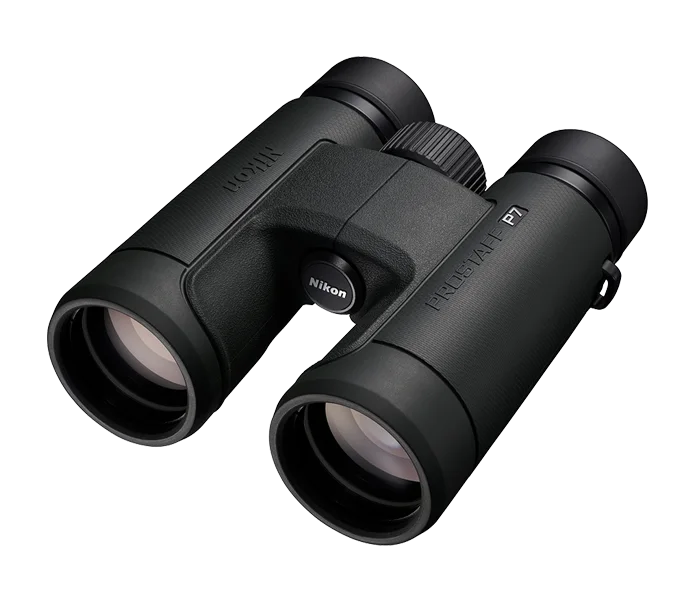
Nikon PROSTAFF P7 10x42
The Nikon PROSTAFF P7 10x42 gives a closer view of distant subjects than an 8x binocular. This record describes the 10x42 model, not an 8x42 alternative.
Nikon
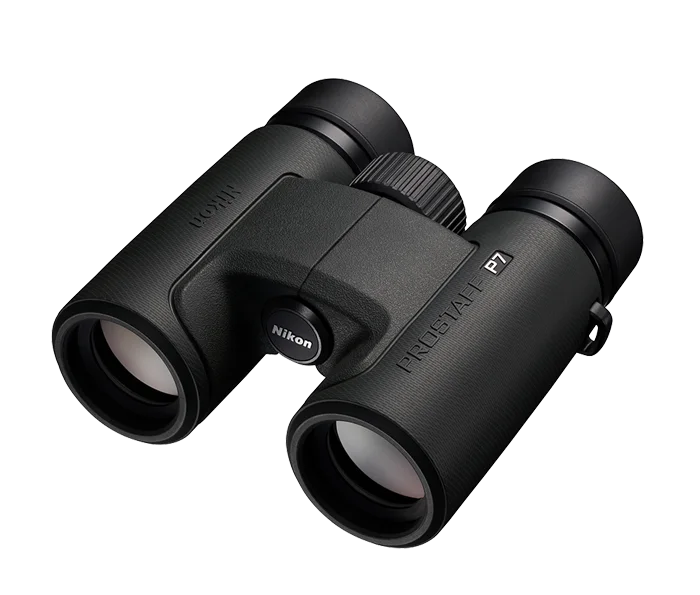
Nikon PROSTAFF P7 10x30
The Nikon PROSTAFF P7 10x30 combines 10x magnification with a compact 30mm objective. It suits daylight travel when distant detail matters and a full-size binocular is too bulky.
Vortex
Vortex Diamondback HD 8x42
The Vortex Diamondback HD 8x42 is a full-size 8x option for nature walks and general birding. Compare it with the 8x32 when choosing between a larger objective and a smaller carry kit.
Athlon Optics
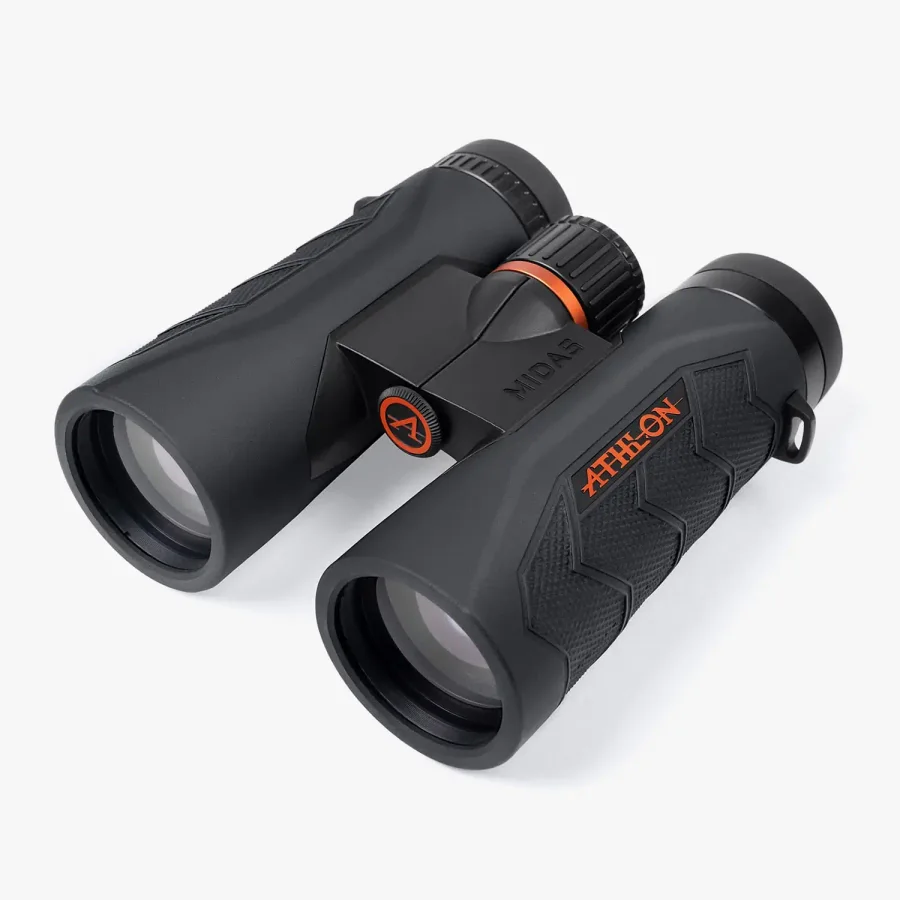
Athlon Optics Midas G2 UHD 8x42
The Athlon Midas G2 UHD 8x42 is an 8x full-size nature binocular to compare for grip, eye placement and all-day carrying comfort. The G2 UHD designation identifies the generation considered here.
Five key takeaways
- Eight-power binoculars are easier to hold steady than 10x models for most hikers.
- A 42mm objective favors brightness; 30mm favors lower weight.
- Field of view and eye relief can matter more than headline magnification.
- Try binoculars with your glasses if possible because facial fit is personal.
- Optical quality rankings require physical comparison, which this guide does not claim.
Frequently asked questions
Is 8x or 10x better for birding?
Eight-power binoculars are usually steadier and offer a wider field. Ten-power models can help with distant subjects but magnify shake.
Are 8x30 binoculars bright enough?
They work well in daylight. A 42mm model generally provides a larger exit pupil and more comfortable low-light viewing.
What eye relief do glasses wearers need?
Many users prefer roughly 16mm or more, but usable eye relief and eyecup geometry vary. Personal fit remains important.
Do I need ED glass?
ED glass can reduce color fringing, but coatings, alignment, focus, and ergonomics also affect the view.
Primary sources
- nikonusa.com · Verified 2026-07-19
- nikonusa.com · Verified 2026-07-19
- vortexoptics.com · Verified 2026-07-19
- athlonoptics.com · Verified 2026-07-19