
Quick picks by park-day profile
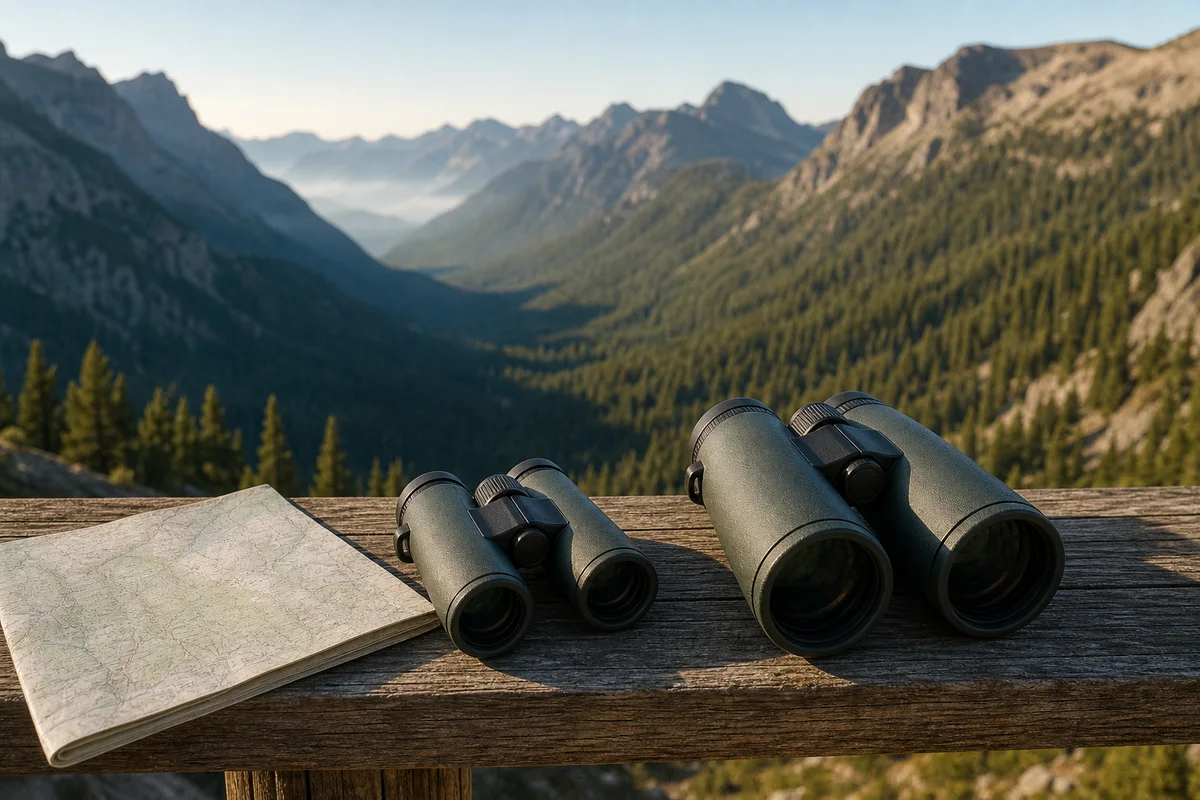
- Mixed hiking and wildlife: 8x32.
- Forest, dawn, dusk, or long observation: 8x42.
- Bright open country and supported viewing: consider 10x42.
- Minimalist day hike: a well-fitted 8x30 or 8x32.
- Eyeglass wearer: prioritize usable eye relief and eyecup fit over a specification headline.
These are format recommendations, not claims that one model wins every park. The retained product families below are candidates based on manufacturer specifications; Senkōra has not conducted field tests for this article.
Why the park day matters
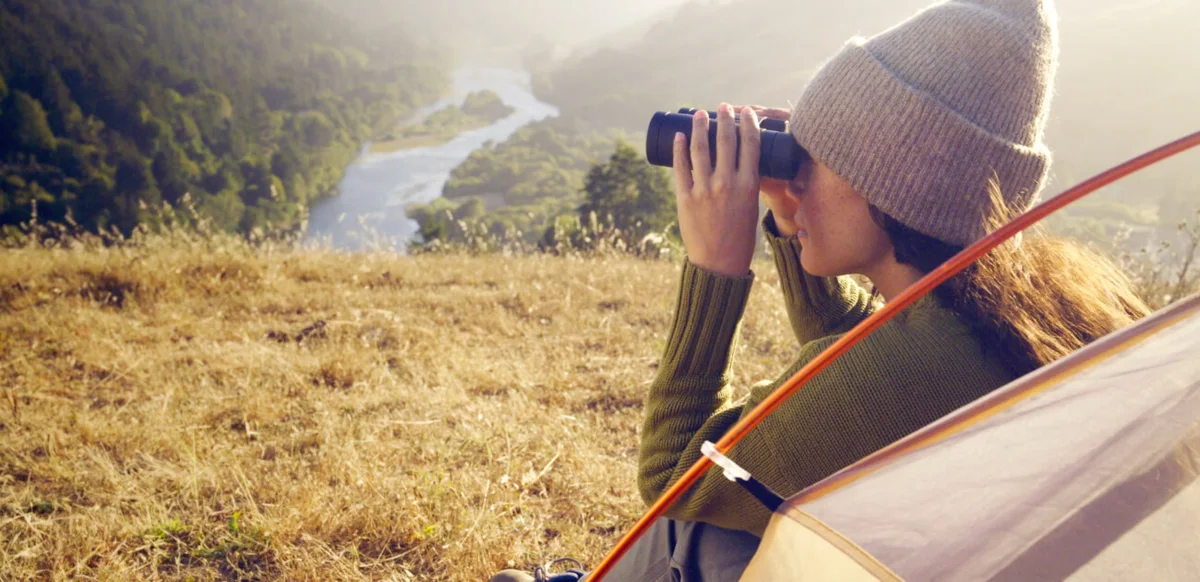
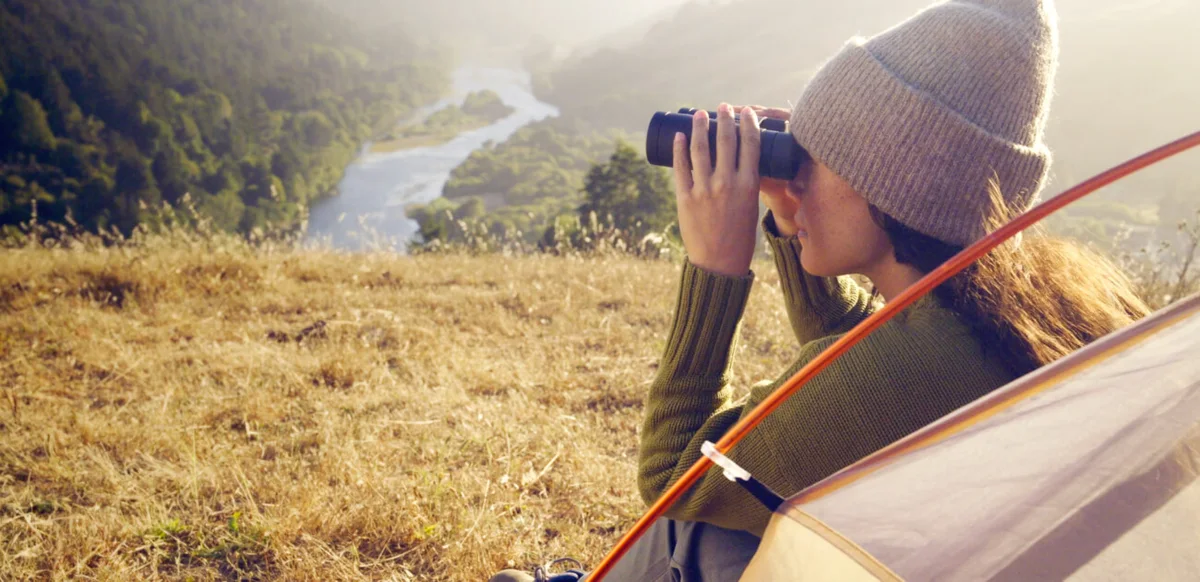
A bright desert overlook, a shaded forest trail, and a dawn wildlife pullout create different needs. Magnification, objective diameter, field of view, weight, eye relief, and waterproofing interact. The binocular you willingly carry and can bring to your eyes quickly is often more useful than a larger model left in the vehicle.
8x versus 10x
Eight-power binoculars are easier to hold steadily and generally make it easier to find a moving animal. Their wider field of view is valuable for birds and scanning a hillside. Ten-power binoculars make the subject appear larger, but hand movement is also more visible and the field is commonly narrower.
Choose 10x when subjects are consistently distant, daylight is adequate, and you can stabilize your position. Do not choose higher magnification as a substitute for respecting wildlife-distance rules.
30/32mm versus 42mm
An 8x30 or 8x32 usually makes the better hiking companion. It can reduce neck and pack weight while retaining more viewing comfort than a tiny pocket binocular. An 8x42 is larger and heavier, but its exit pupil and handling can be more forgiving in dimmer conditions and during longer sessions.
Specifications cannot tell you whether a binocular fits your face. Test whether both eyes merge into one comfortable image, whether the focus wheel is reachable, and whether the eyecups provide a full field with or without glasses.
Current US-market families to compare
| Profile | Candidate families | What to verify |
|---|---|---|
| Lightweight 8x30/32 | Nikon Monarch M7 8x30; Vortex Diamondback HD 8x32 | Exact weight, eye relief, grip, current variant |
| General-purpose 8x42 | Nikon Monarch M7 8x42; Vortex Diamondback HD 8x42 | Field of view, eye fit, carried weight |
| Value-oriented ED 8x42 | Celestron Nature DX ED 8x42 | Current new-stock status, warranty, fit |
Do not assume two sizes in the same family handle identically. Verify the exact model number and current US manufacturer page before purchasing.
Safety and wildlife distance
The National Park Service advises visitors to learn the exact park’s minimum distances and to use binoculars or a zoom lens rather than approaching wildlife. Common examples in NPS guidance are 25 yards from many animals and 100 yards from predators such as bears and wolves, but some parks require different distances. The park-specific rule controls.
If an animal reacts to you or moves toward you, back away. Never call, bait, follow, or surround wildlife for a better view.
How we evaluated the options
We compared documented US manufacturer specifications, including magnification, objective size, weight, field of view, eye relief, and weather-protection claims. We did not conduct a controlled optical or durability test, and we do not rank resolution, glare control, or long-term reliability without that evidence.
Compare the exact configurations
| Product | Configuration | Before you choose |
|---|---|---|
| Nikon MONARCH M7 8x42 | 8x magnification, 42mm objective | Check the 8x42 marking and view the entire field while wearing your usual glasses. |
| Nikon MONARCH M7 8x30 | 8x magnification, 30mm objective | Compare it with the 8x42 in the lighting you actually use, including eyecup position with glasses. |
| Vortex Diamondback HD 8x42 | 8x magnification, 42mm objective | Try the 8x42 with your normal glasses and carry strap before committing to all-day use. |
| Vortex Diamondback HD 8x32 | 8x magnification, 32mm objective | Confirm the 8x32 version and test focus-wheel access with the gloves you use outdoors. |
| Celestron Nature DX ED 8x42 | 8x magnification, 42mm objective, ED glass | Distinguish Nature DX ED from the non-ED Nature DX and try the eyecups with your glasses. |
Recommended gear
Explore the products in this guide
Review the key fit for each recommendation, then confirm the current offer and seller details directly on Amazon.
Nikon
Nikon MONARCH M7 8x30
The Nikon MONARCH M7 8x30 is the compact M7 choice for daylight birding and travel. It retains 8x magnification while reducing the objective size and carrying burden.
Vortex
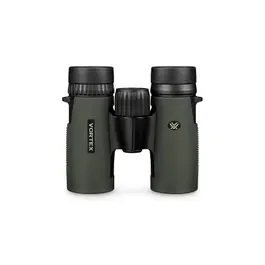
Vortex Diamondback HD 8x32
The Vortex Diamondback HD 8x32 is the smaller-objective Diamondback option for daylight birding and travel. It is relevant when binoculars must fit beside a camera rather than replace it.
Nikon
Nikon MONARCH M7 8x42
The Nikon MONARCH M7 8x42 combines 8x magnification, a full-size objective and ED glass for birding and nature walks. It is the larger-objective option beside the M7 8x30.
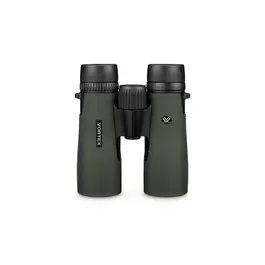
Vortex
Vortex Diamondback HD 8x42
The Vortex Diamondback HD 8x42 is a full-size 8x option for nature walks and general birding. Compare it with the 8x32 when choosing between a larger objective and a smaller carry kit.
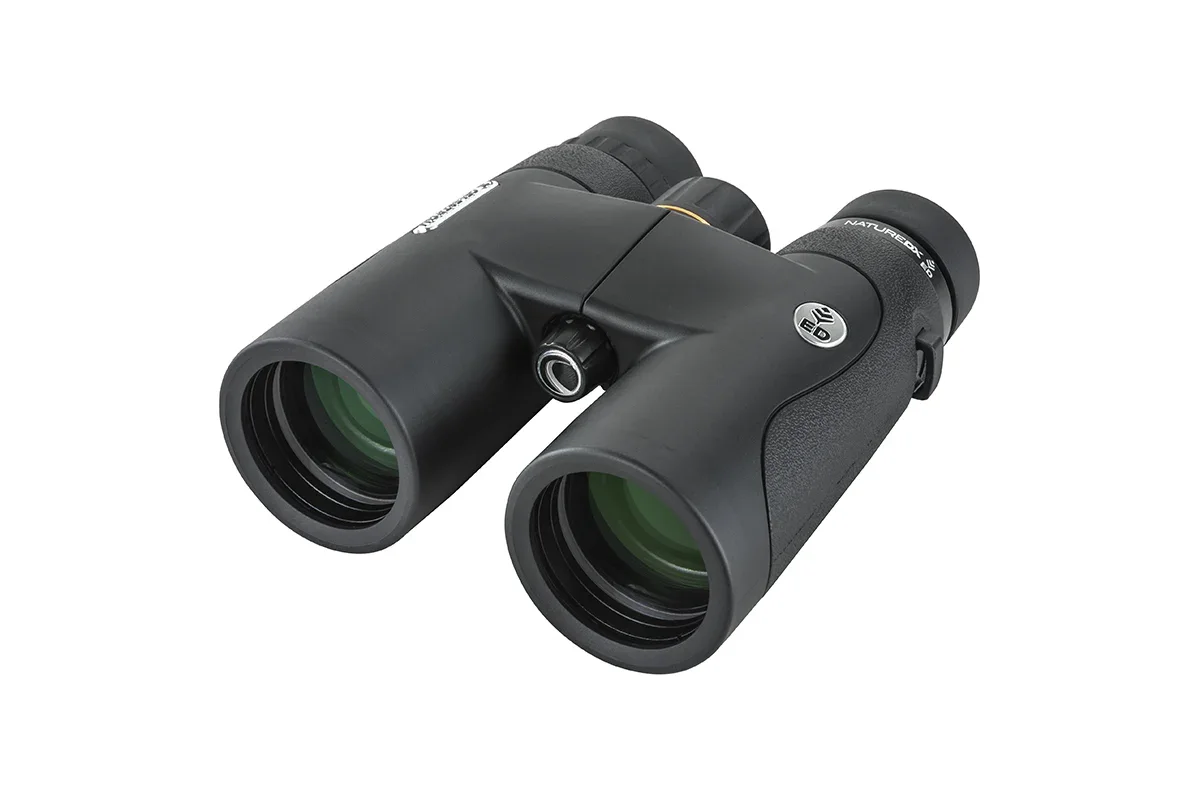
Celestron
Celestron Nature DX ED 8x42
The Celestron Nature DX ED 8x42 combines a full-size 8x viewing format with ED glass. It is a nature-watching candidate for readers comparing eye fit and optical specifications across brands.
Five key takeaways
- An 8x32 is the practical default for mixed hiking and wildlife viewing.
- An 8x42 favors low light and comfortable extended observation at greater weight.
- Eye relief and adjustable eyecups should be checked in person by eyeglass wearers.
- Binoculars support safe observation; they do not change park-specific wildlife distances.
Frequently asked questions
Is 8x or 10x better for Yellowstone?
8x is easier to hold and scan with; 10x can reveal more distant detail but has a narrower field and more shake. Viewing distance, light, and support should decide.
Are compact binoculars good enough for hiking?
They can be, especially in bright light. A 30mm or 32mm objective usually offers a stronger comfort and low-light compromise than the smallest pocket models.
Can binoculars replace a telephoto lens?
No. Binoculars are for observation and subject location; a telephoto records images. Carrying binoculars may still reduce the urge to approach wildlife.
Primary sources
- nps.gov · Verified 2026-07-22
- nikonusa.com · Verified 2026-07-22
- vortexoptics.com · Verified 2026-07-22
- celestron.com · Verified 2026-07-22