
Choose for the trip you will actually take
Compare 20 standard-zoom and telephoto combinations in our Decision Lab: How Much Does a Complete Travel Camera Kit Really Weigh?
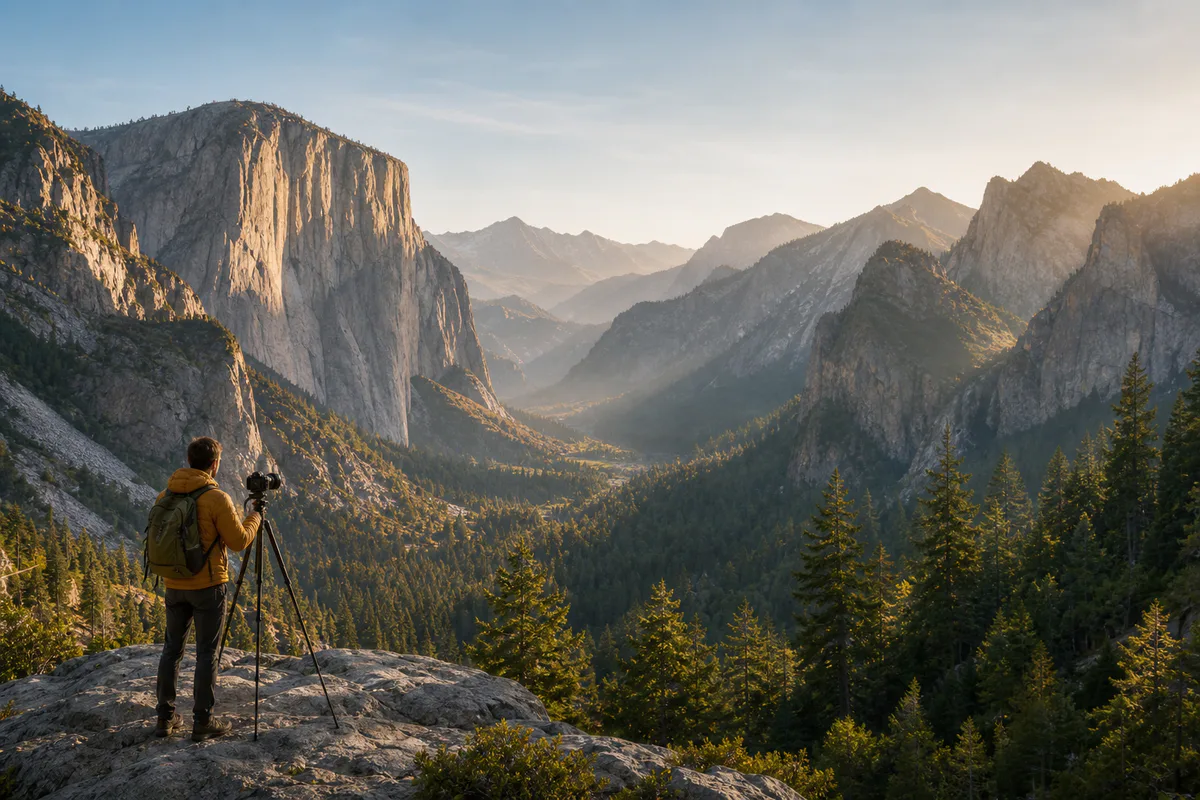
National parks create conflicting camera requirements. Landscapes reward dynamic range, detail, and wide lenses. Wildlife rewards autofocus and telephoto reach. Hiking rewards low weight and fast access. Dust, spray, cold, and heat add another layer.
This is not a second general hiking-camera ranking. A park day may be a long backcountry route, a sequence of roadside overlooks, a wildlife-focused dawn, or a short accessible trail. Start with the exact National Park Service unit, planned locations, season, current alerts, and dominant subject. Use the general hiking camera guide only when carried load and access on foot are the primary decision.
The best choice depends on the dominant activity. A road trip with short overlooks can support a heavier body and two lenses. A long canyon hike calls for a compact camera and one lens. A wildlife-focused trip needs reach and patience more than maximum sensor size.
Turn that profile into a packing plan with the camera gear checklist for US national parks, which separates core, landscape, wildlife, weather, and flight modules.
Quick selection
| Park profile | Example camera and lens | System weight | Main compromise |
|---|---|---|---|
| Best mixed-use balance | Canon EOS R10 + RF-S 18-45mm | 19.7 oz | No in-body stabilization |
| Light general travel | Canon EOS R50 + RF-S 18-45mm | 17.8 oz | Less control depth |
| Wildlife priority | Canon EOS R7 + RF 100-400mm | 44.0 oz | Heaviest example here |
| Learning and mixed subjects | Nikon Z50II + Z DX 16-50mm | 22.2 oz | No in-body stabilization |
| Compact stabilized system | Sony a6700 + E PZ 16-50mm II | 21.2 oz | A wildlife zoom nearly doubles this load |
| Weather-focused wildlife | OM-1 Mark II + M.Zuiko 75-300mm II | 36.0 oz | Smaller sensor and premium body cost |
These are camera-and-one-lens totals, not packed-bag weights. The table deliberately shows standard zooms for mixed use and telephotos for wildlife-first roles, so the figures describe different photographic jobs rather than a performance ranking.
Best mixed-use choice: Canon EOS R10
The R10 is a useful middle ground between the very small R50 and the more substantial R7. Its 15.1-ounce body remains reasonable for hiking, while its grip and controls handle a telephoto more comfortably than the R50.
There is no in-body stabilization, so lens stabilization and technique matter. Its kit lens is suitable for scenery, but wildlife needs a separate RF or RF-S telephoto.
Best light general camera: Canon EOS R50
Choose the R50 when scenery, travel companions, and trail documentation matter more than sustained wildlife action. It is the lightest viewfinder-equipped Canon option in this selection and easy to carry with the 18-45mm kit lens.
It can track common subjects, but its small grip and limited controls make a long wildlife session less comfortable. Pairing it with a large lens also reduces the handling advantage.
Best Canon wildlife body: EOS R7
The EOS R7’s 32.5-megapixel APS-C sensor, in-body stabilization, larger battery, and control layout make it the stronger Canon choice for wildlife. Its 21.6-ounce body is still lighter than many full-frame wildlife bodies, but the complete load depends on the lens.
For long hikes, compare the R7 plus RF100-400mm against a lighter body and lens, not against bodies alone.
Best learning platform: Nikon Z50II
The Z50II offers Nikon’s current processor, a deep grip, a vari-angle screen, and subject detection in a 17.5-ounce body. The compact 16-50mm kit supports landscapes, while the Z DX 50-250mm provides a light two-lens route.
The body lacks in-body stabilization. That matters most with unstabilized lenses and static low-light scenes, less with Nikon’s stabilized compact zooms.
Best compact stabilized option: Sony a6700
The a6700 is well suited to a two-lens park kit because it combines in-body stabilization, subject recognition, and a mature APS-C lens system. Sony’s 70-350mm G is a relevant wildlife pairing without moving to a full-frame supertelephoto.
Its compact body can feel front-heavy with larger lenses. Try the grip and carry method before committing to long trail days.
Best weather-focused wildlife option: OM-1 Mark II
OM System documents an IP53 weather-resistance rating for the OM-1 Mark II body. Its Micro Four Thirds format supports comparatively compact long-reach systems, and its subject-recognition features target wildlife use.
The smaller sensor has different high-ISO and depth-of-field behavior from APS-C. The body is also the most expensive candidate here. Choose it for the whole weather-resistant wildlife system, not for body specifications alone.
Park safety and logistics
Use official National Park Service pages for wildlife distances, closures, permits, and local restrictions. A camera recommendation never overrides those rules. Do not block trails, vegetation, or traffic for a photograph.
Carry spare lithium-ion batteries in your carry-on baggage when flying, protect terminals, and verify current TSA and FAA guidance. In the field, protect equipment from blowing dust, salt spray, and sudden temperature transitions.
How we evaluated
We used official manufacturer specifications and system totals rechecked August 15, 2026 and compared system roles, weight, stabilization, autofocus, environmental protection, and lens paths. This is an editorial evaluation, not a report from use inside a park.
Compare the exact configurations
| Product | Configuration | Before you choose |
|---|---|---|
| Canon EOS R50 | Black body with RF-S18-45mm F4.5-6.3 IS STM kit lens | Check the black 18-45mm kit rather than the white body, a body-only offer or a two-lens bundle. |
| Canon EOS R10 | Black body with RF-S18-45mm F4.5-6.3 IS STM kit lens | Plan the RF or RF-S telephoto separately and try the grip with that lens mounted. |
| Canon EOS R7 | Black body only | Include the intended RF telephoto, memory cards and battery plan in the purchase budget. |
| Nikon Z50II | Body with NIKKOR Z DX 16-50mm f/3.5-6.3 VR kit lens | Verify the single 16-50mm lens kit. A two-lens package is a different offer and carrying calculation. |
| Sony Alpha 6700 | Black body with E PZ 16-50mm F3.5-5.6 OSS kit lens | Distinguish the 16-50mm kit from the body-only offer and choose a bright lens separately for dim scenes. |
| OM System OM-1 Mark II | Black body only | Add the lens to the body-only offer and distinguish OM-1 Mark II from the original OM-1. |
Recommended gear
Explore the products in this guide
Review the key fit for each recommendation, then confirm the current offer and seller details directly on Amazon.
Canon
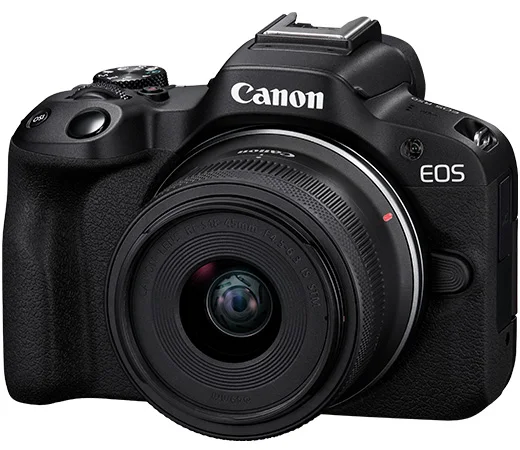
Canon EOS R50
The EOS R50 combines an electronic viewfinder with a screen that can face the photographer. It suits family outings and a first photo-and-video kit built around the small RF-S18-45mm zoom.
Canon
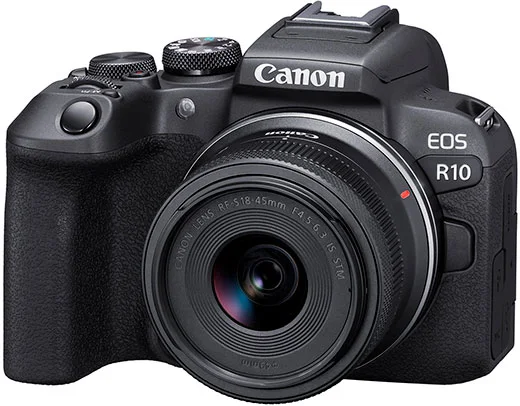
Canon EOS R10
The EOS R10 offers a more substantial grip and direct controls for a traveler learning to follow wildlife. The included 18-45mm zoom covers general travel; distant birds need another lens.
Canon
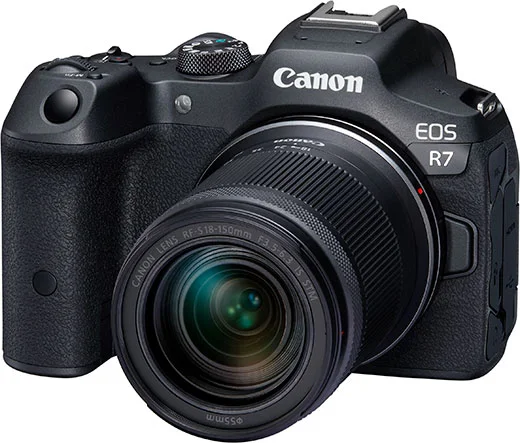
Canon EOS R7
The EOS R7 is the Canon APS-C choice for photographers who put wildlife handling and in-body stabilization ahead of the smallest travel body. This is a body-only purchase.
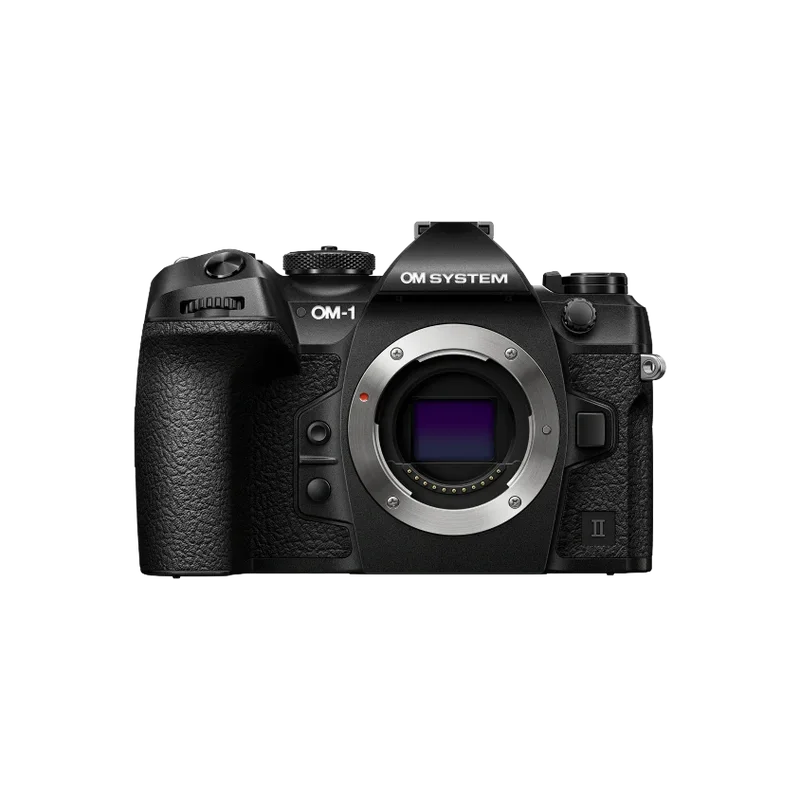
OM System
OM System OM-1 Mark II
The OM System OM-1 Mark II suits outdoor photographers building a stabilized Micro Four Thirds system. It is particularly relevant when existing MFT lenses and mobile wildlife work guide the choice.
Five key takeaways
- No single camera optimizes landscapes, wildlife, hiking weight, and low-light performance.
- Lens choice has more effect on park versatility than a small difference between camera bodies.
- Wildlife should be photographed from safe, regulation-compliant distances.
- Weather resistance and battery planning matter across desert, alpine, coastal, and winter parks.
- Park and trail rules must be checked for the exact location and date.
Frequently asked questions
What lens should I take to a national park?
A compact standard zoom covers scenery and people. Add a lightweight telephoto only when wildlife is a planned subject and you can carry it safely.
Can I use a tripod in a national park?
Rules vary by location, activity, crowding, and permit status. Check the specific park's official page.
Can I fly a drone in a national park?
Launching, landing, or operating an unmanned aircraft is generally prohibited in National Park Service areas except under limited authorization. Check current official rules.
Does a telephoto lens make it safe to approach wildlife?
No. A longer lens supports greater distance, but visitors must follow park-specific distance and behavior rules.
How is this different from a general hiking camera guide?
A hiking guide optimizes the load carried on foot. This guide starts with a specific park profile and adds landscape-versus-wildlife priorities, road access, seasonal conditions, visitor rules, and required wildlife distance.
Primary sources
- usa.canon.com · Verified 2026-08-26
- usa.canon.com · Verified 2026-08-26
- usa.canon.com · Verified 2026-08-26
- nikonusa.com · Verified 2026-08-26
- electronics.sony.com · Verified 2026-08-26
- explore.omsystem.com · Verified 2026-08-26
- nps.gov · Verified 2026-08-26
- usa.canon.com · Verified 2026-08-26
- usa.canon.com · Verified 2026-08-26
- nikonusa.com · Verified 2026-08-26
- electronics.sony.com · Verified 2026-08-26
- explore.omsystem.com · Verified 2026-08-26