
Quick picks
Choose your mount first. A lightweight telephoto lens is useful only if it fits your camera and the complete system remains comfortable to carry.
Senkora may earn a commission when you buy through our links, at no additional cost to you. This does not influence our recommendations.
Canon RF reach
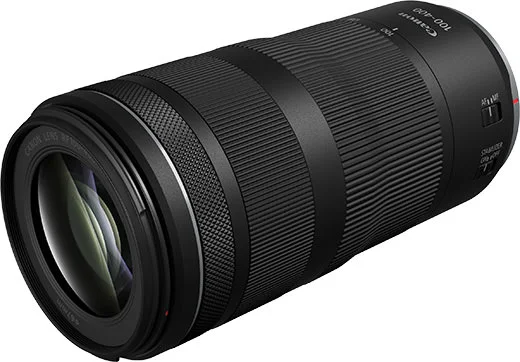
Canon RF100-400mm F5.6-8 IS USM
Black RF-mount lens
Choose the RF 100-400mm when birds and distant animals drive the purchase. Its longer reach reduces the need for heavy cropping while keeping the lens portable.
Main limit: It adds 365 g over the 55-210mm and reaches only f/8 at 400mm.
Read the RF100-400mm F5.6-8 IS USM product profileView the exact lens on AmazonCanon RF-S budget
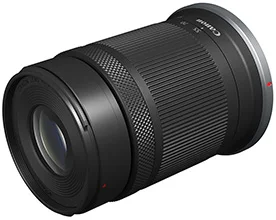
Canon RF-S55-210mm F5-7.1 IS STM
Black RF-S-mount lens
Choose the RF-S 55-210mm for a light first telephoto on an R50 or R10. It fits nearby animals, travel details, and occasional daylight wildlife.
Main limit: 210mm is restrictive for small birds and distant wildlife; f/7.1 also limits dim-light action.
Read the RF-S55-210mm F5-7.1 IS STM product profileView the exact lens on AmazonNikon Z DX
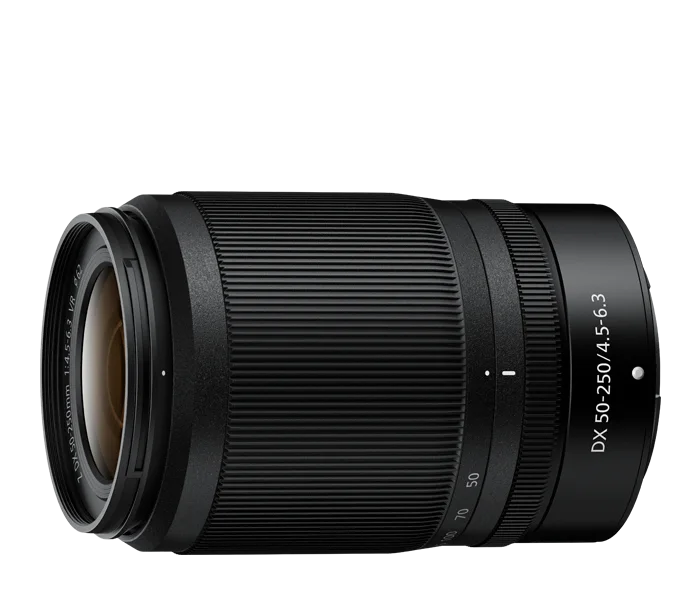
Nikon NIKKOR Z DX 50-250mm f/4.5-6.3 VR
Black Nikon Z DX lens
The NIKKOR Z DX 50-250mm adds a retractable, stabilized telephoto to a Nikon DX kit. It is a sensible second lens when portability outranks maximum reach.
Main limit: DX coverage and 250mm maximum reach restrict its role as a distant-bird lens.
Read the NIKKOR Z DX 50-250mm f/4.5-6.3 VR product profileAmazon offer omitted pending exact US variant verification.
Sony APS-C
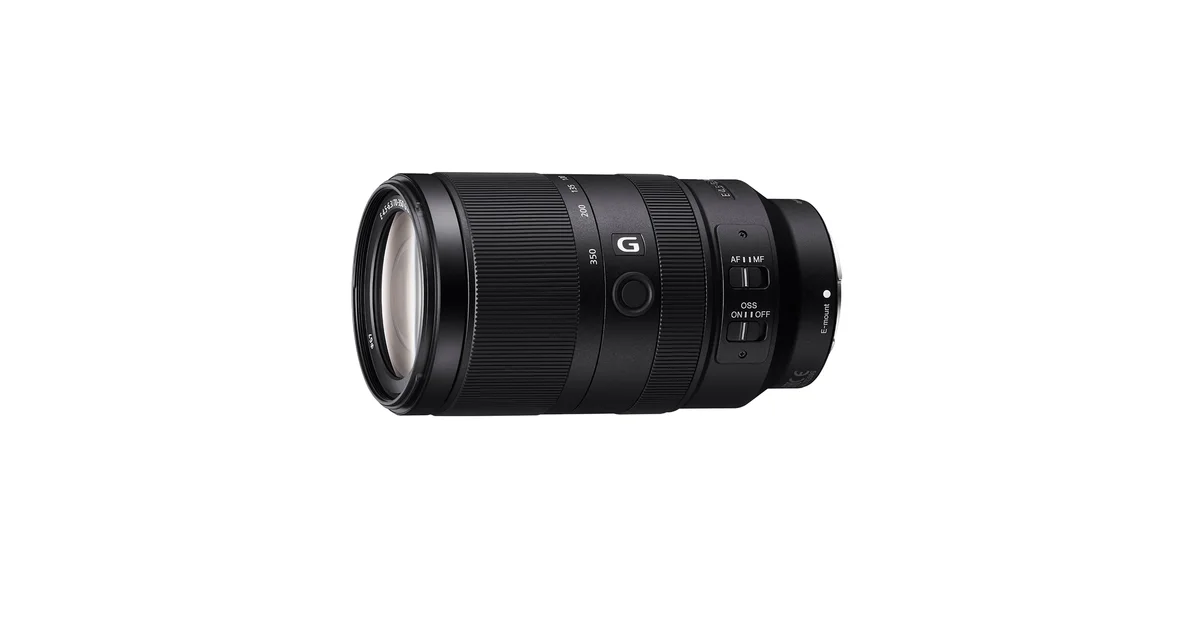
Sony E 70-350mm F4.5-6.3 G OSS
Black Sony E APS-C lens
The Sony E 70-350mm G OSS gives Sony APS-C owners long reach with optical stabilization. It fits daylight wildlife trips where a larger professional telephoto would stay home.
Main limit: APS-C coverage and a front-heavy balance on small bodies; f/6.3 is not a bright action aperture.
Read the E 70-350mm F4.5-6.3 G OSS product profileView the exact lens on AmazonFujifilm X
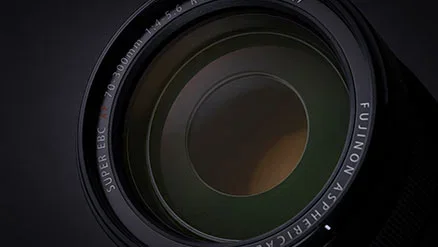
Fujifilm XF70-300mmF4-5.6 R LM OIS WR
Black Fujifilm X-mount lens
The Fujifilm XF70-300mm balances useful wildlife reach with optical stabilization and weather-resistant lens construction. It suits an existing X-system traveler.
Main limit: The barrel extends when zooming; lens weather resistance does not make an unsealed body weather resistant.
Read the XF70-300mmF4-5.6 R LM OIS WR product profileAmazon offer omitted pending exact US variant verification.
Compare the recommended systems
Compare complete camera-kit weights in our Decision Lab before choosing a lens.
| Decision factor | Canon RF100-400mm F5.6-8 IS USM | Canon RF-S55-210mm F5-7.1 IS STM | Nikon NIKKOR Z DX 50-250mm f/4.5-6.3 VR | Sony E 70-350mm F4.5-6.3 G OSS | Fujifilm XF70-300mmF4-5.6 R LM OIS WR |
|---|---|---|---|---|---|
| Mount and angle of view | Canon RF; 160-640mm equivalent on Canon APS-C | Canon RF-S; 88-336mm equivalent on Canon APS-C | Nikon Z DX; 75-375mm equivalent on DX | Sony E APS-C; 105-525mm equivalent | Fujifilm X; 107-457mm equivalent (maker specification) |
| Lens weight | 635 g / 22.4 oz | 270 g / 9.5 oz | 405 g / 14.3 oz | 625 g / 22.1 oz | 580 g / 20.5 oz |
| Example complete system | 1,064 g / 37.5 oz with EOS R10 | 645 g / 22.8 oz with EOS R50 | 900 g / 31.7 oz with Z50II | 1,118 g / 39.4 oz with a6700 | 1,018 g / 35.9 oz with X-T50 |
| Stabilization | Optical IS | Optical IS | Lens VR | Optical SteadyShot | Optical OIS |
| Aperture at telephoto | f/8 | f/7.1 | f/6.3 | f/6.3 | f/5.6 |
| Handheld use | Daylight birds; support the lens with your left hand | Light walks and larger nearby animals | Travel wildlife and nearby animals | Distant daylight subjects; use a supported stance | Hiking and daylight wildlife |
| Low-light limitation | f/8 pushes ISO up when action needs a fast shutter | Short reach plus a slow aperture restrict dawn wildlife | Shade and fast movement can require high ISO | Fast motion in shade raises ISO requirements | f/5.6 still needs enough light for moving animals |
| Main limitation | It adds 365 g over the 55-210mm and reaches only f/8 at 400mm. | 210mm is restrictive for small birds and distant wildlife; f/7.1 also limits dim-light action. | DX coverage and 250mm maximum reach restrict its role as a distant-bird lens. | APS-C coverage and a front-heavy balance on small bodies; f/6.3 is not a bright action aperture. | The barrel extends when zooming; lens weather resistance does not make an unsealed body weather resistant. |
| Exact US offer | Black RF-mount lens View the exact lens on Amazon | Black RF-S-mount lens View the exact lens on Amazon | Black Nikon Z DX lens Amazon offer omitted pending exact US variant verification. | Black Sony E APS-C lens View the exact lens on Amazon | Black Fujifilm X-mount lens Amazon offer omitted pending exact US variant verification. |
Example system totals add one lens to a camera with battery and card. They exclude caps, straps, bags and spares. Equivalent focal lengths describe angle of view, not extra magnification.
Start with your camera mount
See the camera-and-lens totals in our Decision Lab: How Much Does a Complete Travel Camera Kit Really Weigh?
The best wildlife lens is one that fits your camera natively and remains practical to carry. Mount, sensor format, and exact variant come before rankings. A Canon RF-S lens cannot be recommended to a Nikon Z owner, and a Sony APS-C lens behaves differently on a full-frame body.
These lenses prioritize travel weight. None replaces a bright professional supertelephoto for low-light action. Their value is reach that can be packed for a flight or carried on a trail.
Canon RF100-400mm: best lightweight Canon reach
Canon’s RF100-400mm reaches 400mm while weighing 22.4 ounces. It works on RF full-frame and APS-C bodies, with a narrower angle of view on APS-C. Optical stabilization supports framing and slower shutter speeds for static subjects.
The maximum aperture falls to f/8 at the long end. That is the central compromise: low mass and reach in exchange for less light. It is most convincing for daylight travel, open habitats, and users who accept higher ISO when needed.
Canon RF-S55-210mm: lightest Canon option
At 9.5 ounces, the RF-S55-210mm is easy to add to an R50 or R10 kit. It suits larger animals, zoo use where permitted, details, and occasional daylight wildlife.
Its 210mm maximum focal length is short for small birds or distant animals. Treat it as a lightweight entry lens, not as a substitute for a 400mm wildlife zoom.
Nikon Z DX 50-250mm: best balanced Nikon DX zoom
The Nikon lens weighs 14.3 ounces and retracts for storage. Its vibration reduction and 50-250mm range make it a logical second lens beside the Z DX 16-50mm.
It is a DX lens. It can mount on Nikon Z full-frame bodies, but those cameras use a cropped image area. The lens makes the most sense on Z50-series DX bodies.
Sony E 70-350mm G: best Sony APS-C reach
Sony’s 70-350mm G reaches farther than most compact APS-C telephotos while remaining close to 22 ounces. Optical stabilization and the mature E-mount system make it a strong travel-wildlife choice for the a6400 and a6700.
It is an APS-C lens. Balance can be front-heavy on the smallest bodies, so the grip and carry method deserve attention.
Fujifilm XF70-300mm: best weather-oriented Fujifilm option
The XF70-300mm combines a 20.5-ounce weight, optical stabilization, a 70-300mm range, and weather-resistant construction. It is a versatile match for Fujifilm X bodies used for hiking and wildlife.
The barrel extends from approximately 132.5mm at the wide position to about 205.5mm at the long position. Stored dimensions alone understate the space needed while shooting.
Lightweight does not mean low-light
Long reach, low weight and a bright maximum aperture pull the design in different directions. These compact zooms keep weight manageable partly by using relatively small maximum apertures. A bright professional supertelephoto is a different tool with a different carrying burden.
A fast shutter helps stop wing beats or a running animal, but admits light for less time. At f/5.6-f/8 you may need higher ISO in shade. Optical stabilization can steady your view and help static subjects; it cannot stop the animal. At dawn, choose an easier subject, add support where appropriate or accept that a heavier, brighter lens may better fit the job.
For Canon, use our RF-S 55-210 vs RF 100-400 comparison to decide whether distant-wildlife reach justifies another 365 g. For a new body, compare hybrid camera systems.
What the specifications do not prove
Manufacturer data establishes compatibility, weight, dimensions, aperture, and stabilization claims. It does not establish which lens produces the best real-world autofocus hit rate or image quality in every condition. Those judgments require controlled or field testing that Senkōra has not performed for this guide.
How we evaluated
Official US product pages and manuals were rechecked September 5, 2026. We compared native compatibility, focal range, aperture, stabilization, documented weather protection, stored size, lens weight, complete example-system weight, and explicit limitations. No Amazon listing, merchant price, or user rating affected the selection.
Ready to choose?
Match the recommendation to your use, then verify the exact package, seller, US warranty and return policy. Amazon is a buying destination, not a guarantee of the best offer.
Nikon NIKKOR Z DX 50-250mm f/4.5-6.3 VR
Nikon Z DX
Black Nikon Z DX lens
Amazon offer omitted pending exact US variant verification.
Fujifilm XF70-300mmF4-5.6 R LM OIS WR
Fujifilm X
Black Fujifilm X-mount lens
Amazon offer omitted pending exact US variant verification.
Five key takeaways
- A lens recommendation is invalid unless the exact camera mount and sensor format are known.
- Long reach at low weight usually requires a slower maximum aperture.
- Equivalent angle of view does not make different sensor formats identical.
- Lens stabilization helps framing but cannot stop animal movement.
- A shorter lens carried comfortably may produce more opportunities than a larger lens left behind.
Frequently asked questions
How much focal length do I need for wildlife?
There is no universal number. Subject size, safe distance, habitat, and sensor pixel density all matter. The 300mm to 400mm range on APS-C is a practical travel target.
Does crop factor add magnification?
No. It narrows the angle of view. Detail also depends on pixel density, focus, lens quality, distance, and atmospheric conditions.
Is an f/8 telephoto too slow?
It can work in daylight, but dawn, dusk, forest shade, and fast motion may require higher ISO or slower shutter speeds than ideal.
Can I mix lens mounts?
Not directly. Some adapters exist, but autofocus, stabilization, sealing, and balance can change. Native compatibility is preferred here.
Primary sources
- usa.canon.com · Verified 2026-09-05
- usa.canon.com · Verified 2026-09-05
- nikonusa.com · Verified 2026-09-05
- electronics.sony.com · Verified 2026-09-05
- fujifilm-x.com · Verified 2026-09-05
- usa.canon.com · Verified 2026-09-05
- usa.canon.com · Verified 2026-09-05
- nikonusa.com · Verified 2026-09-05
- electronics.sony.com · Verified 2026-09-05
- fujifilm-x.com · Verified 2026-09-05