
Quick picks
For an inexpensive, light first telephoto, start with the RF-S 55-210mm. For birds and distant animals, prioritize the RF 100-400mm. These are editorial use-case judgments, not field-test awards.
Senkora may earn a commission when you buy through our links, at no additional cost to you. This does not influence our recommendations.
Best lightweight starting point
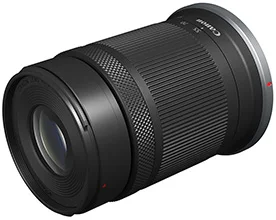
Canon RF-S55-210mm F5-7.1 IS STM
Black RF-S-mount lens
Choose the RF-S 55-210mm for a light first telephoto on an R50 or R10. It fits nearby animals, travel details, and occasional daylight wildlife.
Main limit: 210mm is restrictive for small birds and distant wildlife; f/7.1 also limits dim-light action.
Read the RF-S55-210mm F5-7.1 IS STM product profileView the exact lens on AmazonBest for distant wildlife
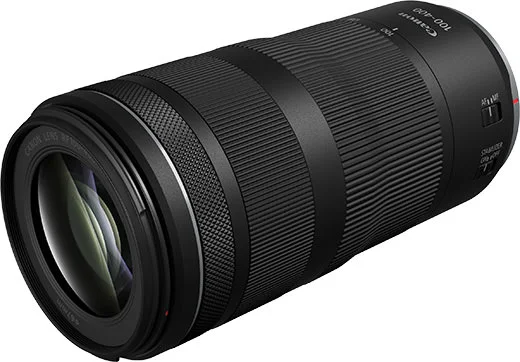
Canon RF100-400mm F5.6-8 IS USM
Black RF-mount lens
Choose the RF 100-400mm when birds and distant animals drive the purchase. Its longer reach reduces the need for heavy cropping while keeping the lens portable.
Main limit: It adds 365 g over the 55-210mm and reaches only f/8 at 400mm.
Read the RF100-400mm F5.6-8 IS USM product profileView the exact lens on AmazonCompare the recommended systems
| Decision factor | Canon RF-S55-210mm F5-7.1 IS STM | Canon RF100-400mm F5.6-8 IS USM |
|---|---|---|
| Compatibility | Canon RF mount; APS-C coverage. Full-frame RF bodies use crop mode. | Canon RF; full-frame and APS-C coverage |
| Focal range | 55-210mm; 88-336mm-equivalent view on R50/R10/R7 | 100-400mm; 160-640mm-equivalent view on R50/R10/R7 |
| Lens weight | 270 g / 9.5 oz | 635 g / 22.4 oz |
| Maximum aperture | f/5-7.1 | f/5.6-8 |
| Stabilization | Optical IS; up to 4.5 stops claimed by Canon | Optical IS; up to 5.5 stops claimed by Canon |
| Recommended use | Nearby animals, travel and a light beginner kit | Birds and distant animals in daylight |
| Main limitation | 210mm is restrictive for small birds and distant wildlife; f/7.1 also limits dim-light action. | It adds 365 g over the 55-210mm and reaches only f/8 at 400mm. |
| Exact US offer | Black RF-S-mount lens View the exact lens on Amazon | Black RF-mount lens View the exact lens on Amazon |
Lens weights exclude the camera. Stabilization figures are manufacturer claims under specified conditions, not measured results from Senkōra.
Canon RF-S 55-210mm: start light
The shorter zoom is the easier addition to a small travel bag. Choose it for larger nearby animals, outdoor portraits and details, especially if you are still discovering how often you use a telephoto. Budget-oriented describes its role in the range, not a promise about today’s retailer price.
Skip it when small birds remain tiny in the frame even at 210mm. Cropping can tighten composition but discards pixels; it does not create subject detail.
Canon RF 100-400mm: prioritize distant wildlife
The longer zoom is the more useful choice when you cannot safely or responsibly move closer. It reaches 400mm and supports full-frame RF bodies as well as APS-C. Support the lens with your left hand, rather than letting its weight pull against the camera grip.
Its f/8 maximum aperture at 400mm makes daylight the easiest setting. If your main subject is fast wildlife at dawn or in deep woodland, neither lens is a substitute for a brighter telephoto.
What changes on the EOS R50, R10 and R7?
All three are Canon APS-C RF-mount cameras, so both lenses fit without an adapter. The same focal length gives the same angle of view across these bodies; changing from an R50 to an R7 does not make the lens longer.
EOS R50: the 270 g zoom keeps the small body easy to carry. The 100-400mm is usable, but your supporting hand matters more. The R50 has no in-body stabilization, so lens IS is the relevant optical support.
EOS R10: its deeper grip and physical controls make it a practical partner for deliberate wildlife outings. It also lacks in-body stabilization. Pick the lens by subject distance rather than assuming a larger grip solves a lack of reach.
EOS R7: in-body stabilization can work with compatible lens IS. Its higher pixel count gives more cropping flexibility in favorable conditions, but does not remove the need for accurate focus, an appropriate shutter speed or enough light. Neither the body nor stabilization freezes a moving bird.
Is the extra reach worth carrying?
If most missed pictures involve distant animals, choose the 100-400mm. If the problem is leaving a bulky lens at home, choose the 55-210mm. For other mounts, compare our lightweight wildlife telephoto choices. If you are also choosing the body, use the hybrid camera guide.
Method and limits
We checked Canon US documentation on September 5, 2026 and compared mount coverage, focal range, stated weight, aperture and stabilization. Verdicts are editorial interpretations of those specifications. We did not field-test either lens, measure autofocus hit rate or establish a current retailer price.
Ready to choose?
Match the recommendation to your use, then verify the exact package, seller, US warranty and return policy. Amazon is a buying destination, not a guarantee of the best offer.
Canon RF-S55-210mm F5-7.1 IS STM
Best lightweight starting point
Black RF-S-mount lens
View the exact lens on AmazonCanon RF100-400mm F5.6-8 IS USM
Best for distant wildlife
Black RF-mount lens
View the exact lens on AmazonFive key takeaways
- The RF-S 55-210mm is the lighter beginner choice; the RF 100-400mm prioritizes distant wildlife.
- Both lenses mount directly on the EOS R50, R10 and R7.
- The RF 100-400mm adds 365 g and reaches 400mm rather than 210mm.
- Optical stabilization reduces camera shake, not animal movement.
- This comparison uses manufacturer documentation, not a Senkōra field test.
Frequently asked questions
Is the Canon RF 100-400 worth the extra weight?
Yes if birds or distant animals are the main subject: 400mm gives tighter framing than 210mm from the same position. For nearby animals and casual travel, the extra 365 g may be unnecessary.
Is 210mm enough for wildlife?
It can be enough for larger nearby animals and daylight zoo visits. On Canon APS-C it gives a 336mm-equivalent angle of view, but small birds or distant animals often need more reach.
Which lens is better for the Canon EOS R50?
Choose the RF-S 55-210mm for the lightest beginner telephoto kit. Choose the RF 100-400mm when distant wildlife is the reason for buying a lens. The R50 supports both lenses and relies on their optical stabilization.
Primary sources
- usa.canon.com · Verified 2026-09-05
- usa.canon.com · Verified 2026-09-05
- usa.canon.com · Verified 2026-09-05
- usa.canon.com · Verified 2026-09-05
- usa.canon.com · Verified 2026-09-05