
The short answer
Mount compatibility decides the shortlist first. Then balance reach, aperture, stabilization, weather protection, and the weight you can hold steadily.
Use the mount to eliminate the wrong options
Canon RF100-400mm, Nikon Z DX 50-250mm, Sony E 70-350mm G, Fujifilm XF70-300mm, and OM 75-300mm II serve different camera systems. This is a shortlist within those systems, not a reason to attach an incompatible lens or change bodies solely because another focal-length number is larger.
Separate perched birds from birds in flight
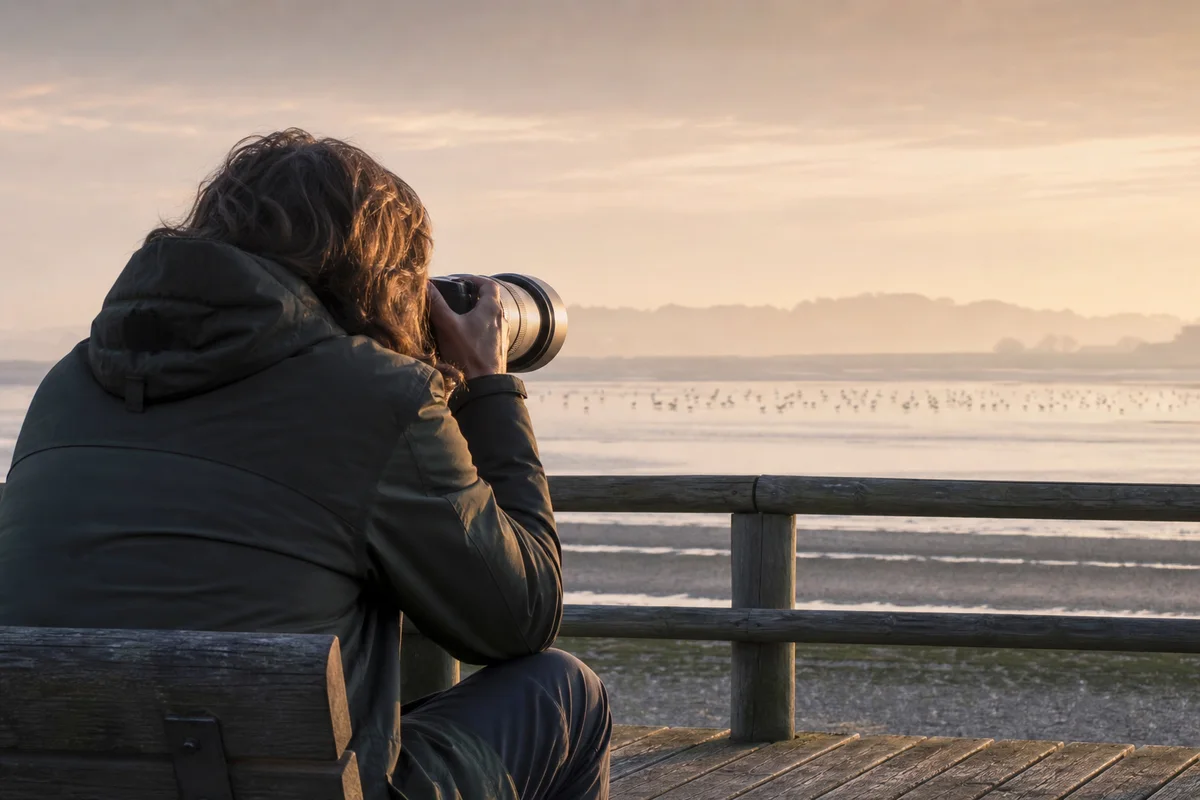
A perched bird lets you work on steadiness and precise focus. Flight adds subject acquisition, tracking, and a shutter speed suited to motion. Leave enough room in the frame to find the bird, and avoid expecting a daylight-oriented zoom to solve poor light. Compare the complete body-and-lens load you can keep ready during a long walk.
The models and their tradeoffs
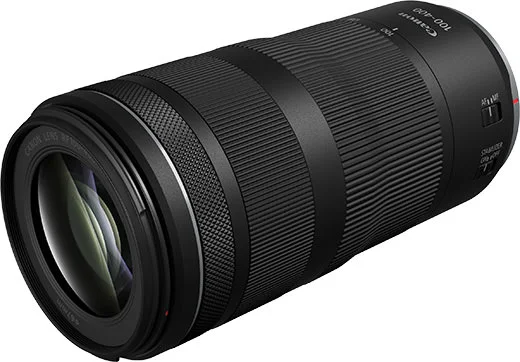
Canon RF100-400mm F5.6-8 IS USM
The Canon RF100-400mm provides long wildlife reach in a 635 g RF-mount lens. It fits both full-frame and APS-C EOS R cameras and uses optical stabilization for steadier framing.
Main limitation: At 400mm the maximum aperture is f/8, so fast wildlife in shade can demand high ISO.
See the exact configuration and specifications.
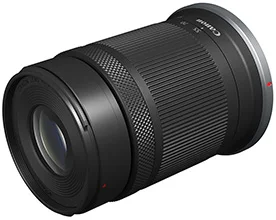
Canon RF-S55-210mm F5-7.1 IS STM
The Canon RF-S55-210mm is a 270 g telephoto companion for a small Canon APS-C kit. It suits nearby animals, travel details and a first experiment with longer focal lengths.
Main limitation: 210mm is restrictive for distant birds, and f/7.1 at the long end limits dim-light action.
See the exact configuration and specifications.
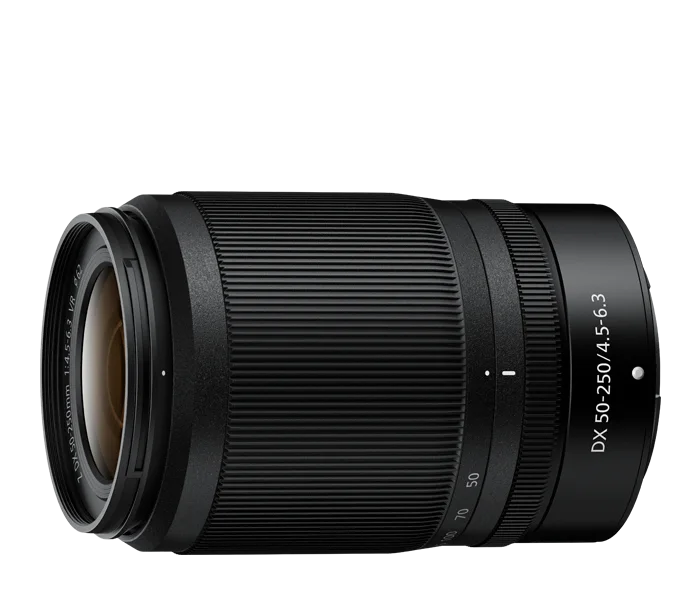
Nikon NIKKOR Z DX 50-250mm f/4.5-6.3 VR
The NIKKOR Z DX 50-250mm adds a retractable, optically stabilized telephoto to a Nikon DX travel kit. It complements the shorter DX 16-50mm without the bulk of a large wildlife lens.
Main limitation: DX coverage and 250mm maximum focal length limit its role as a full-frame or distant-bird solution.
See the exact configuration and specifications.
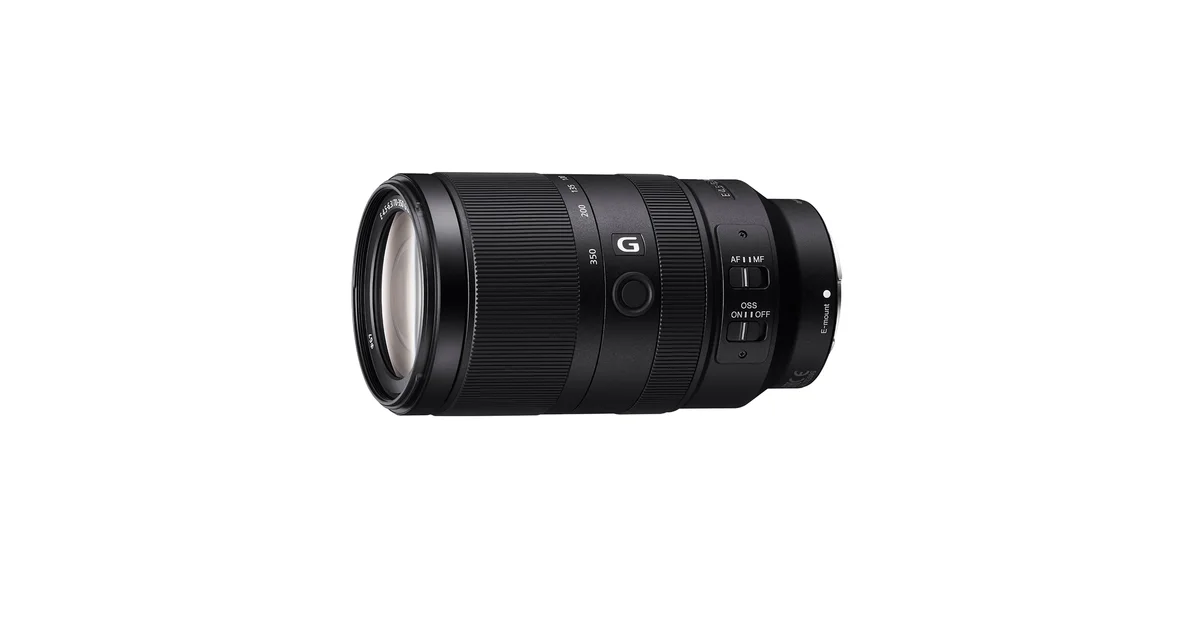
Sony E 70-350mm F4.5-6.3 G OSS
The Sony E 70-350mm G OSS offers long reach for Sony APS-C wildlife trips with optical stabilization. Its 625 g weight keeps it within reach of a practical hiking kit.
Main limitation: It covers APS-C, and f/6.3 at the long end is not a bright aperture for moving wildlife at dusk.
See the exact configuration and specifications.
Fujifilm XF70-300mmF4-5.6 R LM OIS WR
The Fujifilm XF70-300mm combines wildlife reach, optical stabilization and weather-resistant lens construction in a 580 g X-mount zoom. It is a practical travel partner for an existing Fujifilm system.
Main limitation: The barrel extends during zooming; the lens does not make an unsealed camera body weather resistant.
See the exact configuration and specifications.
OM System M.Zuiko Digital ED 75-300mm F4.8-6.7 II
The M.Zuiko 75-300mm II is a compact Micro Four Thirds route to distant daylight subjects. Its 150-600mm-equivalent view makes careful framing and a steady hold important.
Main limitation: The f/4.8-6.7 aperture is slow, and the lens has no optical stabilization of its own.
See the exact configuration and specifications.
How we reached this recommendation
This is an editorial comparison of the documented products and their intended uses, not a hands-on test. The manufacturer references listed below support the specifications; the recommendations describe practical tradeoffs rather than measured performance. We do not reproduce retailer prices or guarantee availability.
Compare the exact configurations
| Product | Configuration | Before you choose |
|---|---|---|
| Canon RF100-400mm F5.6-8 IS USM | Black RF-mount lens | Confirm RF-mount compatibility and enough carrying support for the camera plus lens. |
| Canon RF-S55-210mm F5-7.1 IS STM | Black RF-S-mount lens | Use it on an APS-C EOS R body; a full-frame RF body uses a cropped image area. |
| Nikon NIKKOR Z DX 50-250mm f/4.5-6.3 VR | Black Nikon Z DX lens | Check that the camera uses Nikon Z mount and allow for the extended lens length while shooting. |
| Sony E 70-350mm F4.5-6.3 G OSS | Black Sony E APS-C lens | Confirm the E 70-350mm G OSS model and assess the balance on your camera grip. |
| Fujifilm XF70-300mmF4-5.6 R LM OIS WR | Black Fujifilm X-mount lens | Check X-mount fit and leave room for the hood and extended barrel in the shooting position. |
| OM System M.Zuiko Digital ED 75-300mm F4.8-6.7 II | Black Micro Four Thirds lens | Check the Mark II lens and the stabilization available in your Micro Four Thirds body. |
Recommended gear
Explore the products in this guide
Review the key fit for each recommendation, then confirm the current offer and seller details directly on Amazon.
Canon
Canon RF100-400mm F5.6-8 IS USM
The Canon RF100-400mm provides long wildlife reach in a 635 g RF-mount lens. It fits both full-frame and APS-C EOS R cameras and uses optical stabilization for steadier framing.
Canon
Canon RF-S55-210mm F5-7.1 IS STM
The Canon RF-S55-210mm is a 270 g telephoto companion for a small Canon APS-C kit. It suits nearby animals, travel details and a first experiment with longer focal lengths.
Nikon
Nikon NIKKOR Z DX 50-250mm f/4.5-6.3 VR
The NIKKOR Z DX 50-250mm adds a retractable, optically stabilized telephoto to a Nikon DX travel kit. It complements the shorter DX 16-50mm without the bulk of a large wildlife lens.
Sony
Sony E 70-350mm F4.5-6.3 G OSS
The Sony E 70-350mm G OSS offers long reach for Sony APS-C wildlife trips with optical stabilization. Its 625 g weight keeps it within reach of a practical hiking kit.
Fujifilm
Fujifilm XF70-300mmF4-5.6 R LM OIS WR
The Fujifilm XF70-300mm combines wildlife reach, optical stabilization and weather-resistant lens construction in a 580 g X-mount zoom. It is a practical travel partner for an existing Fujifilm system.
OM System
OM System M.Zuiko Digital ED 75-300mm F4.8-6.7 II
The M.Zuiko 75-300mm II is a compact Micro Four Thirds route to distant daylight subjects. Its 150-600mm-equivalent view makes careful framing and a steady hold important.
Five key takeaways
- Select the lens for your camera mount and sensor coverage first.
- Birds in flight require room for tracking as well as tight framing.
- Long-end aperture and available light matter alongside focal length.
Frequently asked questions
Is more reach always better for birds in flight?
No. A very narrow view makes a moving bird harder to find and follow. Use enough reach for detail while leaving room to acquire and track the subject.
Will optical stabilization freeze a flying bird?
No. It reduces camera shake. Subject motion still requires an appropriate shutter speed, which may mean raising ISO in dim light.
Primary sources
- usa.canon.com · Verified 2026-07-22
- usa.canon.com · Verified 2026-07-22
- nikonusa.com · Verified 2026-07-22
- electronics.sony.com · Verified 2026-07-22
- fujifilm-x.com · Verified 2026-07-22
- explore.omsystem.com · Verified 2026-07-22