
The short answer
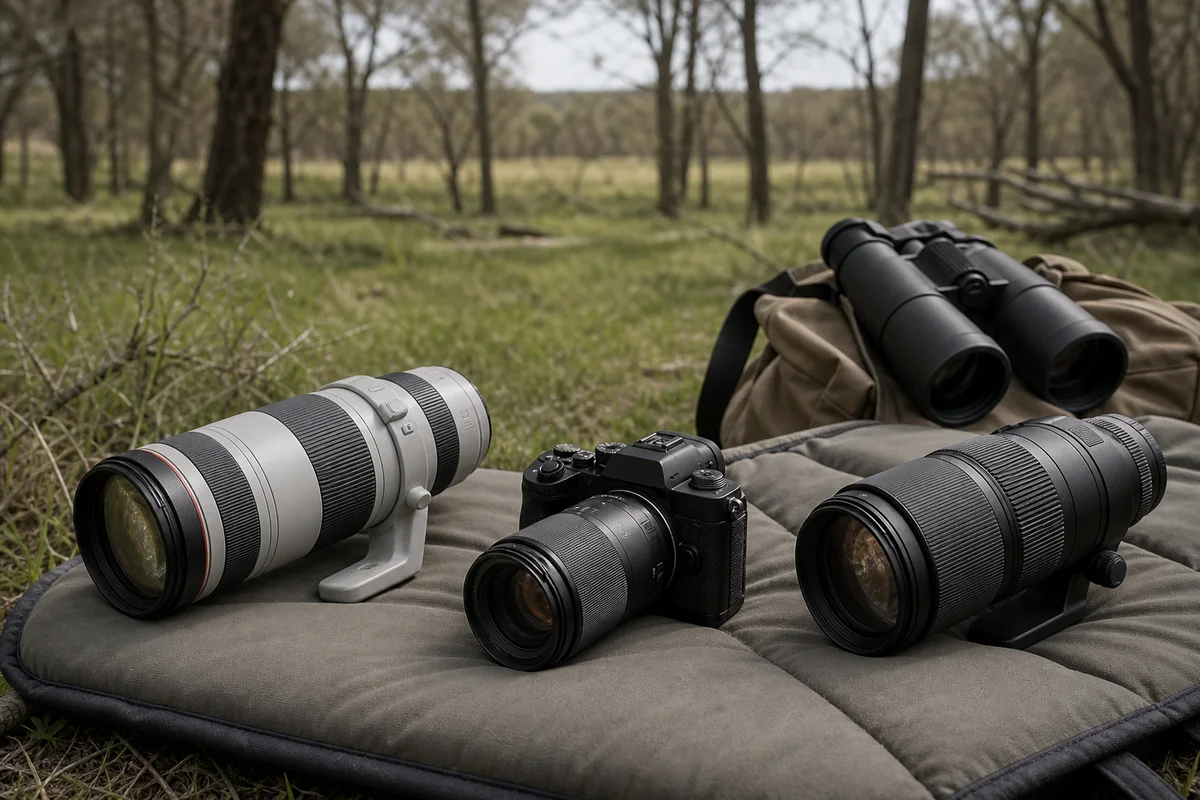
The RF100-400mm offers more reach; the RF-S55-210mm forms the smaller APS-C kit. Choose portability first or distant-subject reach first.
Start with how far away the animal usually is
The RF100-400mm is the stronger choice for distant wildlife from paths, hides, or overlooks. The RF-S55-210mm is easier to add to a small APS-C travel kit when animals are closer and photography is one part of the outing. Buying the smaller lens for subjects that always require heavy cropping can defeat the weight saving.
Account for light as well as reach
Both lenses have relatively modest maximum apertures at the long end. Stabilization helps reduce camera shake, but a moving bird still needs a sufficiently fast shutter speed. The RF-S model is designed for APS-C coverage; verify camera compatibility and cropping before considering it for a full-frame EOS R body.
The models and their tradeoffs
Canon RF100-400mm F5.6-8 IS USM
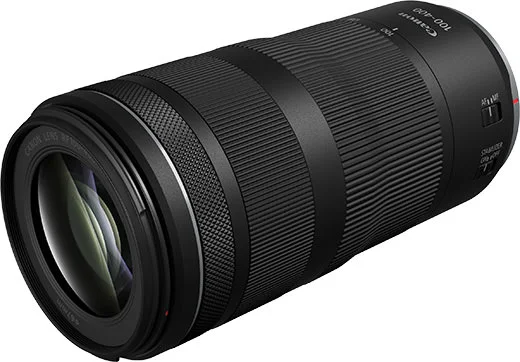
The Canon RF100-400mm provides long wildlife reach in a 635 g RF-mount lens. It fits both full-frame and APS-C EOS R cameras and uses optical stabilization for steadier framing.
Main limitation: At 400mm the maximum aperture is f/8, so fast wildlife in shade can demand high ISO.
See the exact configuration and specifications.
Canon RF-S55-210mm F5-7.1 IS STM
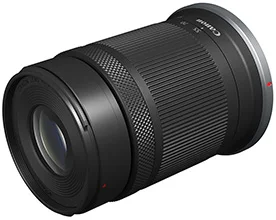
The Canon RF-S55-210mm is a 270 g telephoto companion for a small Canon APS-C kit. It suits nearby animals, travel details and a first experiment with longer focal lengths.
Main limitation: 210mm is restrictive for distant birds, and f/7.1 at the long end limits dim-light action.
See the exact configuration and specifications.
Canon EOS R10
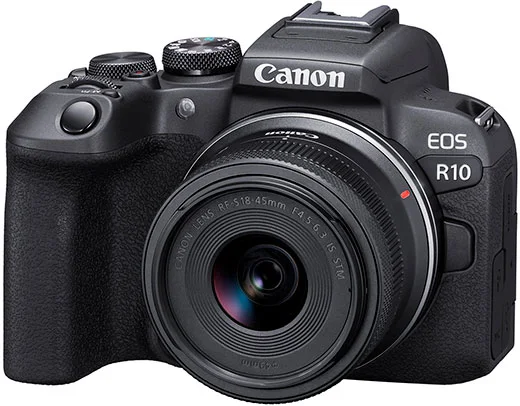
The EOS R10 offers a more substantial grip and direct controls for a traveler learning to follow wildlife. The included 18-45mm zoom covers general travel; distant birds need another lens.
Main limitation: No in-body stabilization; a wildlife telephoto adds weight and cost beyond this starter kit.
See the exact configuration and specifications.
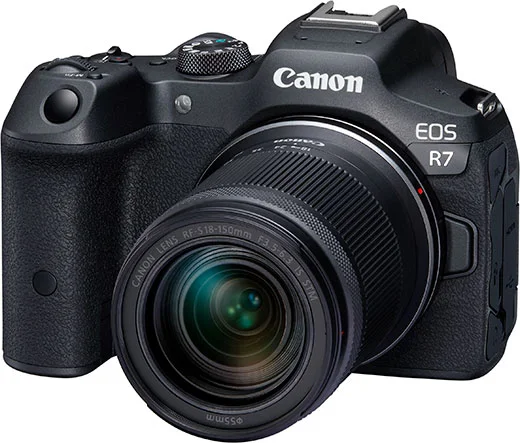
Canon EOS R7
The EOS R7 is the Canon APS-C choice for photographers who put wildlife handling and in-body stabilization ahead of the smallest travel body. This is a body-only purchase.
Main limitation: A long lens, spare power and support can make the completed wildlife system much heavier than the body specification suggests.
See the exact configuration and specifications.
How we reached this recommendation
This is an editorial comparison of the documented products and their intended uses, not a hands-on test. The manufacturer references listed below support the specifications; the recommendations describe practical tradeoffs rather than measured performance. We do not reproduce retailer prices or guarantee availability.
Compare the exact configurations
| Product | Configuration | Before you choose |
|---|---|---|
| Canon EOS R10 | Black body with RF-S18-45mm F4.5-6.3 IS STM kit lens | Plan the RF or RF-S telephoto separately and try the grip with that lens mounted. |
| Canon EOS R7 | Black body only | Include the intended RF telephoto, memory cards and battery plan in the purchase budget. |
| Canon RF100-400mm F5.6-8 IS USM | Black RF-mount lens | Confirm RF-mount compatibility and enough carrying support for the camera plus lens. |
| Canon RF-S55-210mm F5-7.1 IS STM | Black RF-S-mount lens | Use it on an APS-C EOS R body; a full-frame RF body uses a cropped image area. |
Recommended gear
Explore the products in this guide
Review the key fit for each recommendation, then confirm the current offer and seller details directly on Amazon.
Canon
Canon RF100-400mm F5.6-8 IS USM
The Canon RF100-400mm provides long wildlife reach in a 635 g RF-mount lens. It fits both full-frame and APS-C EOS R cameras and uses optical stabilization for steadier framing.
Canon
Canon RF-S55-210mm F5-7.1 IS STM
The Canon RF-S55-210mm is a 270 g telephoto companion for a small Canon APS-C kit. It suits nearby animals, travel details and a first experiment with longer focal lengths.
Canon
Canon EOS R10
The EOS R10 offers a more substantial grip and direct controls for a traveler learning to follow wildlife. The included 18-45mm zoom covers general travel; distant birds need another lens.
Canon
Canon EOS R7
The EOS R7 is the Canon APS-C choice for photographers who put wildlife handling and in-body stabilization ahead of the smallest travel body. This is a body-only purchase.
Five key takeaways
- RF100-400mm favors distant subjects; RF-S55-210mm favors a smaller APS-C kit.
- Stabilization cannot freeze a moving animal.
- RF-S coverage and RF full-frame coverage are different.
Frequently asked questions
Which lens makes more sense for birds across a pond?
The RF100-400mm gives the tighter framing. Very small or very distant birds can still require more reach, a closer legal viewpoint, or accepting a wider environmental image.
Which is easier for family travel with occasional wildlife?
The RF-S55-210mm is the smaller addition to an APS-C kit, provided its reach is enough for the animals you expect to photograph.
Primary sources
- usa.canon.com · Verified 2026-07-22
- usa.canon.com · Verified 2026-07-22
- usa.canon.com · Verified 2026-07-22
- usa.canon.com · Verified 2026-07-22