
Our travel threshold
This guide defines lightweight travel binoculars as models around 17.5 ounces or less. The threshold captures compact 8x30, 8x32, and 10x30 instruments while keeping the shortlist meaningfully separate from full-size 8x42 models.
Weight is only half of the packing decision. External dimensions determine whether binoculars fit a jacket pocket, daypack compartment, or small camera bag without displacing other equipment.
Verified compact comparison
| Model | Weight | Listed dimensions | Magnification | Travel role |
|---|---|---|---|---|
| Vortex Diamondback HD 8x32 | 15.9 oz | 4.7 x 4.4 x 2.0 in | 8x | Lowest listed weight in this set |
| Nikon MONARCH M7 8x30 | 16.4 oz | 4.7 x 4.9 x 1.9 in | 8x | Balanced general-travel format |
| Nikon PROSTAFF P7 10x30 | 17.1 oz | 4.9 x 5.1 x 2.0 in | 10x | More reach for distant stationary subjects |
The table reports retained US catalog data, not independent measurements. Confirm the exact current variant before ordering, particularly where model families contain several magnifications.
How the candidates differ in a travel bag
Vortex Diamondback HD 8x32: lowest documented carry weight
At a listed 15.9 ounces, the Vortex is the lightest record in this set. Its 8x32 format suits general daylight observation without moving to a smaller pocket objective. Because its retained catalog status is not as definitive as the Nikon records, verify the exact US listing and specifications at purchase time.
Nikon MONARCH M7 8x30: compact 8x balance
The retained record lists 16.4 ounces and dimensions of 4.7 x 4.9 x 1.9 inches. Eight-power magnification is the more forgiving choice for general sightseeing from trails, vehicles, or boats, where hand movement and limited setup time matter.
Nikon PROSTAFF P7 10x30: compact reach
The verified product is the PROSTAFF P7 10x30, not an 8x30 variant. It weighs a listed 17.1 ounces and remains within this guide’s threshold. Choose it for distant, relatively stationary details only when the additional magnification is worth greater sensitivity to hand movement.
When 8x42 earns the extra space
An 8x42 format is the better comparison for frequent dawn, dusk, or shaded-forest use and for longer observation sessions. The retained Vortex Diamondback HD 8x42 record lists 21.3 ounces, while the Nikon MONARCH M7 8x42 lists 23.6 ounces. That is a clear transport penalty relative to this compact group, so choose it deliberately rather than treating it as the same travel category.
See the 8x42 nature guide for that low-light decision. For the different problem of finding and following moving birds, use the compact birding guide.
Packing checks
Allow room for lens caps, a strap, and a lightly padded pouch when comparing dimensions. Keep binoculars away from pressure created by laptops or rigid camera equipment. Before travel, verify destination rules and the relevant carrier or security guidance rather than relying on a universal baggage assumption.
Method and limits
We compared official manufacturer pages with retained Senkōra US catalog records on August 26, 2026. We did not weigh the products, test them during travel, or independently measure optical performance. This shortlist evaluates documented transport burden and format tradeoffs; it does not claim measured optical superiority or real-time availability.
Compare the exact configurations
| Product | Configuration | Before you choose |
|---|---|---|
| Nikon MONARCH M7 8x42 | 8x magnification, 42mm objective | Check the 8x42 marking and view the entire field while wearing your usual glasses. |
| Nikon MONARCH M7 8x30 | 8x magnification, 30mm objective | Compare it with the 8x42 in the lighting you actually use, including eyecup position with glasses. |
| Nikon PROSTAFF P7 10x30 | 10x magnification, 30mm objective | Verify the 10x30 model; an 8x30 has different steadiness and viewing characteristics. |
| Vortex Diamondback HD 8x42 | 8x magnification, 42mm objective | Try the 8x42 with your normal glasses and carry strap before committing to all-day use. |
| Vortex Diamondback HD 8x32 | 8x magnification, 32mm objective | Confirm the 8x32 version and test focus-wheel access with the gloves you use outdoors. |
Recommended gear
Explore the products in this guide
Review the key fit for each recommendation, then confirm the current offer and seller details directly on Amazon.
Vortex
Vortex Diamondback HD 8x32
The Vortex Diamondback HD 8x32 is the smaller-objective Diamondback option for daylight birding and travel. It is relevant when binoculars must fit beside a camera rather than replace it.

Nikon
Nikon MONARCH M7 8x30
The Nikon MONARCH M7 8x30 is the compact M7 choice for daylight birding and travel. It retains 8x magnification while reducing the objective size and carrying burden.
Nikon
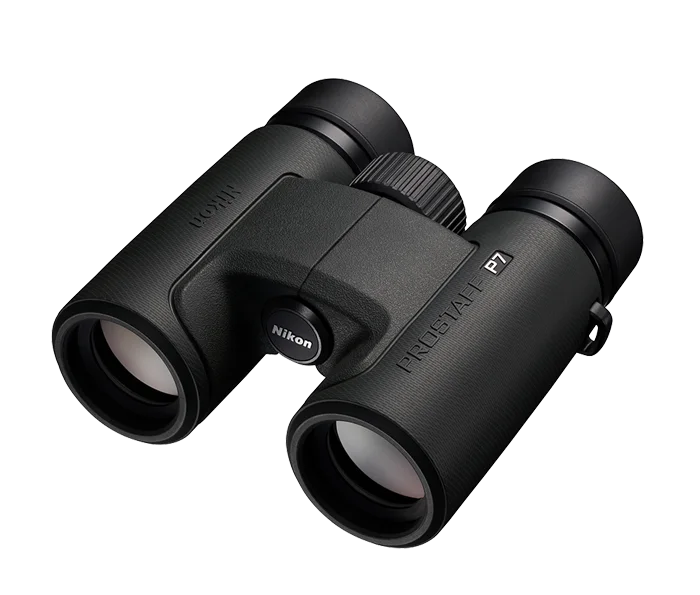
Nikon PROSTAFF P7 10x30
The Nikon PROSTAFF P7 10x30 combines 10x magnification with a compact 30mm objective. It suits daylight travel when distant detail matters and a full-size binocular is too bulky.
Vortex
Vortex Diamondback HD 8x42
The Vortex Diamondback HD 8x42 is a full-size 8x option for nature walks and general birding. Compare it with the 8x32 when choosing between a larger objective and a smaller carry kit.

Nikon
Nikon MONARCH M7 8x42
The Nikon MONARCH M7 8x42 combines 8x magnification, a full-size objective and ED glass for birding and nature walks. It is the larger-objective option beside the M7 8x30.
Five key takeaways
- This guide prioritizes transport weight and packed size, not specialized birding or low-light performance.
- The three compact records weigh 15.9 to 17.1 ounces and fit within a 17.5-ounce editorial threshold.
- Eight-power models are the more forgiving general-travel format for vehicles, boats, trails, and sightseeing.
- A full-size 8x42 can improve viewing comfort in dim conditions but adds meaningful weight and bulk.
- Personal eye fit and handling cannot be proven from dimensions or a specification sheet.
Frequently asked questions
What size binocular is practical for travel?
An 8x30 or 8x32 model is a useful balance of transport weight and general handling. A 10x30 can suit distant subjects, while an 8x42 is the stronger comparison for regular low-light use.
What counts as lightweight in this guide?
We use approximately 17.5 ounces as an editorial threshold. It includes the three verified compact records without extending the category to heavier full-size models.
Should packed dimensions matter as much as weight?
Yes. A slightly lighter binocular may still fit a bag poorly, so compare all listed dimensions and allow space for caps, a strap, and a protective pouch.
Are binoculars allowed in carry-on baggage?
Ordinary binoculars are generally suitable for carry-on baggage, but the relevant security authority and destination rules have final authority.
Primary sources
- nikonusa.com · Verified 2026-08-26
- nikonusa.com · Verified 2026-08-26
- vortexoptics.com · Verified 2026-08-26