

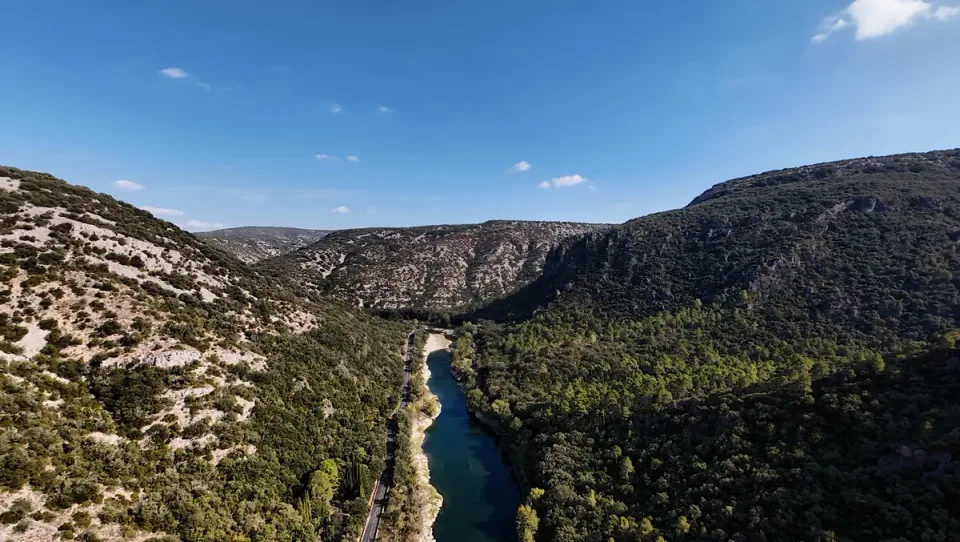
A river can fill the foreground or become a thin line between hills. Both photographs can describe the same stretch of water, yet leave the viewer with a different understanding of the place.
On September 27, 2026, Philippe Contal took a DJI Avata 2 to the Hérault Gorge in southern France. His aim was to explore the river from close to the water and from a more elevated viewpoint. The location was a few kilometers upstream from Saint-Guilhem-le-Désert. He did not overfly the village.
For a landscape photographer or travel filmmaker, the useful lesson is how those perspectives work together. One brings the viewer into the scene. Another explains where the scene sits. A sequence becomes stronger when each image has a different job.
Watch the river change its role
The source report describes a 41-second film that begins with a downward view of the river and the road beside it, then looks farther into the gorge. The changing direction rearranges the banks within the frame.
The still photographs offer a different pace. They let you examine the reflection, the edge of a bank, or the relationship between the water and distant hills without the next camera movement replacing the view.
Start with the water as a surface
In the first photograph, bright sky reflections occupy the center of the river. The rocky banks and trees guide the eye toward the distance. The water is more than a route through the landscape: it is a substantial subject in its own right.
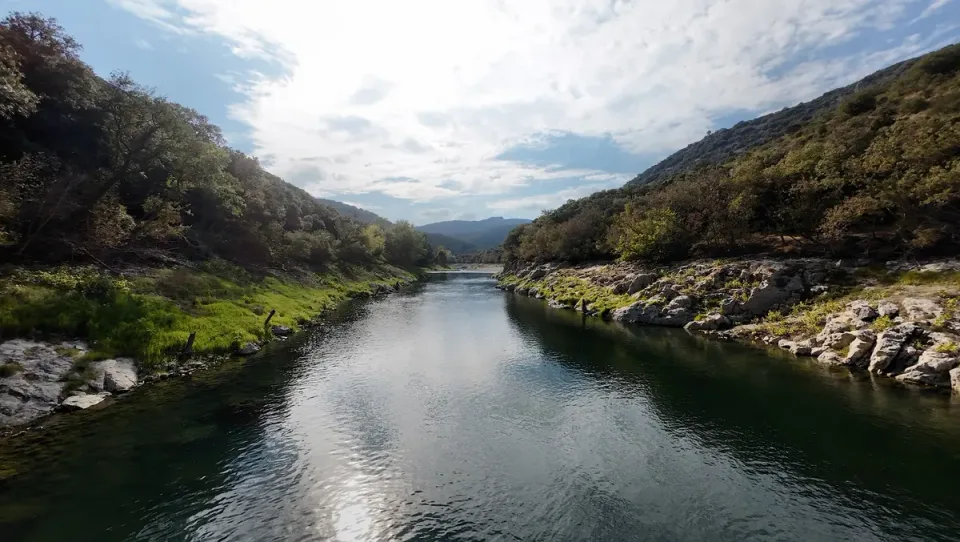
Looking in another direction changes the balance. The river appears darker, a pale rocky bank defines the left edge, and a shaded wooded slope anchors the right. The same subject now has a different arrangement of light and dark.
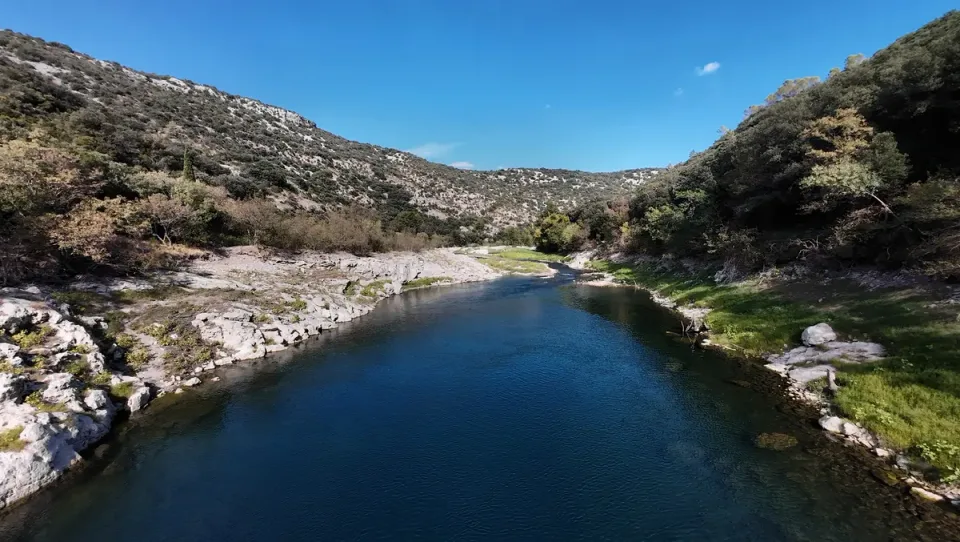
Before seeking another height, consider another orientation within the permitted flight area. Ask where the reflection sits, which bank receives the light, and whether the brightest area supports the subject. Those are composition decisions you can make with the equipment you already own.
Turn sideways to give the bank a voice
A river sequence does not need every image to look toward a distant vanishing point. The third photograph turns attention toward a bank, where green vegetation, pale rock, and trees meet the water.
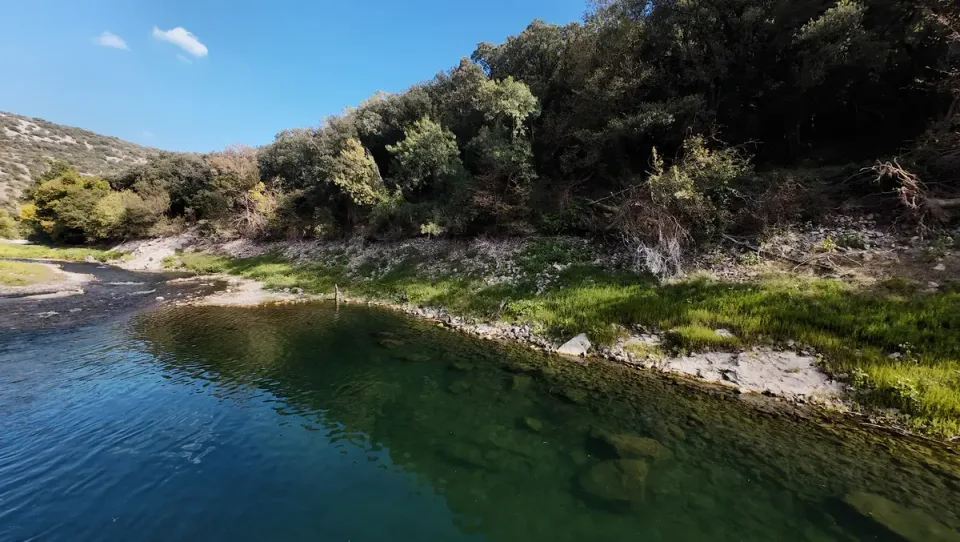
This gives the series a useful pause. After a view that carries the eye into the distance, a sideways image asks the viewer to examine texture and edges. For a short edit, that change can give the next wide view a clearer purpose.
Pull back to explain the gorge
The elevated views make the river a smaller part of a larger arrangement. Both slopes, the adjoining road, and the vegetation can be read together. The photograph explains how the water passes through the terrain.
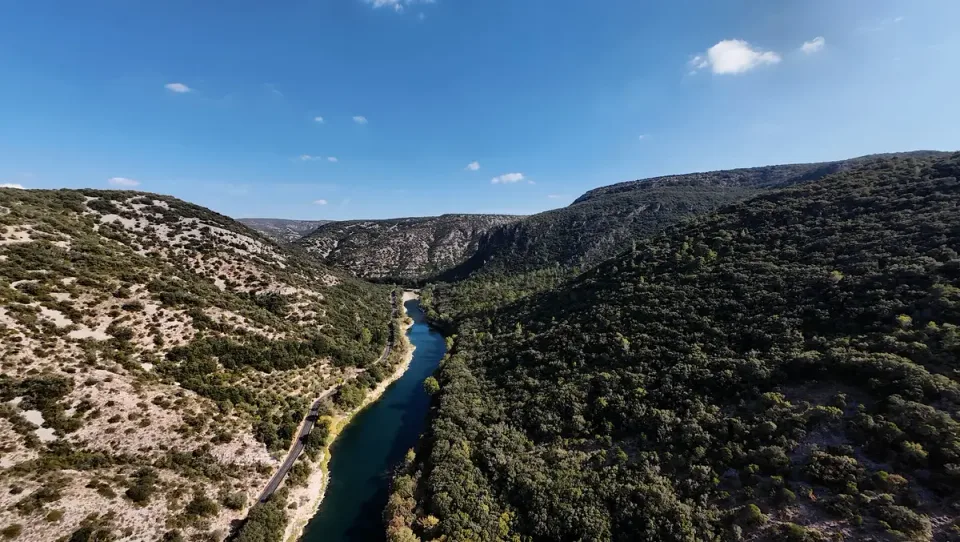
In another frame, an exposed pale strip of rock follows the water. Its shape adds a line to the composition. It does not, by itself, establish the river’s depth, flow, or a change in water level.
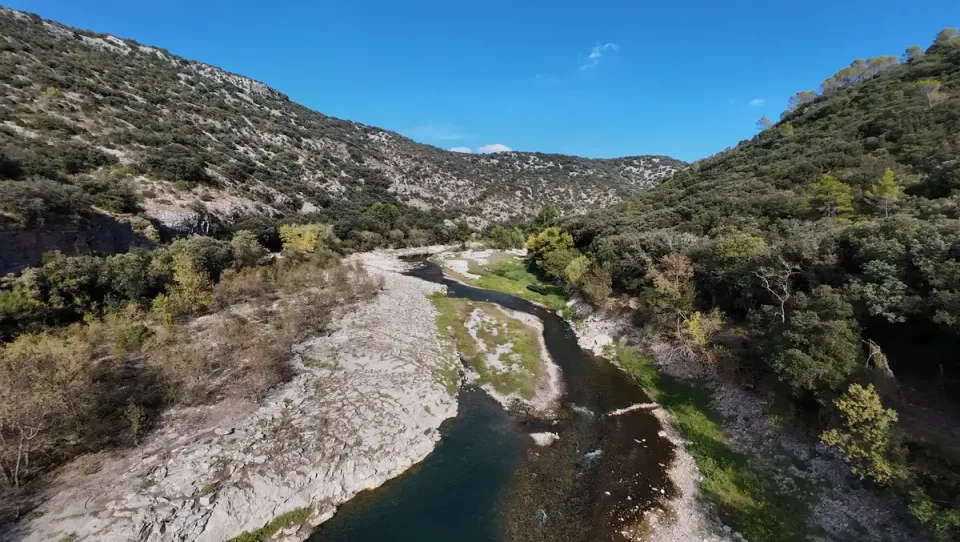
The final view looks toward layers of distant hills while reflected light marks the nearer water. That succession gives the image depth beyond the immediate stretch of river.
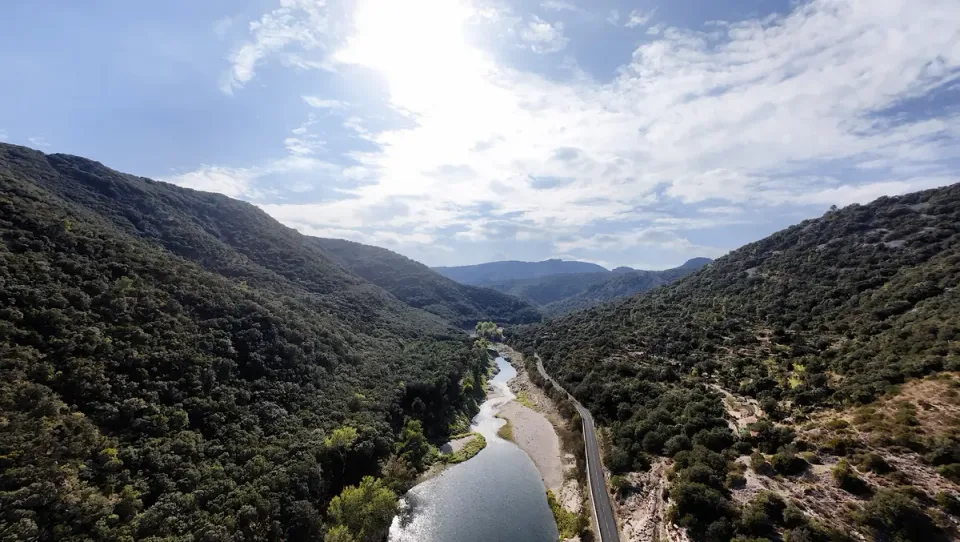
Plan an edit, not a collection of duplicates
These photographs suggest three useful roles for a landscape sequence:
- Introduce the place. A broad view shows how the river fits between the slopes.
- Bring the viewer closer. Water and reflections give the sequence a more immediate visual experience.
- Add a detail or change of direction. A bank, a pale edge, or another orientation contributes information rather than repeating the establishing frame.
That is a proposed editorial sequence, not a reconstruction of the flight order. The photographs can be arranged differently depending on the story. Camera angle matters alongside position: climbing while keeping the same direction may contribute less than a carefully chosen change in framing.
Exact altitudes, flight mode, and exposure settings were not recorded in this account. “Near the water” describes the perspective; it is not a prescribed clearance or a suggested maneuver. Check local requirements, airspace, authorized ground access, people and wildlife, observation, and conditions before considering any flight. This French outing does not establish permission for a US river location; consult FAA guidance for your US operation.
Choose gear around the way you want to work
The Avata 2 was the aircraft used for this outing. The following alternatives address different working styles, rather than identifying a winner from a comparison that did not happen.
| Creative priority | Relevant option | Practical reason | Limitation to consider |
|---|---|---|---|
| Immersive footage where camera movement carries the story | DJI Avata 2 Fly More Combo with three batteries | An FPV system uses goggles and a compatible controller to make the moving viewpoint central to the experience. | DJI states that the Avata 2 does not provide obstacle avoidance. Propeller guards do not make close passes risk-free. |
| Deliberate landscape stills and conventional aerial video | DJI Mini 4 Pro Fly More Combo with RC 2 | The screen-based workflow, three-axis mechanical gimbal, and JPEG/DNG capture suit planned framing and photo editing. | It was not used here. Battery variants and complete kit contents matter, and sensing cannot replace pilot judgment. |
Choose the Avata 2 if the immersive FPV workflow is itself part of your creative goal and you are prepared for its training and observation requirements. The selected three-battery retail bundle does not establish which exact package or how many batteries Contal brought to the river.
Choose the Mini 4 Pro if you prefer to compose landscape photographs on a controller screen. That recommendation is based on DJI specifications, not a field comparison with the Avata 2.
Keep your current drone if it can already produce the framing and files you need. A more purposeful sequence may help more than another aircraft. Additional batteries or a charging hub are only useful when your existing kit leaves a real gap; the selected Fly More packages should be checked before adding duplicate accessories.
The affiliate cards below use existing US product records and distinct product photographs. Pricing, seller, and stock have not been checked for this article.
Bring both views into the story
A photograph close to the water gives the river presence. An elevated view gives it context. The sideways bank view adds texture between them.
Before finishing your next landscape sequence, ask what each image contributes. If two frames explain the same thing, choose the stronger one. If the viewer can feel the place but cannot understand its shape, add context. If the place reads clearly but feels distant, look for an authorized viewpoint that brings a useful detail forward.
For another example of terrain shaping the picture, read Montferrand and Viviourès: start with the terrain. For a landscape approached through movement, see Canyon du Diable by FPV drone.
Recommended gear
Find your next piece of gear
Find the setup that fits your plans, then explore prices and buying options on Amazon.
DJI
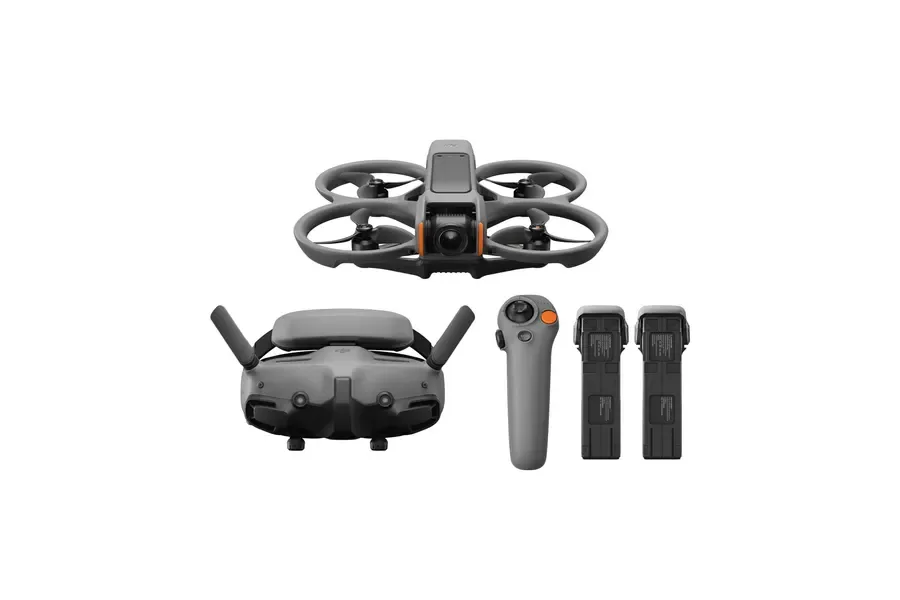
DJI Avata 2 Fly More Combo
The DJI Avata 2 is an FPV system for immersive, moving viewpoints with goggles and a compatible controller. Its role differs from a conventional drone used to compose distant landscape stills.
DJI
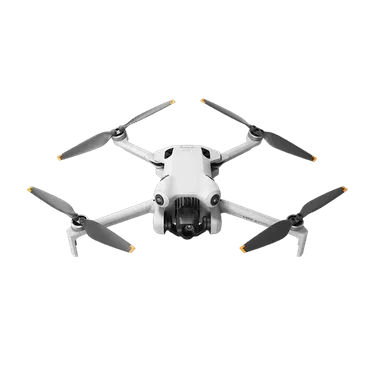
DJI Mini 4 Pro Fly More Combo
The DJI Mini 4 Pro is a compact folding drone for deliberate travel photos and conventional aerial video. It suits trips where camera control matters but pack space is limited.
Transparent evidence
Method and limitations
Independent US adaptation of Philippe Contal's first-hand September 27, 2026 account, checked against the published French article, with visual inspection of six credited photographs. YouTube metadata confirms the Senkōra video title, channel, and October 1 publication timestamp. Composition advice is editorial interpretation, not a controlled flight or camera test. Product recommendations use DJI documentation and existing US catalogue records.
- Exact flight heights, mode, camera settings, and the kit or battery count used are not documented.
- No measured image-quality, battery-endurance, or drone comparison is provided.
- The images do not establish river depth, flow rate, water-level change, or permission for a future flight.
- The Mini 4 Pro was not used on this outing. Seller, stock, and bundle contents must be checked before purchase.
Five key takeaways
- A near-surface perspective makes reflections and riverbanks dominant; an elevated view makes the river a line through the landscape.
- Changing camera direction changes the arrangement of bright water, pale rock, and shaded slopes.
- A sideways view can reveal a bank's textures instead of repeating a forward-looking river composition.
- The Avata 2 was used for this outing; the Mini 4 Pro is an editorial alternative, not a tested comparison.
- Build a sequence of distinct visual roles and keep your current drone when it can make those images.
Frequently asked questions
Where were these drone photographs made?
In the Hérault Gorge in southern France, a few kilometers upstream from Saint-Guilhem-le-Désert, on September 27, 2026. Philippe Contal reports that the village was not overflown.
What altitude and settings were used?
Exact altitudes, flight mode, camera settings, and battery count are not documented. Low and elevated describe the visual perspectives, not measured flight heights or a recommended flight profile.
Why include both low and elevated views of a river?
A lower-looking view can emphasize water, reflections, and the banks. An elevated view can explain how the river runs between slopes. Each contributes a different part of the landscape story.
Was the DJI Mini 4 Pro compared with the Avata 2?
No. Only the Avata 2 was used for this field account. The Mini 4 Pro recommendation is an editorial interpretation of DJI specifications for readers who prefer conventional screen-based composition.
Can I reproduce this flight near the water?
The report does not establish current access or flight permission and is not a flight route. Check the applicable local rules, airspace, authorized ground access, observation arrangement, and conditions independently.
Primary sources
- youtube.com · Verified 2026-10-03
- dji.com · Verified 2026-10-03
- dji.com · Verified 2026-10-03
- dji.com · Verified 2026-10-03
- faa.gov · Verified 2026-10-03