

What the $1,000 launch-price ceiling means
This guide applies a strict and repeatable rule: an official United States camera kit must have launched at an MSRP or SRP no higher than $1,000. The kit must include a usable general-purpose lens. Temporary discounts, marketplace bundles, used products, and body-only prices do not qualify.
Budget eligibility is the purpose of this page. It is not a second ranking of the lightest travel systems. Readers whose first constraint is carried weight should use the lightweight travel camera guide; a camera can qualify here while being heavier, and a lightweight camera can be excluded because its official kit launch price exceeded the ceiling.
That approach produces a shorter list, but it avoids the common problem of calling a camera “under $1,000” when the lens pushes the working setup beyond the limit.
Quick selection
| Best fit | Official US kit | Official launch MSRP/SRP | Main limitation |
|---|---|---|---|
| Best overall | Canon EOS R50 + RF-S 18-45mm | $799.99 | Limited compact RF-S lens range |
| Best low-cost stills kit | Canon EOS R100 + RF-S 18-45mm | $599.99 | Fixed screen and older processor |
| Best compact hybrid | Fujifilm X-M5 + XC 15-45mm | $899.95 | No viewfinder |
| Best established lens ecosystem | Sony a6400 + 16-50mm | $999.99 | Older interface and battery platform |
These are official manufacturer figures used to define eligibility, not offers or representations of what a retailer charges today.
Best overall: Canon EOS R50
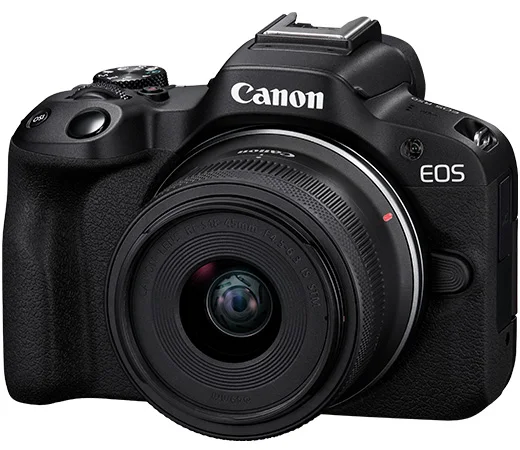
The EOS R50 has the clearest balance of beginner-friendly handling, low weight, a viewfinder, and current subject-detection autofocus. Its 18-45mm kit lens covers everyday travel scenes, people, architecture, and broad landscapes.
It lacks in-body stabilization, and Canon’s compact APS-C lens selection remains smaller than Sony’s or Fujifilm’s. Still, the kit provides the fewest major compromises for a first camera.
Best lower-cost option: Canon EOS R100
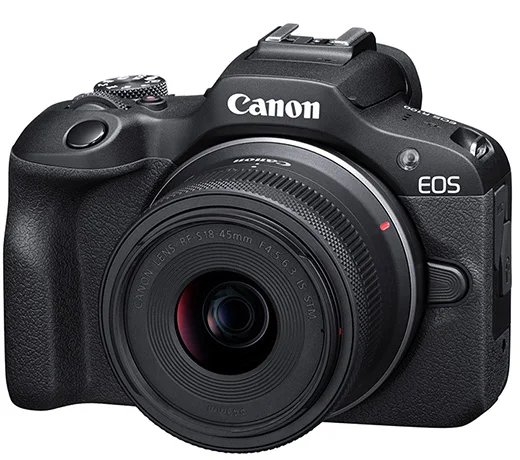
The R100 shares the basic advantage of an APS-C sensor and RF lens compatibility at a lower official launch MSRP. It is best treated as a stills-first camera. The rear screen is fixed, the processor is older, and its autofocus and video workflow are less flexible than the R50.
Choose it if the savings support a spare battery, memory card, protective insert, or future lens. If an articulating screen or simpler subject tracking matters, the R50 is the better long-term fit.
Best compact hybrid: Fujifilm X-M5
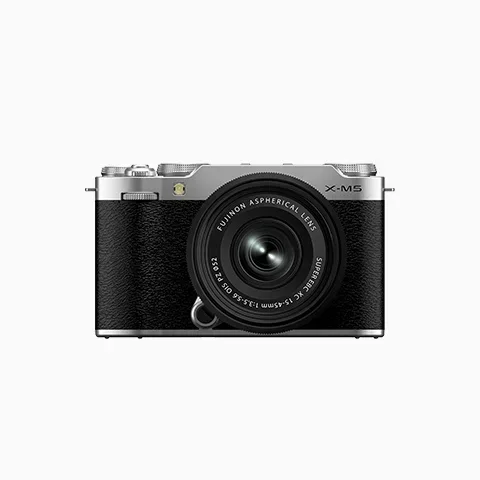
The X-M5 is the smallest body here and offers strong video-oriented controls alongside Fujifilm’s film simulations. The 15-45mm power zoom keeps the kit compact.
There is no electronic viewfinder. That omission is acceptable for travelers comfortable composing on a screen, but it is a real disadvantage in bright daylight. Confirm the exact US kit and color because body-only and other variants should not be merged.
Best established ecosystem: Sony a6400
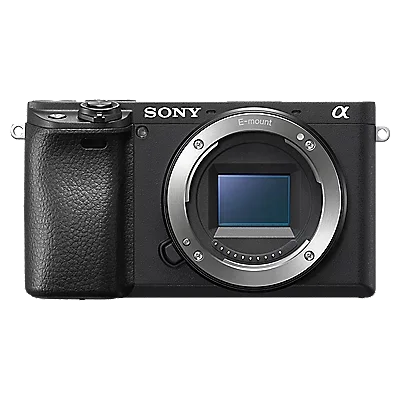
Sony’s a6400 remains useful because the E-mount APS-C lens catalog is broad and the 16-50mm kit retracts for transport. It includes a viewfinder and capable subject tracking.
Its age is the main caution. Newer bodies have more current menus, screens, stabilization options, and charging behavior. Check that the official kit is still supported and available in the United States before treating it as a durable choice.
Costs outside the camera kit
A usable kit still needs a reliable memory card and a safe carrying solution. A spare proprietary battery can be sensible for long days. Do not assume a camera includes an external charger, weather cover, high-speed card, or protective bag.
We do not combine those variable accessory costs into a false universal total. Instead, list what you need and confirm the official compatibility for the exact body.
Why some popular cameras are excluded
The Nikon Z50II 16-50mm kit launched at an official US SRP of $1,049.95, so it misses this guide’s ceiling even though a retailer may occasionally advertise it lower. Higher-end bodies are excluded for the same reason. A promotion can make them worth considering, but it cannot define an evergreen under-$1,000 recommendation.
How we evaluated
Eligibility comes from official US kit announcements or manufacturer pages checked July 19, 2026. We then considered weight, controls, autofocus, kit-lens usefulness, system path, and limitations. This is an editorial evaluation, not a physical test.
Compare the exact configurations
| Product | Configuration | Before you choose |
|---|---|---|
| Canon EOS R100 | Black body with RF-S18-45mm F4.5-6.3 IS STM kit lens | Handle the fixed screen before buying and check that the RF-S18-45mm lens is included. |
| Canon EOS R50 | Black body with RF-S18-45mm F4.5-6.3 IS STM kit lens | Check the black 18-45mm kit rather than the white body, a body-only offer or a two-lens bundle. |
| Sony Alpha 6400 | Black body with E PZ 16-50mm F3.5-5.6 OSS kit lens | Confirm the E PZ 16-50mm lens and test how your microphone affects screen visibility. |
| Fujifilm X-M5 | Black body with XC15-45mmF3.5-5.6 OIS PZ kit lens | Try screen visibility outdoors and confirm the XC15-45mm power-zoom kit. |
Recommended gear
Explore the products in this guide
Review the key fit for each recommendation, then confirm the current offer and seller details directly on Amazon.
Canon
Canon EOS R100
The EOS R100 is a small, viewfinder-equipped starting point for learning still photography with Canon RF-S lenses. Its 18-45mm kit covers everyday scenes without a large bag.
Canon
Canon EOS R50
The EOS R50 combines an electronic viewfinder with a screen that can face the photographer. It suits family outings and a first photo-and-video kit built around the small RF-S18-45mm zoom.
Fujifilm
Fujifilm X-M5
The Fujifilm X-M5 with XC15-45mm zoom is a small screen-operated system for travel photos and creator video. It is most appealing when minimum body bulk matters more than eye-level framing.
Sony
Sony Alpha 6400
The Sony a6400 with 16-50mm zoom is an E-mount travel option for photographers who want a viewfinder and a compact everyday lens, especially when they already own compatible Sony lenses.
Five key takeaways
- The $1,000 ceiling includes a manufacturer kit lens, not a body alone.
- Only official US MSRP or launch SRP is used here, never an Amazon or temporary merchant price.
- Canon's R50 is the most balanced beginner kit in the group.
- Fujifilm's X-M5 is smaller but omits a viewfinder.
- Budget for storage, power, and protection separately.
Frequently asked questions
Does the $1,000 budget include a lens?
Yes. Every main pick is an official manufacturer kit with a general-purpose lens.
Are sale prices included?
No. This guide uses official US launch MSRP or SRP so its logic does not depend on a temporary promotion.
Should I buy body only and add a lens?
Only if you already know the lens you need. For a first travel camera, an official kit is easier to compare and usually more practical.
Is used equipment included?
No. Used condition, warranty, shutter count, and seller risk require a separate methodology.
Primary sources
- usa.canon.com · Verified 2026-07-19
- usa.canon.com · Verified 2026-07-19
- fujifilm-x.com · Verified 2026-07-19
- electronics.sony.com · Verified 2026-07-19