

Who this guide is for
For a reproducible system-level comparison, see our Decision Lab: How Much Does a Complete Travel Camera Kit Really Weigh?
This guide is for travelers who want more control and image quality than a phone without building a heavy camera bag. It prioritizes cameras that can remain accessible during a walking day, fit into a compact personal-item setup, and grow into a useful lens system.
Start here when a compact camera and a light everyday lens are the main priorities. Choose the family travel guide when fast handoffs, simple operation, and photographing people dominate. Use the road trip guide when vehicle access, charging, dust, and frequent location changes define the trip. The under-$1,000 guide applies a price-eligibility rule instead of optimizing minimum system weight.
Lightweight does not mean body weight alone. A 13-ounce camera paired with a large zoom may be harder to carry than a 17-ounce body with a compact kit lens. Our comparisons therefore start with the exact US kit or body variant and identify what is, and is not, included.
Quick selection
| Best fit | Camera and variant | Camera + lens | Main reason to choose it | Important limitation |
|---|---|---|---|---|
| Best overall balance | Canon EOS R50 with RF-S 18-45mm | 17.8 oz | Viewfinder, compact body, accessible autofocus | No in-body stabilization |
| Lightest creative kit | Fujifilm X-M5 with XC 15-45mm | 17.3 oz | Smallest system here and strong video options | No viewfinder |
| Established value option | Sony a6400 with E PZ 16-50mm II | 18.0 oz | Mature E-mount lens choice and viewfinder | Older controls and battery design |
| Best controls for growing skills | Nikon Z50II with 16-50mm | 22.2 oz | Larger grip, viewfinder, current processor | Heaviest combination in this selection |
| Best high-resolution compact body | Fujifilm X-T50 with XC 15-45mm | 20.2 oz | In-body stabilization and detailed files | Not weather sealed |
Totals add the manufacturer-documented camera weight, including battery and card where defined that way, to the documented lens weight. They exclude straps, chargers, spare batteries, caps, filters, and the bag.
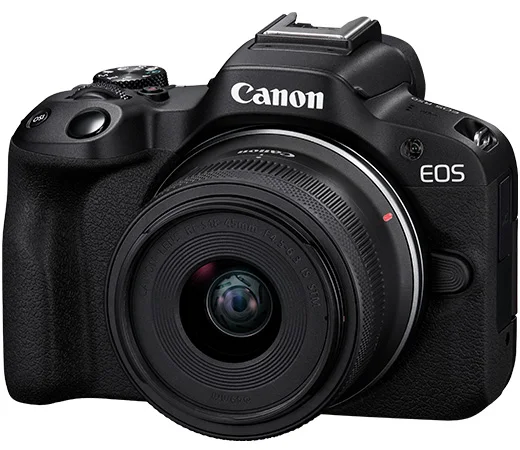
Best overall: Canon EOS R50 kit
The EOS R50 is the safest all-around recommendation in this group. It combines a 24.2-megapixel APS-C sensor, a built-in electronic viewfinder, subject-detection autofocus, and a compact retracting kit zoom. It is small enough for a day bag but shaped like a conventional camera, which helps beginners find controls and keep a stable grip.
The compromise is system depth. Canon’s compact RF-S lens range is still narrower than Sony E or Fujifilm X, and the body has no in-body image stabilization. Stabilized RF-S zooms address ordinary hand shake, but travelers planning low-light work should account for that limitation.
Choose it for mixed stills, family travel, city walks, and occasional wildlife with an additional lens. Skip it if you want extensive compact-lens choice immediately.
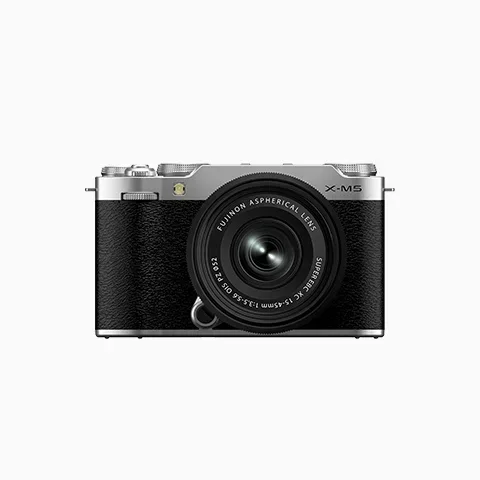
Lightest creative kit: Fujifilm X-M5
At 12.5 ounces for the body, the X-M5 is the lightest camera in this selection. The XC 15-45mm power zoom keeps the package compact, and Fujifilm’s color profiles can reduce the amount of editing needed for casual travel sharing.
The missing viewfinder is the decisive tradeoff. In bright sun, framing from the rear screen can be less comfortable. The shallow grip also matters when a larger lens is fitted. The X-M5 makes most sense when small size and hybrid stills/video use matter more than traditional camera handling.
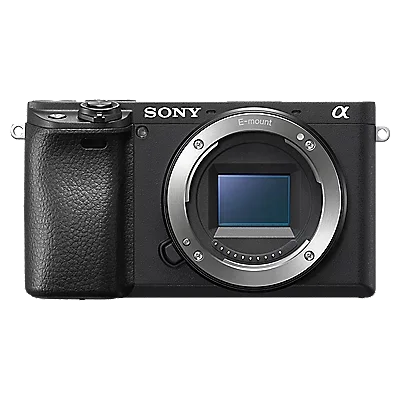
Established value option: Sony a6400
The a6400 remains relevant because its 16-50mm kit is compact and Sony’s APS-C E-mount system offers many native lenses. Its viewfinder and subject-tracking autofocus support varied travel subjects.
This is an older body, introduced in 2019. Its menus, screen behavior, charging, and handling feel less current than newer models. Continued US availability should be checked before purchase because older kits can disappear or be replaced without a formal discontinuation notice.
Best controls: Nikon Z50II
The Nikon Z50II is the heaviest body in this lightweight group, but 17.5 ounces is still manageable. The benefit is a more substantial grip, a vari-angle screen, a viewfinder, and Nikon’s newer processing platform. It is a stronger choice for a learner who expects to add a telephoto lens and wants controls that remain comfortable with it.
The 16-50mm kit carried an official US launch SRP of $1,049.95, so it does not belong in our under-$1,000 selection without a separately verified current-price policy. It belongs here because this guide is about weight, not budget.
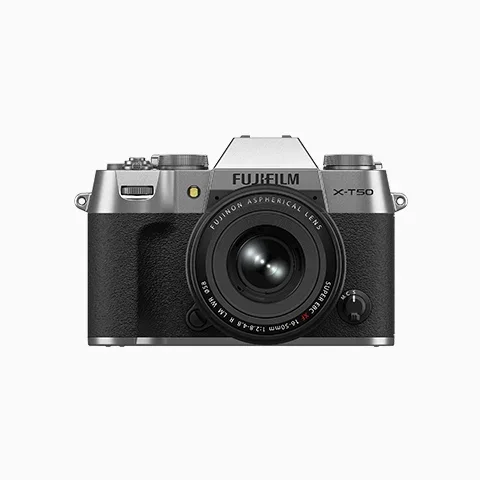
High-resolution alternative: Fujifilm X-T50
The X-T50 brings a 40.2-megapixel APS-C sensor and in-body stabilization into a compact body. It suits travelers who crop, print, or use small unstabilized prime lenses.
High resolution increases storage needs and can expose lens or technique limitations. The body is not weather sealed, and multiple US kit configurations exist. Match the exact kit before comparing price or weight.
How to choose
Start with how the camera will be carried. A camera that stays zipped inside a deep backpack will miss more pictures than a slightly heavier camera on a comfortable strap or accessible insert. Then decide whether a viewfinder is essential, especially for desert, beach, snow, or high-altitude travel.
Next, add the lens you will actually use. The kit zoom is adequate for landmarks, people, food, and everyday landscapes. Wildlife, indoor events, and night work may require another lens, changing both weight and cost.
Finally, check charging, spare batteries, memory cards, and airline rules. Lithium-ion spare batteries belong in carry-on baggage under current US aviation guidance. Confirm the latest rules before travel.
How we evaluated
We compared exact US variants using manufacturer specifications rechecked August 15, 2026. The evaluation considered body and complete one-lens system weight, viewfinder, stabilization, autofocus, lens path, documented US availability, and clear limitations. We did not handle these cameras for this guide, and no hands-on performance claim is made.
Compare the exact configurations
| Product | Configuration | Before you choose |
|---|---|---|
| Canon EOS R50 | Black body with RF-S18-45mm F4.5-6.3 IS STM kit lens | Check the black 18-45mm kit rather than the white body, a body-only offer or a two-lens bundle. |
| Nikon Z50II | Body with NIKKOR Z DX 16-50mm f/3.5-6.3 VR kit lens | Verify the single 16-50mm lens kit. A two-lens package is a different offer and carrying calculation. |
| Sony Alpha 6400 | Black body with E PZ 16-50mm F3.5-5.6 OSS kit lens | Confirm the E PZ 16-50mm lens and test how your microphone affects screen visibility. |
| Fujifilm X-M5 | Black body with XC15-45mmF3.5-5.6 OIS PZ kit lens | Try screen visibility outdoors and confirm the XC15-45mm power-zoom kit. |
| Fujifilm X-T50 | Black body with XC15-45mmF3.5-5.6 OIS PZ kit lens | Identify the XC15-45mm bundle: X-T50 offers with a different zoom have different weight and handling. |
Recommended gear
Explore the products in this guide
Review the key fit for each recommendation, then confirm the current offer and seller details directly on Amazon.
Canon
Canon EOS R50
The EOS R50 combines an electronic viewfinder with a screen that can face the photographer. It suits family outings and a first photo-and-video kit built around the small RF-S18-45mm zoom.
Fujifilm
Fujifilm X-M5
The Fujifilm X-M5 with XC15-45mm zoom is a small screen-operated system for travel photos and creator video. It is most appealing when minimum body bulk matters more than eye-level framing.
Sony
Sony Alpha 6400
The Sony a6400 with 16-50mm zoom is an E-mount travel option for photographers who want a viewfinder and a compact everyday lens, especially when they already own compatible Sony lenses.
Fujifilm
Fujifilm X-T50
The Fujifilm X-T50 combines detailed still files, in-body stabilization and an electronic viewfinder in a compact X-mount body. The XC15-45mm kit keeps the everyday system small.
Five key takeaways
- Compare the camera with its travel lens, battery, and charger, not as a body alone.
- A viewfinder improves usability in bright sun but usually adds size.
- The smallest kit is not automatically the best if it slows access or lacks the controls you need.
- APS-C systems offer the strongest balance of image quality, lens reach, and travel weight in this selection.
- All recommendations are editorial evaluations based on documented specifications, not field tests.
Frequently asked questions
How light should a travel camera be?
For this guide, a light interchangeable-lens travel body is roughly 18 ounces or less before the lens. The complete kit matters more than that threshold.
Do I need a viewfinder for travel?
No, but it can make framing much easier in strong daylight. Travelers who rely on the rear screen may prefer the smaller Fujifilm X-M5.
Is full frame better for travel?
Not automatically. Full-frame bodies can be compact, but comparable lenses often add weight and cost. APS-C is a more efficient fit for many travelers.
Are these cameras weatherproof?
No camera should be treated as waterproof. Weather-resistant construction varies by body and lens, so use a rain cover when conditions exceed the documented protection.
Primary sources
- usa.canon.com · Verified 2026-08-15
- fujifilm-x.com · Verified 2026-08-15
- electronics.sony.com · Verified 2026-08-15
- nikonusa.com · Verified 2026-08-15
- fujifilm-x.com · Verified 2026-08-15
- faa.gov · Verified 2026-08-15
- usa.canon.com · Verified 2026-08-15
- fujifilm-x.com · Verified 2026-08-15
- electronics.sony.com · Verified 2026-08-15
- nikonusa.com · Verified 2026-08-15