

Build the rig around the footage you need to deliver
For a small documentary crew, a cinema camera only helps if it reduces friction between capture, audio and the edit. Panasonic’s new LUMIX SHX1, model AU-SHX1, brings two RAW recording routes into a box-style L-Mount body: Blackmagic RAW to a USB-C SSD and Apple ProRes RAW to an internal CFexpress Type B card. Neither route requires a separate RAW recorder.
Panasonic announced the camera on November 17, 2026. Its US announcement sets launch pricing at $4,699.99 body-only or $5,499.99 with the AU-XHU1 XLR handle and AU-GRP1 control grip, with January 2027 availability planned in the United States. The global release mentions staged availability from December; that is not the US shipping schedule.
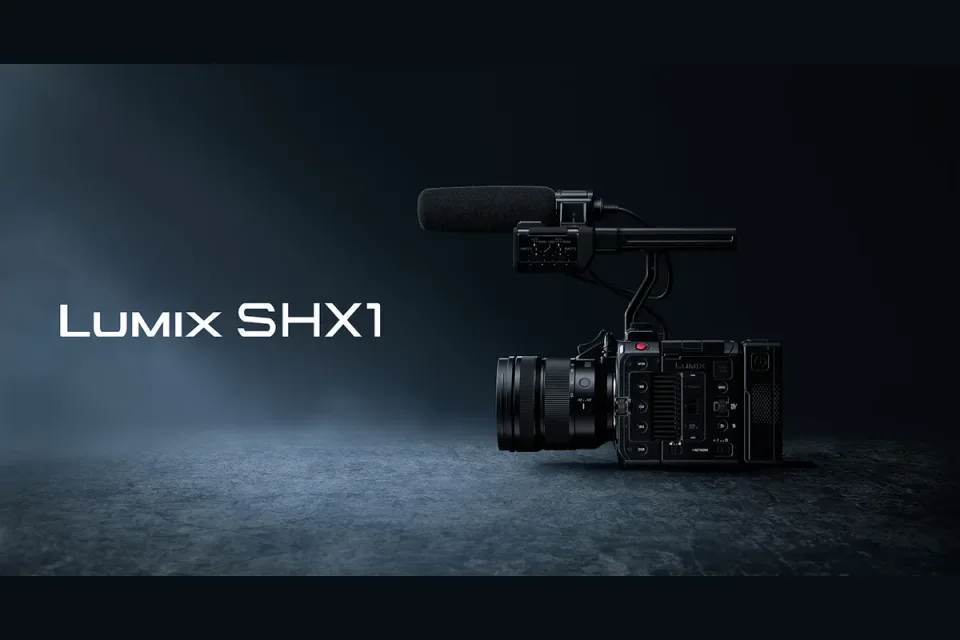
This is a manufacturer-source first look. The cover is Panasonic’s official press image, showing additional equipment; it is not evidence of a Senkōra field test or a list of everything included in either package.
RAW formats: two paths, different practical costs
| Recording path | Destination | What to plan around |
|---|---|---|
| Blackmagic RAW | External USB-C SSD | SSD, cable, secure mounting and a compatible editing workflow |
| ProRes RAW / ProRes RAW HQ | Internal CFexpress Type B | Qualified card, reader and support in the intended editing application |
| Standard Open Gate recording | Mode-dependent media requirements | Panasonic lists 6K 30p and 5.1K 60p 4:2:0 10-bit; confirm the exact mode and media combination |
BRAW is the direct route for a production already editing that format in DaVinci Resolve. Panasonic also offers Blackmagic color science to help matching with Blackmagic cameras. ProRes RAW keeps recording media inside the body, potentially reducing external cabling for a gimbal. ProRes RAW and ordinary ProRes are different formats: confirm native support in your application and version before choosing the recording path.
The global announcement’s footnotes matter. External SSDs must be 2TB or smaller, with Panasonic recommending models it has checked. SSD recording does not permit simultaneous main recording to a CFexpress or SD card, although an SD proxy can accompany the SSD main recording. BRAW 6K 24p Open Gate has a slight crop, so do not assume exactly the same field of view in every Open Gate mode.
For horizontal and vertical versions of an interview, Open Gate can leave more framing options in post. It does not remove the need to compose for both outputs or establish that every codec offers the same frame rate.
A cinema body with handheld tools
Panasonic specifies a partially stacked, approximately 24.1MP full-frame CMOS sensor with an optical low-pass filter, five-axis in-body stabilization and 779-point phase-hybrid autofocus. The practical proposition is a modular body that can move between a tripod, a compact handheld rig and a gimbal without abandoning autofocus or sensor stabilization.
Those features address different problems. IBIS reduces camera shake; it cannot freeze subject movement. Autofocus may reduce the workload for a solo operator, but tracking consistency and focus transitions still need evaluation. Gimbal selection must account for the complete payload, lens clearance, cables and center of gravity. Panasonic lists roughly 984 g / 2.17 lb for the body alone.
The 15-stop V-Log dynamic-range figure is Panasonic’s claim with Dynamic Range Boost enabled. With it disabled, Panasonic states 14+ stops. Boost also restricts video-quality and ISO options and increases rolling-shutter distortion. A setting that favors highlight latitude for a controlled interview may therefore be a different choice from one for rapid movement. We have not measured either mode.
ARRI LogC3 is preinstalled. That can help a crew organize a compatible grading workflow and use ARRI looks. It does not make the SHX1’s sensor response identical to an ARRI camera, and ALEXA 35 uses LogC4.
Compare complete rigs, not codec names alone
A useful comparison with another modular cinema camera starts with the production bottleneck rather than an assumed winner.
| Your recurring problem | What the SHX1 announcement addresses | What remains to verify |
|---|---|---|
| An external RAW recorder makes a gimbal rig awkward | Internal ProRes RAW | Editing support, card requirements and complete payload |
| The edit is built around BRAW | Direct BRAW to SSD | Approved SSD, cable retention and the specific recording mode |
| Solo documentary coverage needs mobile framing | IBIS, phase-hybrid AF and adjustable monitor | Tracking behavior, stabilization artifacts and operating ergonomics |
| A multicamera rig needs professional connections | 12G-SDI, HDMI and timecode | Output-format limits and the complete sync/control chain |
A camera already delivering the required footage may remain the better purchase decision: keep it if a change would add media, batteries and retraining without solving a recurring production problem. A named competitor comparison needs verified specifications for both models; we are not treating an unverified “SHX1 vs FX5” search phrase as a specification source.
The body price is the starting point
The announced kit costs $800 more than the body. That buys the two named accessories, not a fully specified production rig. Budget separately for any equipment you lack, after checking the exact package contents.
- Lens: reuse suitable L-Mount glass first. An adapter, autofocus behavior or unsupported control function should never be assumed from mount affinity alone.
- Storage: choose qualified CFexpress media for the intended ProRes RAW mode, or an approved SSD within the 2TB limit for BRAW. Include a reader or secure SSD mounting if needed.
- Power: the camera supports Micro V-Mount batteries. Check electrical requirements, clearance, charger and expected runtime before choosing a model.
- Audio: the body records 32-bit float through its 3.5mm input. The optional XLR handle expands input options; four-channel recording uses it together with the body’s stereo input. Microphones and monitoring still need planning.
- Support and cabling: buy the cage, plate, SDI/HDMI cable or gimbal only after confirming the actual rig and recording/output requirements.
32-bit float does not rescue poor microphone placement, wind noise or every form of overload in the signal chain. Likewise, “unlimited recording” up to 4K 120p is conditional on Panasonic’s guaranteed operating-temperature range, available power and recording capacity. It is not a promise of unlimited operation in all environments.
Related L-Mount lenses: useful affinity, no speculative accessory bundle
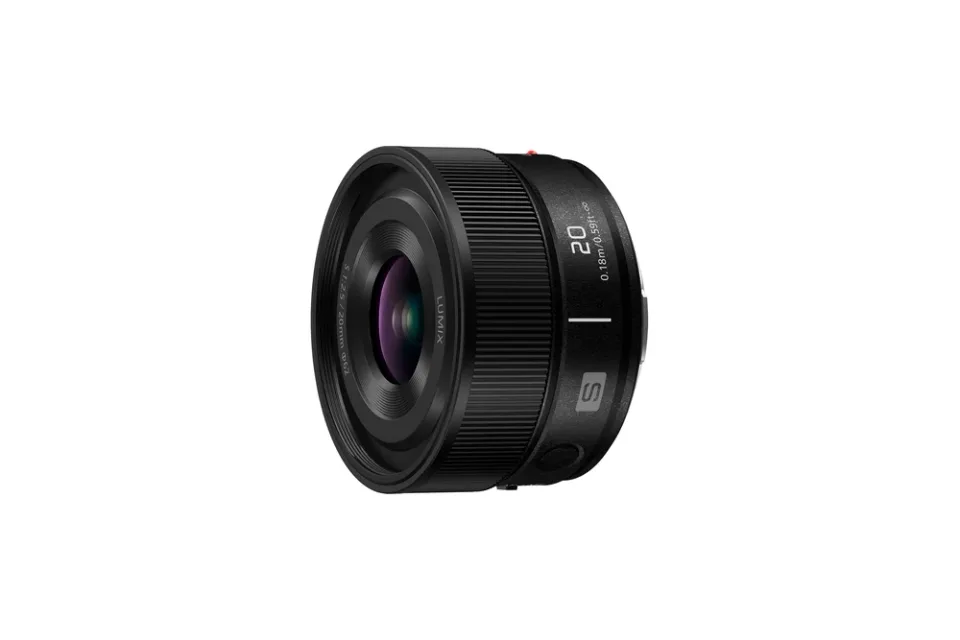
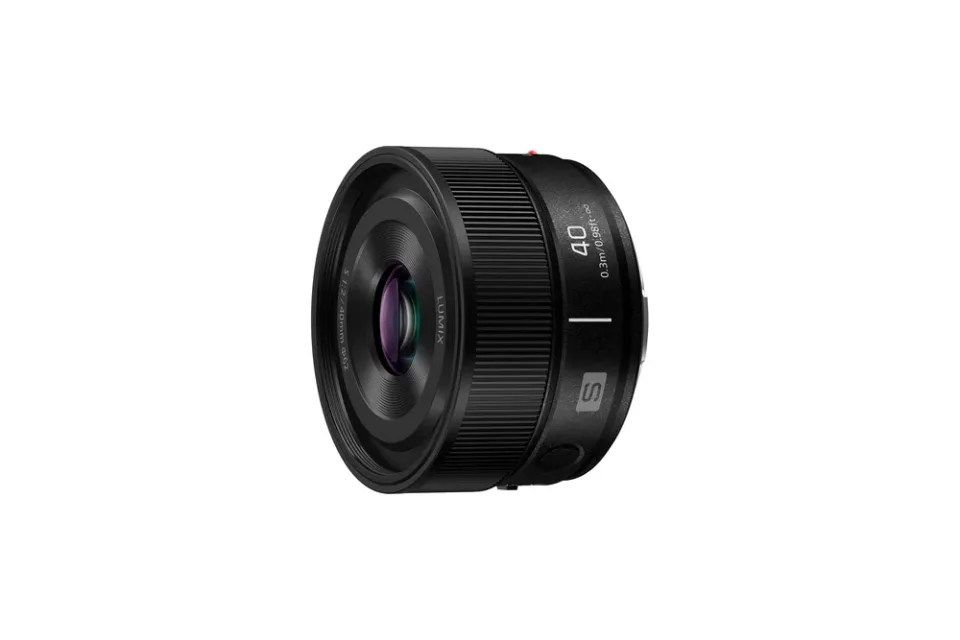
The product selection reuses two existing US catalog entries with distinct official photographs. The LUMIX S 20mm F2.5 suits wide environmental scenes and establishing footage. The LUMIX S 40mm F2 offers a narrower view for documentary details and interviews when camera distance permits. These are alternatives for different framing needs, not a required two-lens purchase.
Both are full-frame L-Mount lenses. That establishes system affinity; it does not independently verify SHX1 autofocus, breathing correction, firmware-dependent controls or gimbal balance. Neither should be bought for the announced future power-zoom workflow. Keep existing lenses if they already provide the framing and handling you need.
Retailer links: the black US references were checked on Amazon.com on November 18, 2026: S-S20K (B0HJGZW988) and S-S40K (B0GY21YLS2). The affiliate buttons open Amazon searches for those ASINs, not direct product pages. Check the selected finish, seller, package and shipping eligibility before ordering; results and availability can change. No Amazon price is displayed. SSD, battery and rig recommendations remain withheld until model-specific compatibility can be checked.
What is planned for 2027?
Separate the launch camera from Panasonic’s roadmap. The AU-LPU1 Live Production Unit, planned for the first half of 2027, is intended to add genlock, LAN with PoE++ and integration with Panasonic’s PTZ control ecosystem. A PTZ solution also needs suitable controllers and external pan-tilt hardware; the camera body alone does not become a motorized PTZ head.
Panasonic also schedules additional Tilta Mirage variable-ND and L-Mount focus/iris control for a firmware update in the first half of 2027. A power-zoom lens is under development. These are future plans, not functions we count as available at launch.
Consider the SHX1 if integrating BRAW, internal ProRes RAW or professional connections solves a specific production problem while retaining a mobile L-Mount setup. Wait for independent testing and compatibility documents if rolling shutter, autofocus, sustained recording or a particular battery/SSD combination determines whether you can accept a paid assignment.
Transparent evidence
Method and limitations
Analysis of Panasonic's US and global November 17 announcements, checked November 18, 2026, with official US lens references. Workflow comparisons describe rig decisions rather than measured camera performance. Kit premium calculated from announced US prices.
- No hands-on, image-quality, rolling-shutter, autofocus, thermal or battery-runtime testing by Senkōra.
- Manufacturer launch timing does not confirm retailer inventory or delivery dates.
- Lens selection is by full-frame L-Mount affinity; SHX1-specific behavior is not independently verified.
- Retailer links open Amazon searches for verified black US lens references; results and availability can change.
Five key takeaways
- Choose the RAW workflow first: BRAW goes to USB SSD; ProRes RAW goes to CFexpress Type B.
- The 15-stop V-Log claim requires Dynamic Range Boost, which also increases rolling-shutter distortion.
- IBIS and phase-hybrid AF may simplify mobile rigs; real handling and tracking still need testing.
- The $800 kit premium adds the named XLR handle and grip, not an entire shooting package.
- January 2027 is the planned US launch; expanded live-production and Tilta controls are future features.
Frequently asked questions
What is the Panasonic LUMIX SHX1 price in the US?
Panasonic announces $4,699.99 for the body and $5,499.99 for the kit with AU-XHU1 XLR handle and AU-GRP1 grip. These are manufacturer launch prices, not retailer quotations. US availability is planned for January 2027.
Does the SHX1 record Blackmagic RAW internally?
BRAW records directly to an external USB-C SSD without a separate recorder. ProRes RAW records inside the camera to CFexpress Type B. BRAW 6K 24p Open Gate has a slight crop.
Does ARRI LogC3 make the SHX1 an ARRI camera?
No. It provides an additional log workflow and access to compatible looks. It does not establish identical sensor response or image quality. ALEXA 35 uses LogC4, not LogC3.
Can any SSD or Micro V-Mount battery be used?
Do not assume so. Panasonic specifies an external USB-C SSD no larger than 2TB and recommends confirmed models. Verify the exact battery, electrical requirements and physical clearance against SHX1 documentation.
Are the PTZ and Tilta features available at launch?
The AU-LPU1 Live Production Unit and the additional Tilta remote-control functions are planned for the first half of 2027. A complete PTZ configuration also needs suitable external control and pan-tilt hardware.
Primary sources
- na.panasonic.com · Verified 2026-11-18
- news.panasonic.com · Verified 2026-11-18
- shop.panasonic.com · Verified 2026-11-18
- shop.panasonic.com · Verified 2026-11-18