

Sigma’s new standard zoom starts where many stop being wide enough
Sigma has announced the 20-60mm F2.8-4 DG Contemporary, a full-frame zoom for Sony E and L-Mount, at a US launch price of $849. Authorized US dealers are scheduled to begin selling it on October 6, 2026, according to the September 8 announcement from Sigma America.
The reason to consider it is the 20mm starting point. For a traveler moving between interiors, streets, landscapes, and everyday details, that extra width may reduce lens changes. The compromise comes at the other end: 60mm leaves less room for tight framing than 70mm, and much less than a travel superzoom.
This is a first look based on specifications. Senkōra has not evaluated the lens’s image quality or autofocus in use.
What the announcement establishes
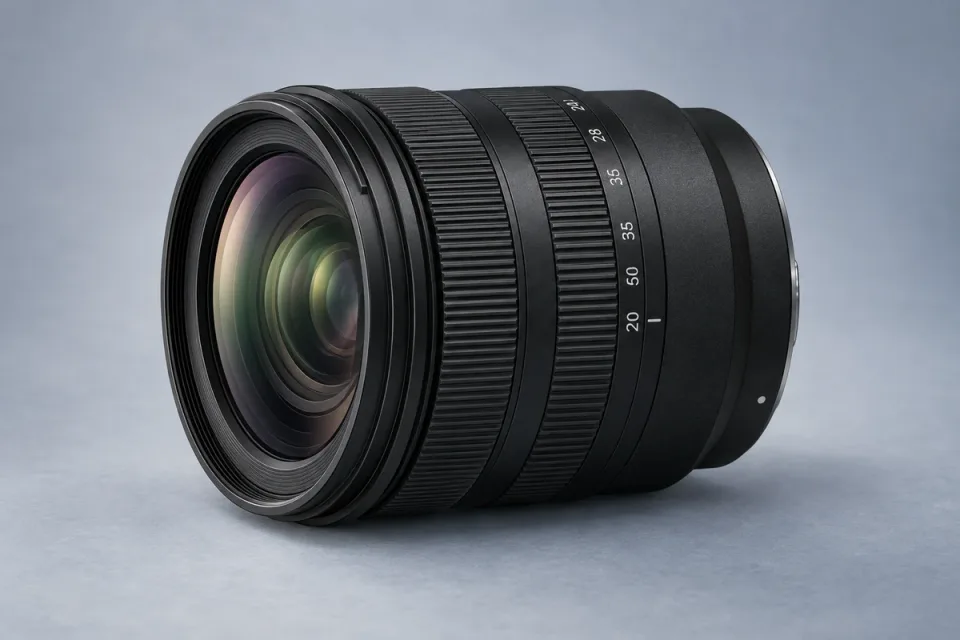
Sigma specifies f/2.8 at 20mm, an HLA linear autofocus motor, and 15 elements in 13 groups. The 385 g L-Mount weight is about 13.6 oz. The Sony E version weighs 375 g, or 13.2 oz., and the lens uses a 67mm filter thread, according to the global specification page.
The lens is designed to reduce focus breathing. That describes Sigma’s design aim, not a measured result. HLA likewise identifies the motor technology without establishing focus speed, tracking accuracy, or recording noise on a particular body.
20-60mm vs. 20-70mm, 24-70mm, and 20-200mm
These four zooms offer different ways to pack a full-frame kit. Manufacturer specifications support the comparison below; they do not establish an optical ranking.
| Lens | Wide end and zoom range | Maximum aperture | Weight: Sony E / L-Mount | Maximum magnification |
|---|---|---|---|---|
| Sigma 20-60mm F2.8-4 DG Contemporary | 20mm; 20-60mm | f/2.8-4, variable | 375 g / 385 g (13.2 / 13.6 oz.) | 1:2.3, about 0.43x, at 35mm |
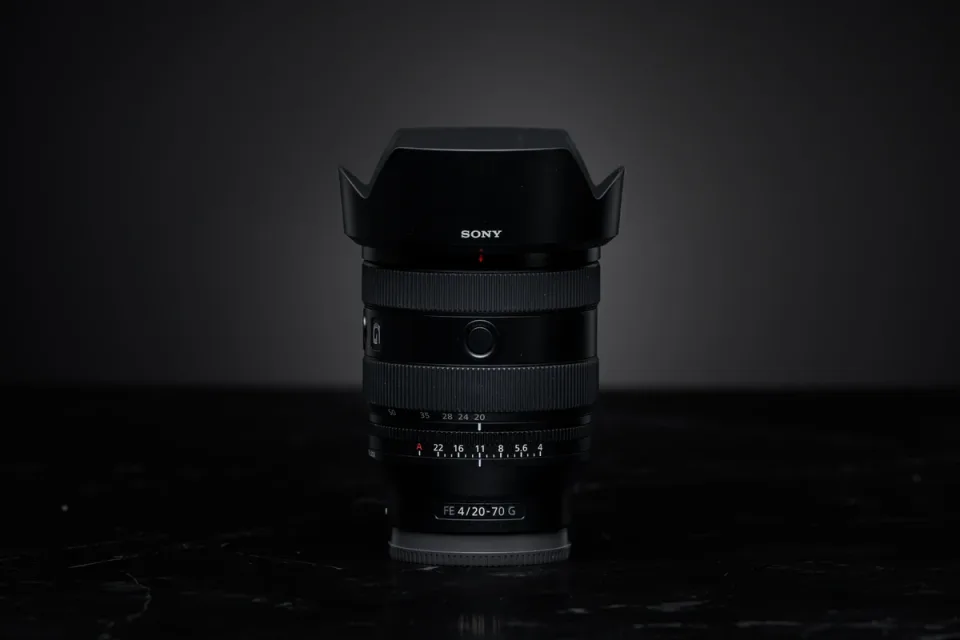
| Sony FE 20-70mm F4 G | 20mm; 20-70mm | f/4, constant | 488 g (17.3 oz.) / not offered | 0.39x |
| Sigma 24-70mm F2.8 DG DN II Art | 24mm; 24-70mm | f/2.8, constant | 735 g / 745 g (25.9 / 26.3 oz.) | 1:2.7, about 0.37x, at the wide end |
| Sigma 20-200mm F3.5-6.3 DG Contemporary | 20mm; 20-200mm | f/3.5-6.3, variable | 540 g / 550 g (19.0 / 19.4 oz.) | 1:2, or 0.5x, at 28-85mm |
Comparison sources: Sony 20-70mm specifications, Sigma 24-70mm II specifications, and Sigma 20-200mm specifications.
Choose the range around the photographs you miss. If a room or landscape will not fit at 24mm, the new Sigma and Sony both start at 20mm. A particularly tight interior may still require something wider. For real-estate work, corner rendering and corrected geometry also need evaluation before committing to a lens.
Choose aperture around the light you work in. The 24-70mm Art keeps f/2.8 as you zoom, while the new Sigma gives up that maximum aperture toward the long end. The Sony maintains f/4 throughout. Constant maximum aperture can make exposure planning simpler when zooming during a shot; a variable-aperture lens can also be stopped down to an aperture available across its range.
Choose reach around your working distance. The 20-200mm can frame distant details without a lens change. Its narrower maximum aperture is the tradeoff, alongside greater weight. None of these numbers tells us which lens produces the best corners, bokeh, or flare resistance.
Close-ups: near half-macro, with two different focal-length limits
The new Sigma reaches a stated 1:2.3 at 35mm, approximately 0.43x. Half-macro means 1:2, or 0.5x, so calling it simply a half-macro lens would overstate the specification.
Its 15.8 cm (6.2 in.) minimum focus distance applies at 28mm. That distance is measured from the camera’s sensor plane, not from the front glass. It therefore cannot be treated as subject clearance. Close subjects may also be shaded by the lens or hood.
For travel details, food, and small objects, this is a useful capability to investigate. It does not replace evidence about close-range sharpness, field flatness, or lighting access.
Products and accessories worth investigating
The selection below focuses on the new lens, its closest Sony focal-range alternative, and one optional accessory. No exact Amazon US ASIN has been confirmed for these candidates. Each card uses a labeled Amazon search; results may contain other lenses, mounts, filter sizes, or sellers. A search is not evidence of stock or authorized-dealer status.
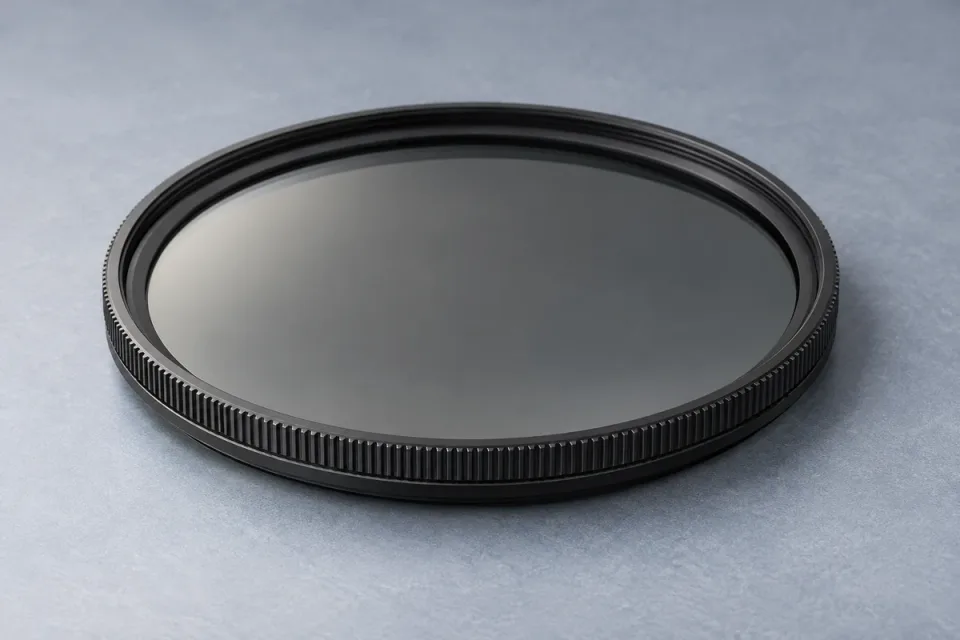
The Sigma WR Circular PL Filter 67mm, code 930813, is listed in Sigma’s official filter range. A polarizer can help adjust reflections, but it is not a compulsory purchase. At an ultra-wide angle, inspect blue skies for uneven polarization. Confirm the thread size before ordering, and avoid assuming stacked filters will clear the frame at 20mm.
The Sony 20-70mm takes 72mm filters, and the Sigma 24-70mm II takes 82mm filters. A 67mm filter cannot screw directly onto either lens. Build the accessory purchase around the lens you actually select.
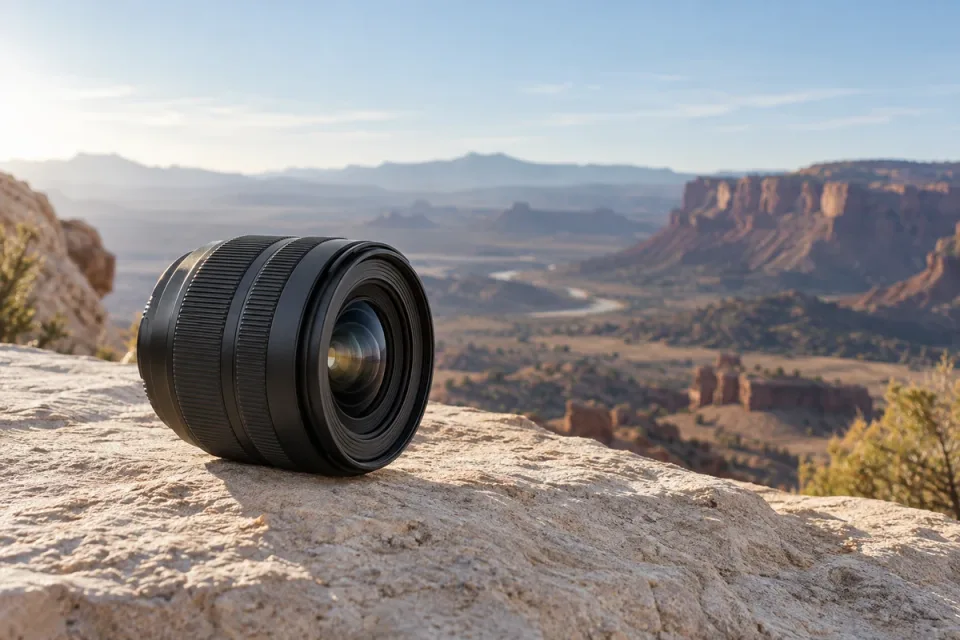
The $849 figure in this article is Sigma’s announced US lens price. Check the correct mount, seller, warranty terms, and delivery estimate before ordering. Product illustrations are conceptual AI-generated visuals, not photographs of the exact models.
Who should put the 20-60mm on a shortlist?
Full-frame travelers who regularly need a wider view and rarely go beyond normal focal lengths have the clearest reason to consider it. Video creators gain an interesting compact range, but should wait for breathing, focus-transition, and handling evidence on their camera.
Photographers who depend on constant f/2.8 should compare the 24-70mm class. Those who miss distant subjects should examine the 20-200mm tradeoff. For everyone else, the next useful evidence is independent testing and confirmed US delivery, ahead of the announced October 6 release.
Transparent evidence
Method and limitations
Specification-based first look using Sigma America's indexed September 8 launch release and the official Sigma global product page, with official Sony and Sigma comparison specifications. Magnification conversions and buying implications are editorial calculations and analysis. No lens was handled.
- No independent sharpness, autofocus, flare, breathing, or close-up image-quality measurements are available from Senkōra.
- Release timing is a manufacturer announcement, not verified retailer inventory.
- All product visuals are conceptual AI-generated editorial illustrations, not photographs of the exact hardware.
Five key takeaways
- The US launch price is $849, with authorized-dealer availability announced for October 6, 2026.
- The 20-60mm range starts wider than a 24-70mm, but sacrifices long-end reach.
- Maximum aperture changes from f/2.8 at 20mm to f/4 at the long end.
- Sigma specifies 385 g for L-Mount and 375 g for Sony E.
- Maximum magnification is 1:2.3 at 35mm; no exact Amazon US ASIN is confirmed for this selection.
Frequently asked questions
When is the Sigma 20-60mm F2.8-4 US release date?
Sigma America announced October 6, 2026 availability through authorized US dealers at $849. Individual retailer stock and delivery dates still need confirmation.
Is the Sigma 20-60mm a constant-f/2.8 lens?
No. It opens to f/2.8 at 20mm, with a maximum aperture of f/4 at the long end. It does not replace a constant-f/2.8 zoom for photographers who need that aperture throughout the range.
Does the Sigma 20-60mm offer half-macro magnification?
Its stated maximum is 1:2.3 at 35mm, approximately 0.43x. True half-macro is 1:2, or 0.5x. The 15.8 cm minimum focus distance applies at 28mm and is not the distance from the front of the lens to the subject.
Is the Sigma 20-60mm available on Amazon US?
Senkōra has not confirmed an exact Amazon US listing or ASIN. The product cards open labeled searches, which do not confirm availability, seller authorization, or an exact match.
Primary sources
- press.sigmaphoto.com · Verified 2026-09-08
- sigma-global.com · Verified 2026-09-08
- sony.com · Verified 2026-09-08
- sigma-global.com · Verified 2026-09-08
- sigma-global.com · Verified 2026-09-08
- sigma-global.com · Verified 2026-09-08