

The decision in one glance
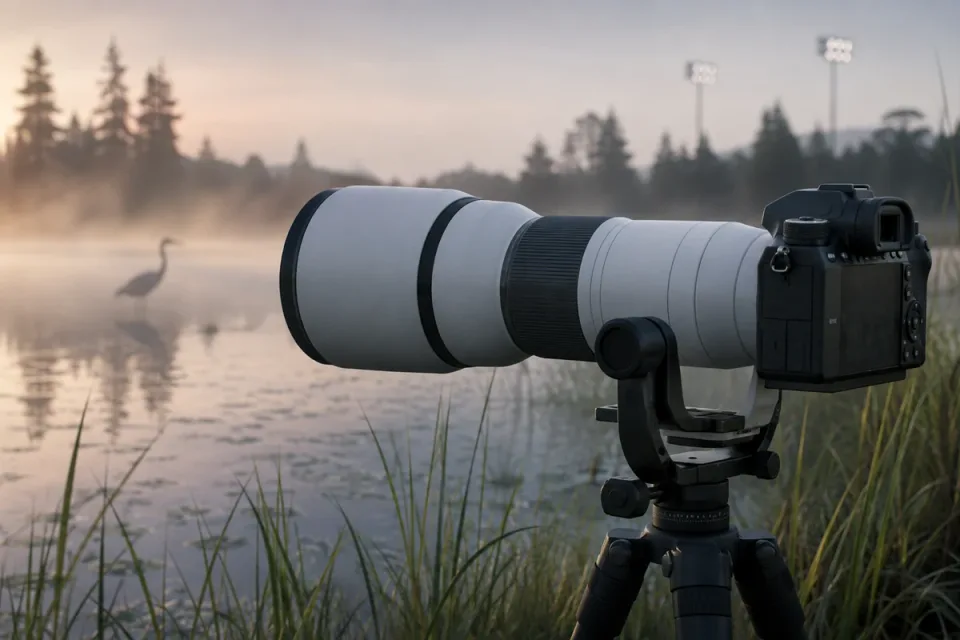
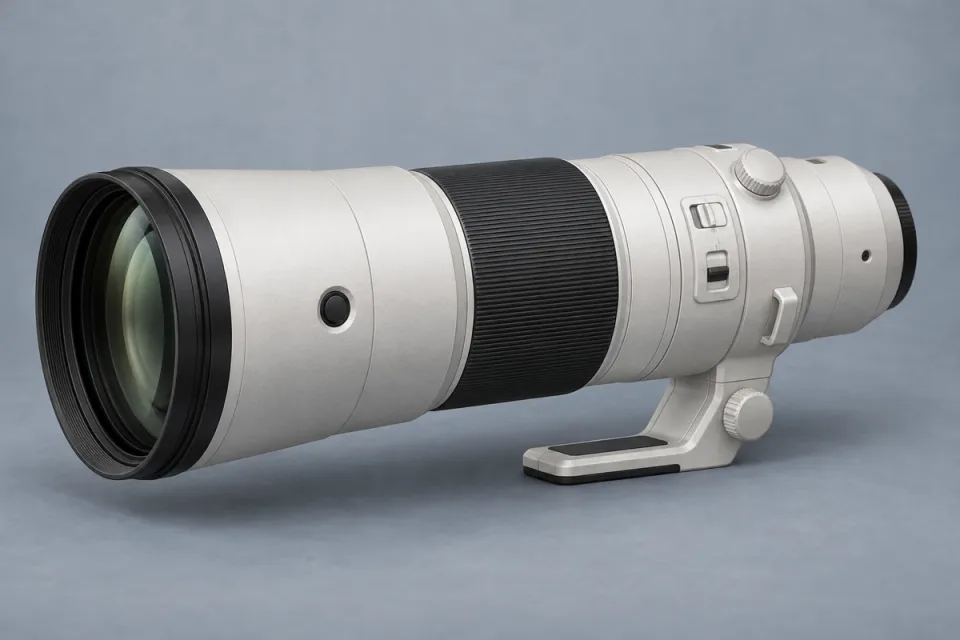
Fujifilm’s new FUJINON XF400mmF4.5 R LM OIS WR is a fixed super-telephoto lens for X-series cameras. Its 400mm focal length gives the same angle of view that a 609mm lens would provide on full frame, while its f/4.5 maximum aperture is designed for wildlife, bird photography, aviation, and outdoor sports.
The buying decision is less about reach than about how the photographer wants to control framing. A 400mm prime asks the photographer to commit to one angle of view. A telezoom such as the XF150-600mm can pull back when an animal approaches, an athlete crosses the sideline, or a larger subject no longer fits inside the frame.
| Photographer | Starting decision | Why |
|---|---|---|
| Birds in flight at a predictable distance | Consider the XF400mmF4.5 | Fixed framing may be manageable, while f/4.5 protects more shutter-speed and ISO margin |
| Wildlife whose distance changes quickly | Favor the XF150-600mm | The 150-600mm range can adapt without changing position |
| Outdoor sports from a fixed shooting zone | Depends on field position | The prime suits distant action, but it may be too tight when play comes closer |
| Photographer prioritizing lower lens weight | XF400mmF4.5 | At 1,245 g, it is 360 g lighter than the XF150-600mm |
| Buyer who needs proven performance | Wait for independent tests | The current evidence establishes specifications, not field results |
Fujifilm North America announced the lens on September 4, 2026, at a US MSRP of $3,199.95. Availability is expected in mid-September 2026, with no exact day stated.
What Fujifilm has confirmed
The XF400mm uses 21 elements in 14 groups, including two Super ED and four ED elements. Fujifilm says this arrangement controls chromatic aberration and delivers high resolution, but those are manufacturer performance claims rather than independent test findings.
The documented physical and operational specifications include:
- 1,245 g (2.74 lb.), excluding the lens cap and hood;
- optical image stabilization rated for up to 5.5 stops under the CIPA standard, measured for pitch and yaw correction;
- an internal focusing system driven by a linear motor;
- 20 sealed points and stated operation down to 14°F (-10°C);
- a focus preset function, front focus control button, and focus limiter for subjects beyond 15 ft. (5 m);
- a fluorine-coated front element intended to resist water and smudges.
These specifications describe the design. They do not establish how consistently the lens tracks a bird against a busy background, how well stabilization works for an individual photographer, or how the files compare with Fujifilm’s zooms at matched focal lengths and apertures.
XF400mmF4.5 versus XF150-600mm
The closest practical comparison is not a simple specification win. It is a choice between aperture and fixed framing on one side, and range on the other.
| Lens | Focal range | Full-frame-equivalent field of view | Maximum aperture | Weight | Main advantage |
|---|---|---|---|---|---|
| XF400mmF4.5 R LM OIS WR | 400mm | 609mm | f/4.5 | 1,245 g / 2.74 lb. | Brighter fixed 400mm lens with lower weight |
| XF150-600mmF5.6-8 R LM OIS WR | 150-600mm | 229-914mm | f/5.6-8 | 1,605 g / 3.54 lb. | Far greater control over framing and more reach at 600mm |
The prime saves 360 g (12.7 oz.), roughly 22% of the zoom’s stated weight. That matters during a long handheld session or when a camera, binoculars, support, water, and protective clothing share the same pack.
The zoom’s advantage appears whenever the subject does not follow the photographer’s plan. At 150mm, it can include an animal in its habitat or cover action closer to the sideline. At 600mm, it reaches beyond the prime without a teleconverter. The 400mm prime cannot reproduce either framing from the same position.
At the long end, the XF150-600mm is f/8, while the new prime is f/4.5. That endpoint comparison represents a little more than one and a half stops of aperture difference, although it also compares 600mm with 400mm rather than the same focal length. Fujifilm’s published specification table does not state the zoom’s exact maximum aperture at 400mm, so a matched 400mm exposure comparison should wait for confirmed data.
What f/4.5 changes, and what it does not
A brighter aperture can support a faster shutter speed or lower ISO in the same light. That is useful when wing movement, a running athlete, or a moving vehicle requires a short exposure.
It does not guarantee better autofocus, sharper detail, or smoother bokeh. Those outcomes depend on the camera body, firmware, subject-recognition mode, focus distance, background, atmosphere, optical behavior, and photographer technique. The linear motor and f/4.5 aperture are promising ingredients, not a field-test verdict.
The same distinction applies to stabilization. A 5.5-stop CIPA rating concerns correction of camera movement under a defined test. It may help a photographer hold a steadier frame and use slower shutter speeds for still subjects. It cannot stop a bird’s wings or an athlete’s motion.
Teleconverters extend reach but add tradeoffs
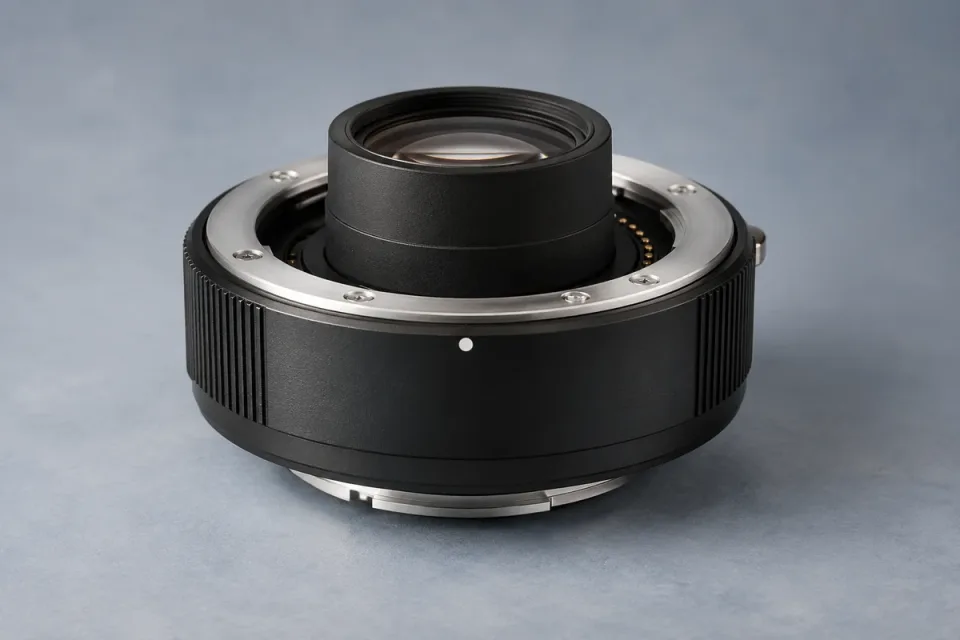
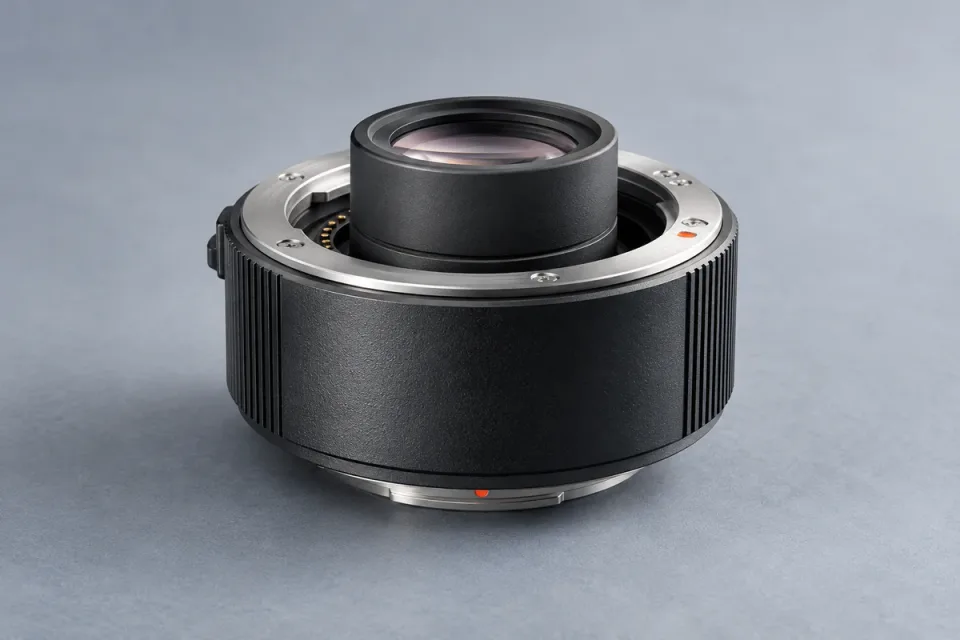
Fujifilm confirms compatibility with both current XF teleconverters:
| Configuration | Physical focal length and aperture | Full-frame-equivalent field of view |
|---|---|---|
| XF400mm alone | 400mm f/4.5 | 609mm |
| With XF1.4X TC WR | 560mm f/6.3 | 853mm |
| With XF2X TC WR | 800mm f/9 | 1,219mm |
The 1.4x combination moves beyond the prime’s native framing while preserving a comparatively practical f/6.3 maximum aperture. The 2x combination offers extreme reach but reaches f/9, placing greater demands on light, ISO, shutter speed, focusing conditions, atmospheric clarity, and support technique.
Teleconverters also increase total cost and add another optical interface. Compatibility alone does not prove that either combination will match the native lens for autofocus confidence or image quality. Buyers should wait for controlled comparisons on the camera body they intend to use.
Working distance and support are part of the purchase
A 609mm-equivalent angle of view lets a photographer frame a distant subject without moving as close, which can be useful for wildlife behavior and restricted sidelines. It also makes small framing errors more visible and can make finding a moving subject in the viewfinder harder.
The complete setup may need more than the lens. A stable monopod, tripod, gimbal or appropriate head, a compatible high-performance X-series body, spare batteries, a rain cover, and possibly a teleconverter can change both the budget and the carrying burden. The lens MSRP alone does not represent the cost of a field-ready system.
Handheld use remains plausible at 1,245 g, especially with optical stabilization, but comfort is individual. Photographers should judge the combined body-and-lens balance rather than the lens weight in isolation.
US MSRP and availability
The announced US MSRP is $3,199.95. Fujifilm says the XF400mmF4.5 will be available in mid-September 2026 but does not name a specific release day. Retail timing can change after an announcement.
Senkōra has not confirmed an exact Amazon US product page or ASIN for the XF400mmF4.5. The gear selection below therefore uses a clearly labeled Amazon.com search link for the lens, not a direct product-page link. Search results, imported listings, or pages for other Fujifilm telephotos should not be treated as the exact US model.
Senkōra’s first-look verdict
The XF400mmF4.5 creates a new decision inside Fujifilm’s X system. It is lighter than the XF150-600mm and offers a brighter fixed super-telephoto design for photographers who often work around one predictable distance. Bird photographers in open habitats and outdoor-sports shooters with established positions are the clearest candidates.
The fixed focal length is the cost that matters most. The prime cannot quickly widen for a large bird flying closer, an animal moving through its environment, or action crossing the near side of a field. The XF150-600mm remains the more adaptable framing tool and reaches 600mm without an added converter.
Fujifilm’s specification sheet makes the XF400mmF4.5 compelling on paper. It does not yet prove sharpness, bokeh, autofocus tracking, stabilization, or teleconverter performance. Until matched independent testing is available, this lens is a high-potential specialist option rather than a tested recommendation.
Transparent evidence
Method and limitations
We checked Fujifilm North America's September 4, 2026 launch release against Fujifilm's official product material, then compared the documented focal range, maximum aperture, and weight with Fujifilm's official XF150-600mm specifications. Exposure differences are derived from stated f-numbers. Senkōra has not handled or tested the new lens.
- Senkōra has not independently tested sharpness, bokeh, flare, chromatic aberration, autofocus speed, tracking accuracy, stabilization, or weather resistance.
- The 5.5-stop stabilization figure and qualitative autofocus and optical-performance statements are Fujifilm claims.
- Mid-September 2026 is an announced window, not a guaranteed retail date, and no exact day is available.
- The comparison addresses documented specifications and framing behavior, not measured image quality or overall value.
Five key takeaways
- The 400mm focal length produces a 609mm-equivalent field of view on Fujifilm X-series APS-C cameras.
- Fujifilm specifies 1,245 g (2.74 lb.), 5.5 stops of CIPA-rated optical stabilization, internal focusing, and a linear autofocus motor.
- The prime is 360 g lighter than the XF150-600mm, but the zoom covers a far more adaptable 150-600mm range.
- The XF1.4X and XF2X teleconverters extend the prime to 560mm and 800mm, or 853mm and 1,219mm equivalent, while reducing maximum aperture.
- The US MSRP is $3,199.95 and mid-September 2026 availability is announced, but no exact Amazon US ASIN has been confirmed.
Frequently asked questions
What is the full-frame equivalent of the Fujifilm XF400mmF4.5?
Fujifilm states a 609mm full-frame-equivalent field of view on its X-series APS-C cameras. The physical focal length remains 400mm, and the maximum aperture remains f/4.5.
Is the XF400mmF4.5 better than the XF150-600mm for bird photography?
Neither is universally better. The prime is lighter and has a brighter f/4.5 maximum aperture, while the XF150-600mm can reframe from 150mm to 600mm without changing position. Image quality and autofocus tracking cannot be ranked before comparable independent testing.
Does the XF400mmF4.5 work with Fujifilm teleconverters?
Yes. Fujifilm lists compatibility with the XF1.4X TC WR and XF2X TC WR. They produce 560mm f/6.3 and 800mm f/9 combinations, respectively, equivalent in field of view to 853mm and 1,219mm on full frame.
How effective is the stabilization?
Fujifilm claims up to 5.5 stops under the CIPA pitch-and-yaw test standard. That figure has not yet been independently verified by Senkōra, and stabilization cannot freeze a moving bird or athlete.
When will the Fujifilm XF400mmF4.5 be available in the United States?
Fujifilm North America says mid-September 2026 but does not provide a specific day. The announced US MSRP is $3,199.95. No exact Amazon US ASIN has been confirmed.
Primary sources
- fujifilm.com · Verified 2026-09-04
- fujifilm-x.com · Verified 2026-09-04
- fujifilm-x.com · Verified 2026-09-04