
Quick picks
These are compact interchangeable-lens systems, not fixed-lens pocket cameras. Plan a bright lens before buying a body: none of these choices alone guarantees low-noise video.
Senkora may earn a commission when you buy through our links, at no additional cost to you. This does not influence our recommendations.
Best compact balance
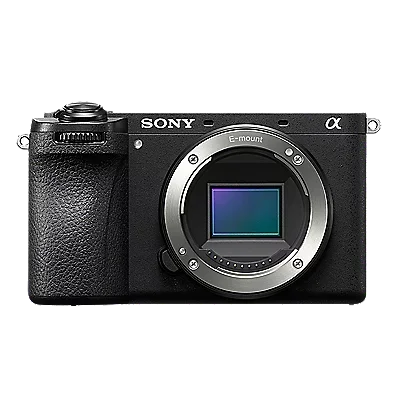
Sony Alpha 6700
Black body with E PZ 16-50mm F3.5-5.6 OSS kit lens
Pair the Sony a6700 with a native E-mount APS-C f/1.4-f/1.8 prime for dim interiors or night scenes. The 16-50mm f/3.5-5.6 zoom is a daylight convenience, not the basis of this low-light recommendation.
Main limit: A fast prime costs extra and fixes your framing; verify the exact lens package before buying.
Read the Alpha 6700 product profileAmazon offer omitted pending exact US variant verification.
Best for stills with video
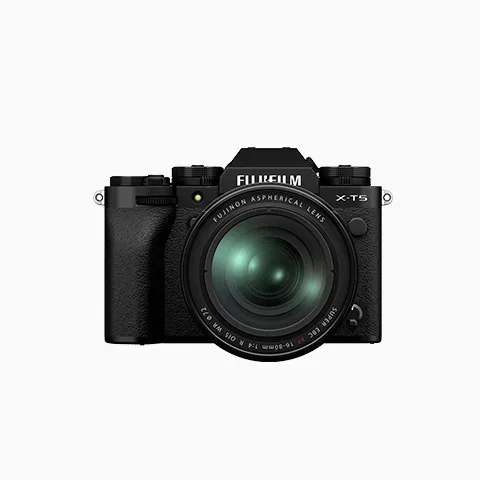
Fujifilm X-T5
Black body only
Pair the Fujifilm X-T5 with a native X-mount f/1.4-f/2 prime when still photography remains the priority. Use video modes that fit your delivery and storage rather than treating sensor resolution as a low-light score.
Main limit: The tilting screen is less useful for self-recording, and the body-only purchase still requires a lens.
Read the X-T5 product profileAmazon offer omitted pending exact US variant verification.
Best for stabilization and mobility
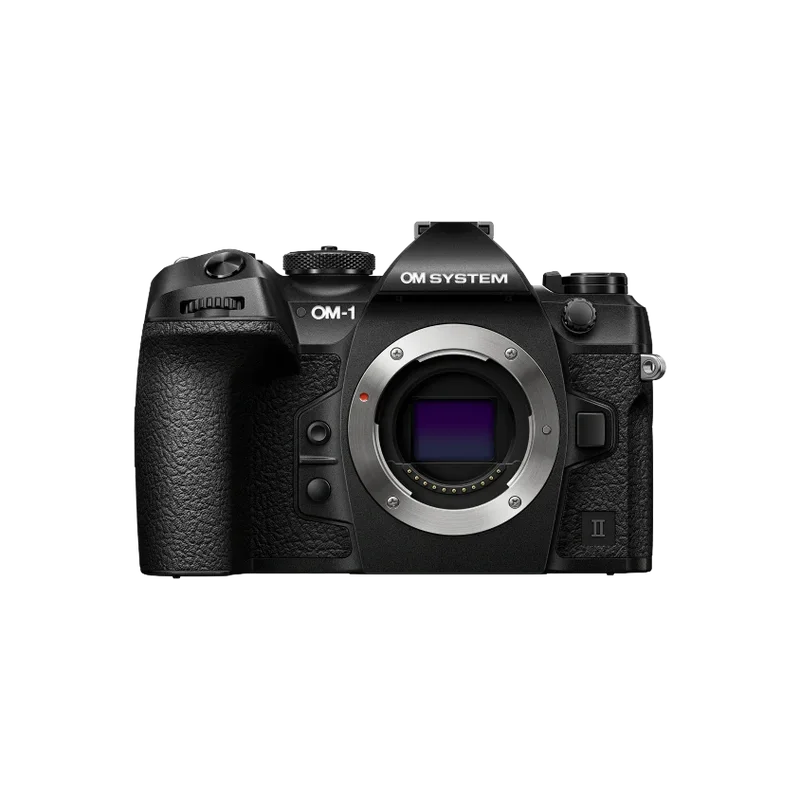
OM System OM-1 Mark II
Black body only
Pair the OM System OM-1 Mark II with a native Micro Four Thirds f/1.7-f/1.8 prime for a mobile available-light setup. Favor it for stabilized static framing and an existing MFT lens system, not an unmeasured noise advantage.
Main limit: It is not the smallest body here; stabilization does not replace light when subjects move. The Amazon offer is body only.
Read the OM-1 Mark II product profileCheck current availability on AmazonCompare the recommended systems
| Decision factor | Sony Alpha 6700 | Fujifilm X-T5 | OM System OM-1 Mark II |
|---|---|---|---|
| System priority | Photo/video balance | Detailed stills with planned video | Stabilized mobile framing |
| Bright lens to plan | Native E APS-C f/1.4-f/1.8 prime | Native Fujifilm X f/1.4-f/2 prime | Native Micro Four Thirds f/1.7-f/1.8 prime |
| Useful focal range | 16-35mm actual; about 24-52.5mm equivalent | 16-35mm actual; about 24-52.5mm equivalent | 12-25mm actual; 24-50mm equivalent |
| Weight and budget consequence | 493 g body, plus your chosen lens; reserve a separate lens budget | 557 g body, plus the lens; larger fast lenses increase cost and bulk | 599 g body, plus the lens; compact primes help control carried weight |
| What stabilization helps | IBIS reduces camera shake in supported or static framing | IBIS steadies handheld framing | In-body stabilization reduces camera shake |
| What it cannot fix | Moving people, missed focus, clipping or insufficient light | Subject blur, exposure errors or a noisy recording mode | Moving subjects or the need for an appropriate video shutter speed |
| Main limitation | A fast prime costs extra and fixes your framing; verify the exact lens package before buying. | The tilting screen is less useful for self-recording, and the body-only purchase still requires a lens. | It is not the smallest body here; stabilization does not replace light when subjects move. The Amazon offer is body only. |
| Exact US offer | Black body with E PZ 16-50mm F3.5-5.6 OSS kit lens Amazon offer omitted pending exact US variant verification. | Black body only Amazon offer omitted pending exact US variant verification. | Black body only Check current availability on Amazon |
Lens ranges are editorial planning suggestions, not claims about a specific affiliate lens. No complete-kit weight or price is asserted until a lens is chosen. The OM-1 Mark II link is explicitly a body-only offer; a bright lens must be bought separately.
Choose the lens before the camera
First choose your framing. A roughly 24-50mm-equivalent view is a useful planning range for interiors, people and night scenes; a wider view helps in tight spaces. Focal lengths in the comparison table are actual lens focal lengths, with equivalent views shown separately.
Then choose an aperture and working distance. A native f/1.4-f/2 prime can admit more light than a small kit zoom, but shallow depth of field makes accurate focus more demanding. A prime also fixes your focal length. If framing changes constantly, consider a brighter zoom and accept the extra size, weight and expense.
For the Sony a6700, budget for an E-mount APS-C bright prime in addition to the catalog’s daylight kit zoom. For the Fujifilm X-T5, select an X-mount prime around the still-photo subjects you also need to cover. For the OM-1 Mark II, a compact Micro Four Thirds prime keeps the lens burden lower than many larger zooms. No specific lens is sold or linked here because an exact US affiliate variant has not been validated.
Make the system fit the scene
For static interiors, body stabilization and a supported stance can reduce camera shake. For people walking through a dim scene, subject movement still dictates a usable shutter speed. A stable camera cannot freeze a moving person, and deliberately slowing the shutter changes motion rendering.
Check exposure and focus on the actual subject, protect bright signs from clipping, and watch mixed-color lighting. For interviews or repeatable indoor work, a small light may be more useful than changing the body. None of these measures proves one camera has lower measured noise than another.
When each choice makes sense
Sony a6700: choose it when stills and video both matter and you want to build a compact E-mount system. The slow 16-50mm kit zoom is not a low-light solution by itself.
Fujifilm X-T5: choose it when still photography remains central. Its detailed still files do not establish better low-light video, and its screen layout is less convenient for filming yourself.
OM System OM-1 Mark II: choose it when mobile, stabilized framing and your existing Micro Four Thirds lenses matter most. The 599 g body is not the smallest option here. The linked package is body only, so plan and budget for the lens before ordering.
Buying the complete setup
Add the chosen lens, battery, memory card, microphone and any support to your budget and carrying plan. Compare the exact US package, seller, warranty and return terms. Do not interpret a body-only offer as a ready-to-film low-light kit.
For the broader one-camera decision, see best hybrid cameras for photo and video. For self-recording while moving, use the travel vlogging guide.
Method and limitations
We reviewed official manufacturer documentation on September 5, 2026. Lens types and focal ranges are editorial planning suggestions. We did not conduct field tests, independently measure noise or dynamic range, test heat limits or establish live retailer availability.
Ready to choose?
Match the recommendation to your use, then verify the exact package, seller, US warranty and return policy. Amazon is a buying destination, not a guarantee of the best offer.
Sony Alpha 6700
Best compact balance
Black body with E PZ 16-50mm F3.5-5.6 OSS kit lens
Amazon offer omitted pending exact US variant verification.
Fujifilm X-T5
Best for stills with video
Black body only
Amazon offer omitted pending exact US variant verification.
OM System OM-1 Mark II
Best for stabilization and mobility
Black body only
Check current availability on AmazonFive key takeaways
- Lens aperture and exposure strategy can matter more than a small body-specification advantage.
- Stabilization helps camera movement but cannot freeze a moving subject.
- Mixed lighting, focus, noise reduction, and highlight protection require deliberate setup.
- This is an editorial evaluation of documented capabilities, not a hands-on test.
Frequently asked questions
Are these fixed-lens compact cameras?
No. These are relatively compact mirrorless interchangeable-lens systems. Each requires an appropriate lens, and some recommended offers are body only.
Does stabilization solve low-light video?
It reduces camera shake, especially for static framing. It does not stop subject movement, replace a bright lens or correct underexposure.
Which lens should I buy for low-light video?
Start with the framing you need, then consider a native bright prime. Roughly a 24-50mm-equivalent view suits many interiors and everyday scenes. Verify mount, autofocus behavior, size and budget before selecting the exact lens.
Which camera has the lowest measured video noise?
Senkōra has not independently measured video noise or dynamic range for this selection. We cannot declare a measured winner from sensor size or manufacturer specifications alone.
Primary sources
- electronics.sony.com · Verified 2026-09-05
- fujifilm-x.com · Verified 2026-09-05
- explore.omsystem.com · Verified 2026-09-05
- learning.omsystem.com · Verified 2026-09-05