
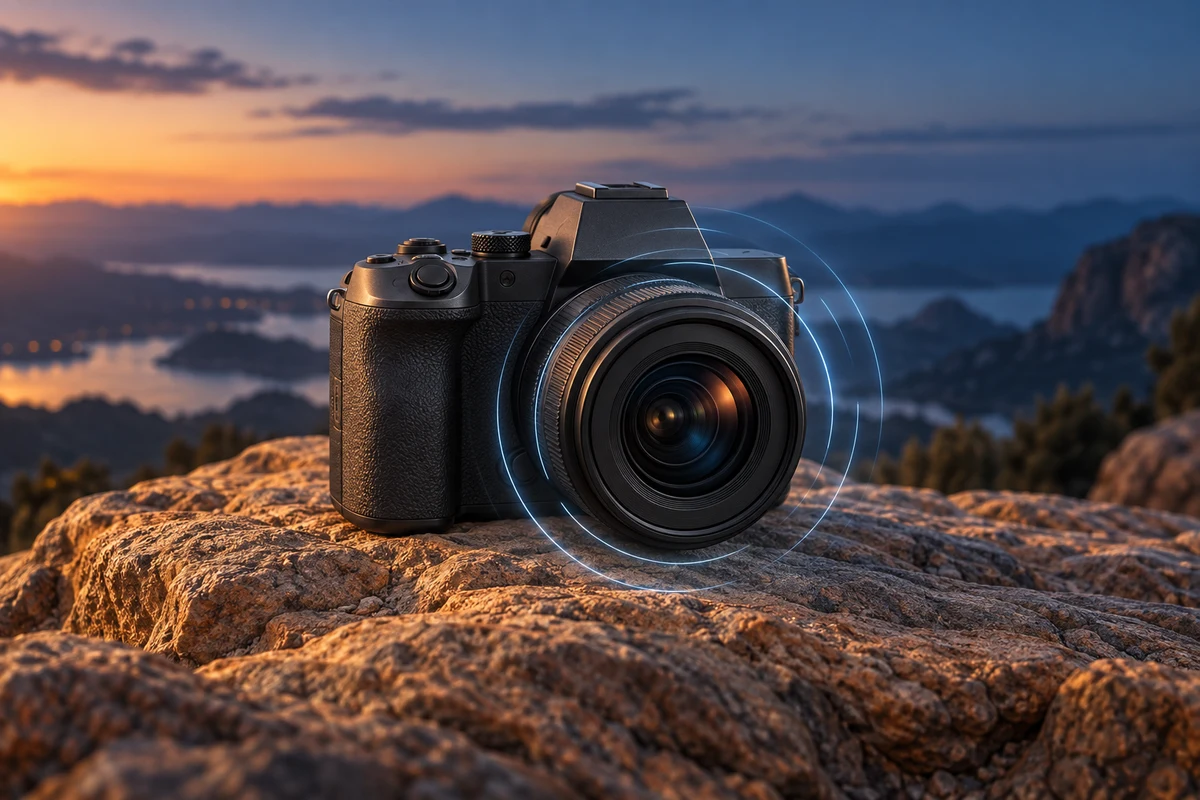
IBIS makes the small full-frame R8 more interesting
Canon announced the EOS R8 Mark II on September 15, 2026, adding five-axis in-body image stabilization and a multi-controller to its compact full-frame line. The announced US price is $1,899 body-only, with availability planned for late October 2026. A $2,099 kit includes the RF24-50mm F4.5-6.3 IS STM.
For a travel photographer, the attraction is straightforward: a small body with stabilization and a dedicated way to move the focus point. For an existing R8 owner, the harder question is whether those changes solve problems encountered often enough to justify replacing the camera.
This is a documentary first look based on Canon’s announcement and official specifications. We have not measured image quality, stabilization or heat behavior. The illustrations are AI-generated concepts, not photographs of the announced hardware.
EOS R8 Mark II vs. EOS R8: what actually changes?
| Feature | Original EOS R8 | EOS R8 Mark II | Buying significance |
|---|---|---|---|
| Sensor resolution | 24.2MP full frame | 24.2MP full frame | No increase in pixel count |
| Sensor-shift stabilization | No IBIS | Five-axis IBIS, coordinated with compatible lenses | A meaningful addition for handheld work |
| Focus-point control | No multi-controller joystick | New multi-controller | A dedicated control worth trying in person |
| Maximum electronic burst | Up to 40 fps | Up to 40 fps | Peak speed is not the upgrade |
| Buffer | Original baseline | Canon claims 30% more continuous RAW shots and 58% more JPEG shots | Potentially longer bursts; settings and card matter |
| Pre-capture | Pre-shooting in RAW Burst mode | Up to 20 frames before full shutter press | Compare the workflow, not simply whether pre-capture exists |
| Main video headline | Uncropped 6K-oversampled 4K60 | Uncropped 6K-oversampled 4K60 | Already a strength of the original R8 |
The original R8 manual describes RAW Burst shooting at approximately 30 fps, with an optional half-second pre-shooting period. Frames are grouped in a roll for extraction. Saying the Mark II introduces pre-capture to the family would therefore be misleading: the important distinction is how its pre-continuous shooting fits the newer burst workflow.
The buffer percentages are Canon’s comparison, not our measured result. Do not turn them into a guaranteed burst duration without matching file format, drive settings and memory card.
A 1.2-pound camera, with a precise weight caveat
Canon calls this its lightest EOS camera with IBIS. That is an EOS-lineup claim, not proof that it is the lightest stabilized full-frame camera from every manufacturer.
The Canon USA specification table lists 546 g, approximately 19.3 oz or 1.2 lb, with battery and one SD card installed. The rounded pound figure should not be converted back into an exact 544 g specification. A lens and optional grip add to the packed weight.
IBIS is most relevant when camera movement limits the shutter speed you can use. It does not freeze a walking person or a bird taking off. For moving subjects, lens aperture, shutter speed and autofocus still determine whether the extra stabilization addresses the actual problem.
Autofocus and video: useful specifications, unfinished judgments
The announced Dual Pixel CMOS AF II system detects people, animals and vehicles. The new multi-controller may be just as important as the detection list for photographers who frequently reposition a focus point. Handling comfort and tracking consistency still need evaluation with real subjects.
Video includes uncropped 4K60 oversampled from 6K and Full HD up to 180p, with audio recording announced for the latter. Verify the selected recording mode before assuming every slow-motion export retains sound.
For an R8 owner, 4K60 alone is not a reason to upgrade: the predecessor already offered it. The practical questions are whether stabilization improves your handheld shots, whether the controls suit your rig, and how long the camera records in the conditions you face. No heat-limit conclusion follows from the launch specifications.
Wi-Fi 6 and streaming through USB-C, HDMI or a wireless connection broaden the available setups. These are different workflows: HDMI needs a compatible capture path, and wireless use depends on the app and network. Confirm the complete chain before budgeting around a streaming feature.
Body, kit or extension grip?
The kit adds $200 to Canon’s announced body price. If you have no suitable RF lens, that is a clear starting point for comparing the RF24-50mm kit with a body and separately chosen lens. If you already own lenses that suit your photography, buying another short zoom may add little value.
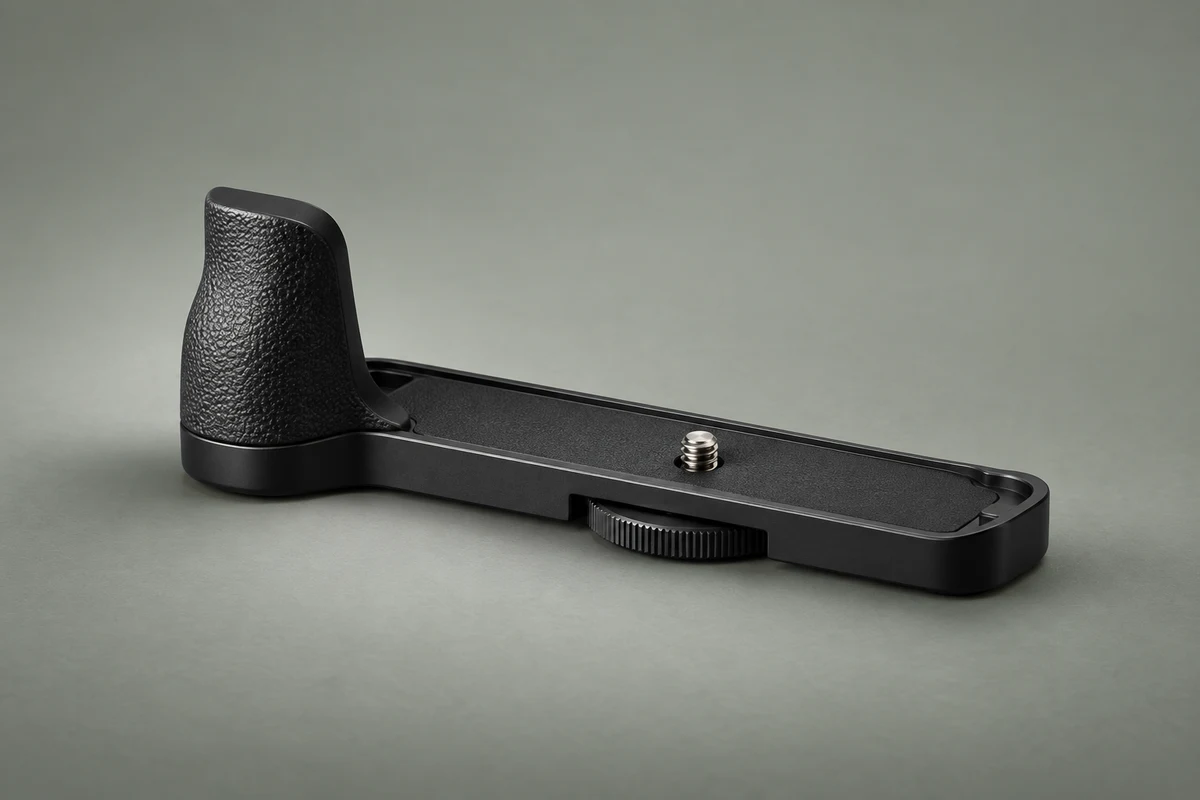
The EG-E2 Extension Grip, announced at $99.99, is the third product in our selection. Canon describes it as a handling extension for the R8 Mark II, with battery access and a tripod mount retained. It is not a battery grip. Try the camera first if possible: extra gripping room is useful only if it improves your hold enough to justify the added size.
Canon also announced the Speedlite EL-5 Ver.2 at $379. A flash is a separate lighting decision, so it is not included in this three-product selection.
All amounts above are manufacturer-announced US prices. None is an Amazon quote. The three cards below open labeled Amazon.com searches with our US affiliate tag. No exact Amazon US ASIN has been confirmed. Results can include the original R8, other grips or unrelated bundles; check the model, seller, warranty and shipping estimate before ordering.
Dual Pixel 3D Converter is a separate software decision
Canon’s Dual Pixel 3D software information describes a Windows workflow for creating 3D imagery from compatible capture data. The announcement identifies compatible Dual Pixel RAW files and R8 Mark II JPEGs carrying distance information as inputs.
The software is described as free at launch. That should not become a promise of permanently free access, universal lens support or compatibility with every computer. Check the release requirements and terms independently of the camera purchase. A photographer shopping for stabilization should not need this software to justify the body.
Who should consider upgrading?
The R8 Mark II makes the strongest case for RF users who repeatedly miss IBIS or a dedicated focus-point controller. Buyers starting from scratch should compare the total camera-and-lens package, rather than ranking bodies on weight alone.
If your original R8 already produces the photographs and 4K footage you need, identify the limitation before replacing it. A different lens, better support or a more suitable lighting setup may address that limitation more directly. Wait for measured autofocus, stabilization and thermal results if any of those are decisive for your work.
Recommended gear
Explore the products in this guide
Review the key fit for each recommendation, then confirm the current offer and seller details directly on Amazon.
Canon
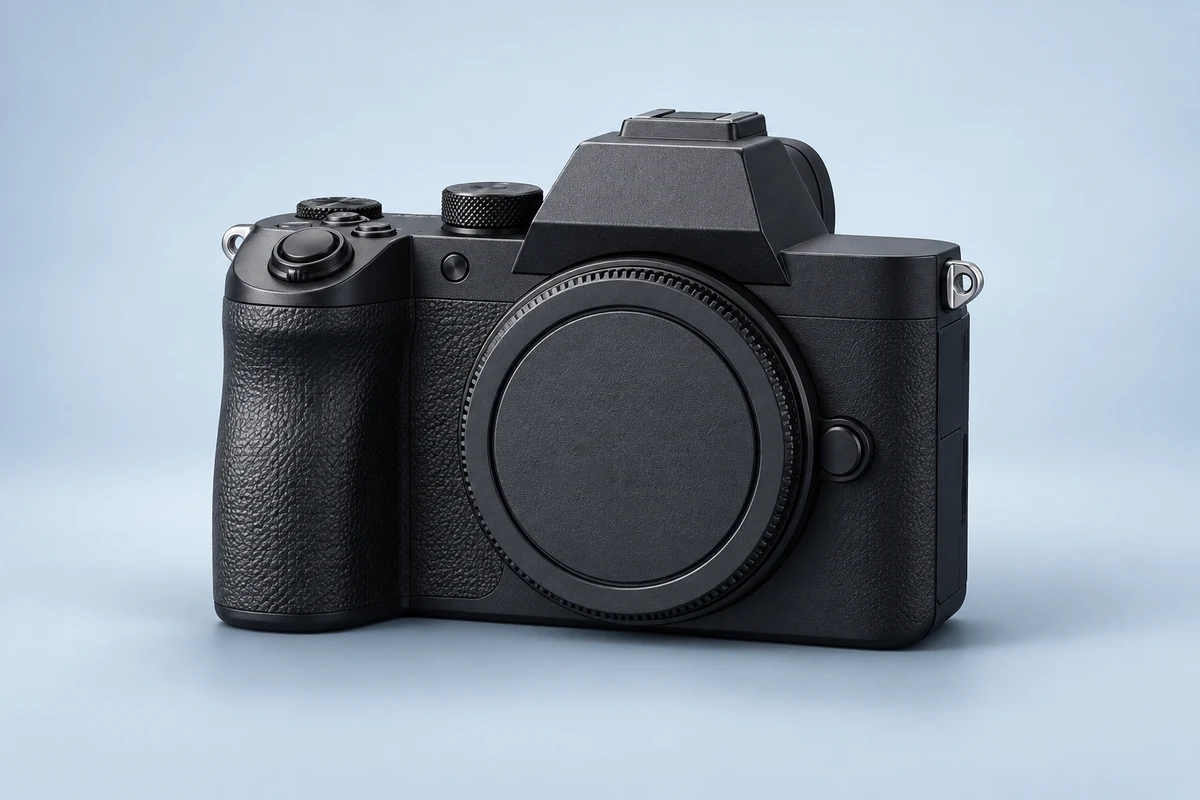
Canon EOS R8 Mark II (Body)
Best for: RF lens owners who want stabilization in a compact full-frame body
Body-only configuration. Check the Mark II name carefully: original R8 results are different products. No exact Amazon US listing or stock is confirmed.
Canon
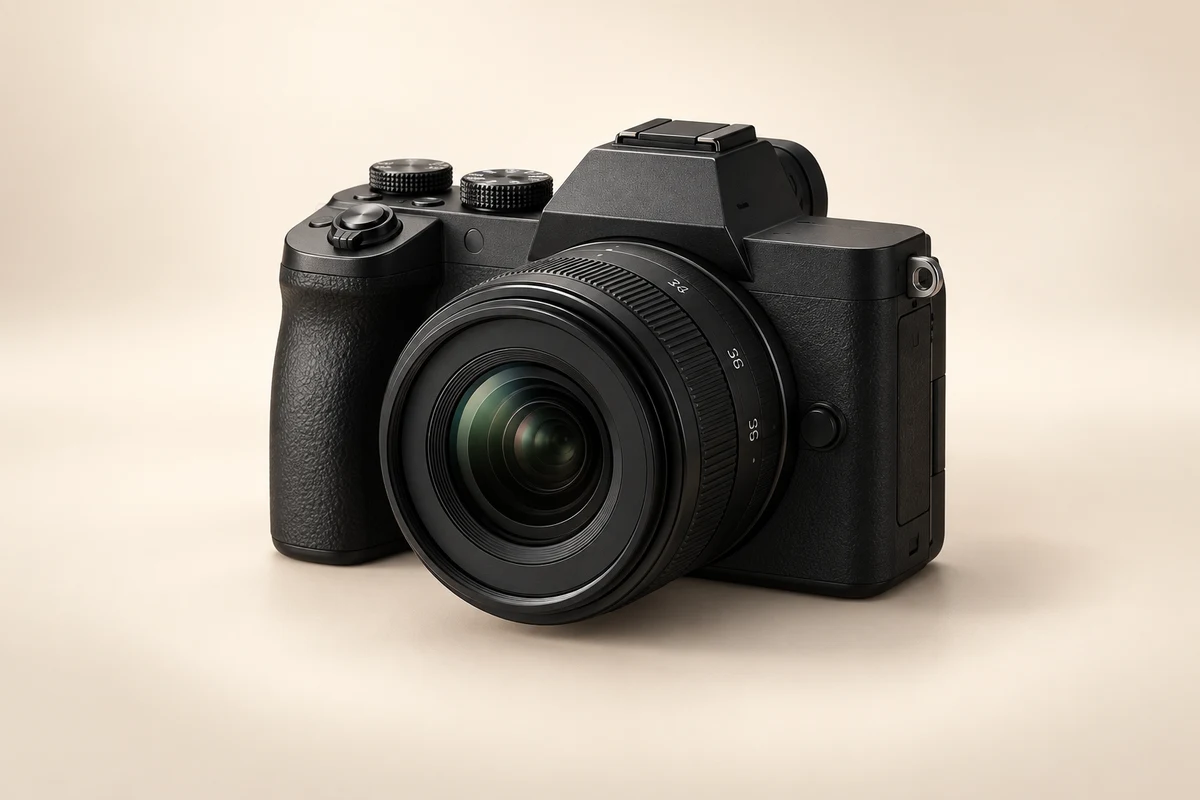
Canon EOS R8 Mark II RF24-50mm Kit
Best for: First-time full-frame buyers needing a compact standard zoom
The announced kit pairs the Mark II with the RF24-50mm F4.5-6.3 IS STM. Verify both names and included accessories. Search results do not confirm a matching listing.
Canon
Canon EG-E2 Extension Grip
Best for: R8 Mark II buyers who need more room for their gripping hand
A handling accessory designed for the R8 Mark II, not an extra battery. Confirm EG-E2 compatibility; no exact Amazon US ASIN is verified.
Transparent evidence
Method and limitations
Specification-based reporting from the supplied verified Canon USA announcement and indexed official Canon product documentation, plus the original R8 manual. No camera or accessory was physically tested.
- Stabilization, autofocus reliability, rolling shutter, battery endurance and heat limits have not been independently measured by Senkōra.
- Launch prices and timing are manufacturer announcements, not retailer inventory or delivery guarantees.
- All four illustrations are AI-generated concepts with approximate hardware, not Canon product photographs.
Five key takeaways
- Canon's announced US prices are $1,899 for the body and $2,099 for the RF24-50mm kit.
- Five-axis IBIS and a multi-controller address two practical limitations of the original R8.
- Canon specifies approximately 546 g with battery and card, or about 1.2 lb.
- The maximum electronic burst rate remains 40 fps; the buffer and pre-capture workflow change.
- The three product links are labeled Amazon.com searches, not confirmed product listings.
Frequently asked questions
When will the Canon EOS R8 Mark II be available in the US?
Canon announced late October 2026 availability at estimated retail prices of $1,899 body-only and $2,099 with the RF24-50mm F4.5-6.3 IS STM. Retailer stock and delivery dates are not confirmed here.
Does the original EOS R8 have IBIS?
No. The Mark II adds sensor-shift stabilization. Lens optical stabilization and movie digital stabilization should not be confused with IBIS.
Is the R8 Mark II the lightest full-frame camera with IBIS?
Canon's claim concerns its own EOS lineup as of September 15, 2026. It does not establish an all-brand weight record. Canon USA lists 546 g with a battery and SD card.
Is the EG-E2 a battery grip?
No. It extends the gripping area of the R8 Mark II. It does not add a second battery; confirm exact camera compatibility before ordering.
Primary sources
- usa.canon.com · Verified 2026-09-16
- usa.canon.com · Verified 2026-09-16
- usa.canon.com · Verified 2026-09-16
- cam.start.canon · Verified 2026-09-16
- usa.canon.com · Verified 2026-09-16
- usa.canon.com · Verified 2026-09-16