

Start with the picture your current lens cannot make
Keep your current lens if it already does the job. If you need more framing range in a single travel lens, examine the Sony E 18-135mm OSS. If moving people indoors are the problem, consider the Sony E version of Sigma’s 18-50mm F2.8. For a wider video view, look at the Sony E PZ 10-20mm F4 G. For small distant birds in daylight, the Sony E 70-350mm G OSS addresses a different need.
These are four possible answers, not four purchases to make. Start with a few missed images: was the subject too small, the room too tight, the shutter speed too slow or the bag too heavy? A new lens helps only when its difference addresses that limitation.
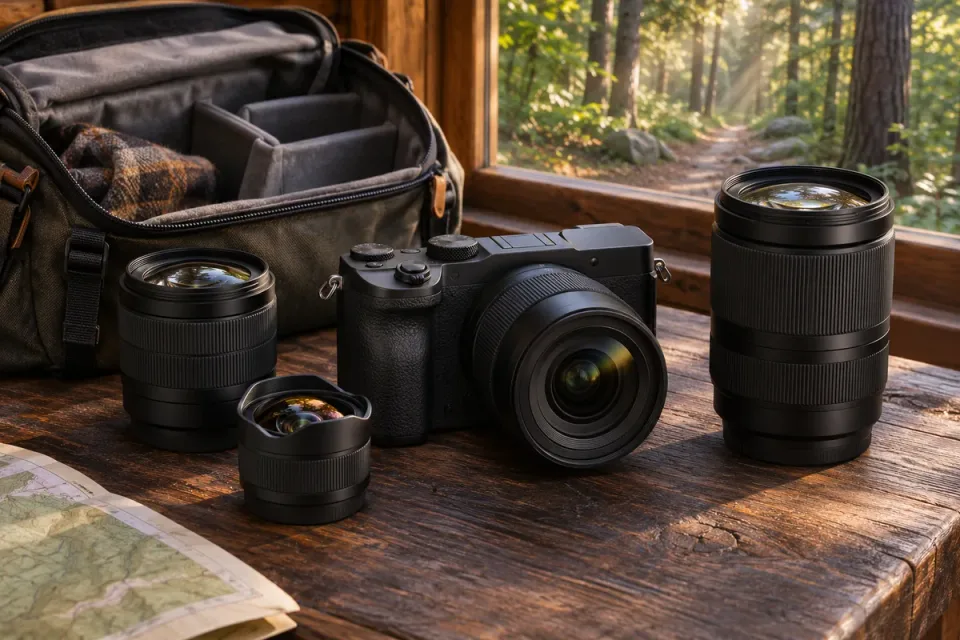
Cover: AI-generated conceptual editorial illustration. Equipment shown is generic, not an exact product photograph or evidence of a field test.
Choose by shooting need
| Your main need | Lens to examine | APS-C angle-of-view equivalent | Stated lens weight | Main compromise |
|---|---|---|---|---|
| One-lens travel, from scenery to details | Sony E 18-135mm F3.5-5.6 OSS | 27-202.5mm | 325 g / 11.5 oz | Less light at the long end; narrower start than a 16mm kit zoom |
| People and everyday pictures indoors | Sigma 18-50mm F2.8 DC DN, Sony E | 27-75mm | 290 g / 10.2 oz | No optical stabilization; 18mm may be tight in a small room |
| Wide video, interiors and architecture | Sony E PZ 10-20mm F4 G | 15-30mm | 178 g / 6.3 oz | F4 rather than F2.8; no optical stabilization |
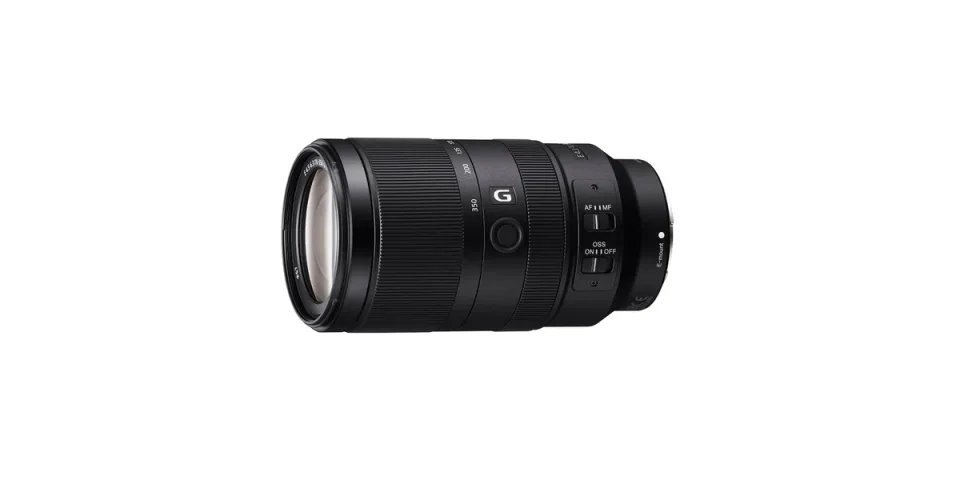
| Daylight birds and distant animals | Sony E 70-350mm F4.5-6.3 G OSS | 105-525mm | 625 g / 22.0 oz | Adds a separate telephoto to the bag; F6.3 at 350mm |
Equivalents use the a6700’s 1.5x APS-C framing factor for still photographs. Physical focal length and aperture do not change. Some video modes and stabilization settings crop the recorded view further. Weights are manufacturer lens figures, not complete-kit weights; add the body, batteries, hood and whatever else you carry.
Travel: Sony E 18-135mm F3.5-5.6 OSS
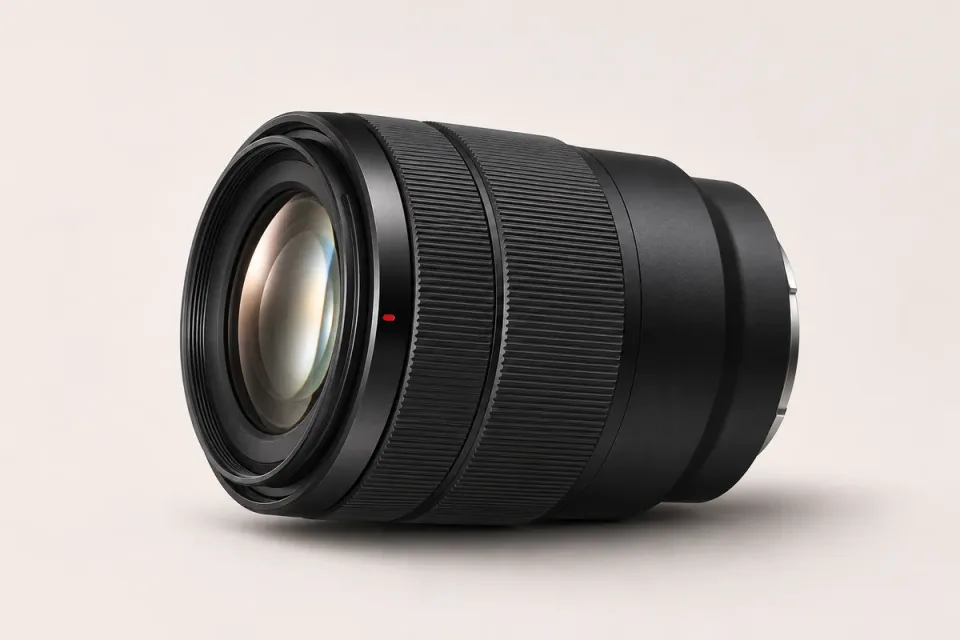
The 18-135mm product guide is the starting point when you want to move from a wide scene to an architectural detail without changing lenses. Its longer end is a meaningful framing change from a 16-50mm kit zoom. Optical SteadyShot can help with camera movement, but it cannot stop a child or animal moving during an exposure.
The compromise is at both ends. Starting at 18mm gives a narrower view than 16mm, which matters in cramped rooms. F5.6 at 135mm is not a bright indoor solution. Keep the kit zoom if it already covers your travel pictures and you value the smallest setup more than extra reach.
Indoors: Sigma 18-50mm F2.8 DC DN, Sony E
The Sigma 18-50mm Sony E guide covers everyday framing with a constant F2.8 maximum aperture. Compared with an F5.6 maximum aperture at the same focal length, F2.8 admits four times as much light, a two-stop difference. That can be spent on shutter speed or ISO when the exposure and other conditions are comparable; it is not a guarantee of a sharp picture.
Check the mount before ordering. Sony E, Fujifilm X, Canon RF and L-Mount variants are distinct products. This selection is the 290 g Sony E APS-C version. There is no optical stabilization in this lens. The a6700 has in-body stabilization, but subject motion still needs the right shutter speed.
Before buying, try 18mm on your current zoom if available. If you cannot fit your family into the frame, a wider lens or a different camera position may matter more than F2.8. For very dim light, even F2.8 may not be enough; better light, a suitable prime or accepting a different shot may be the more useful choice.
Wide video: Sony E PZ 10-20mm F4 G
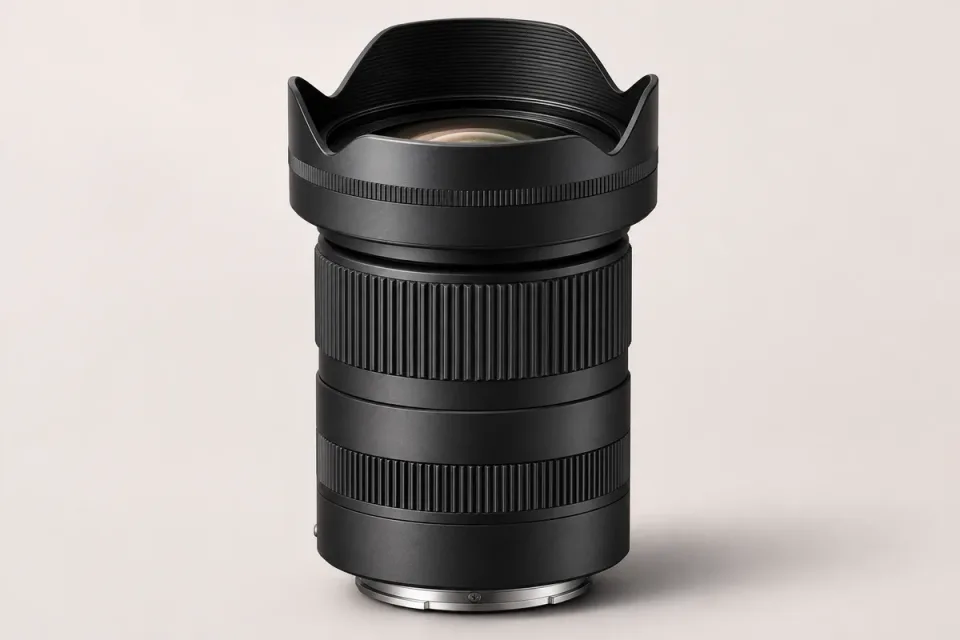
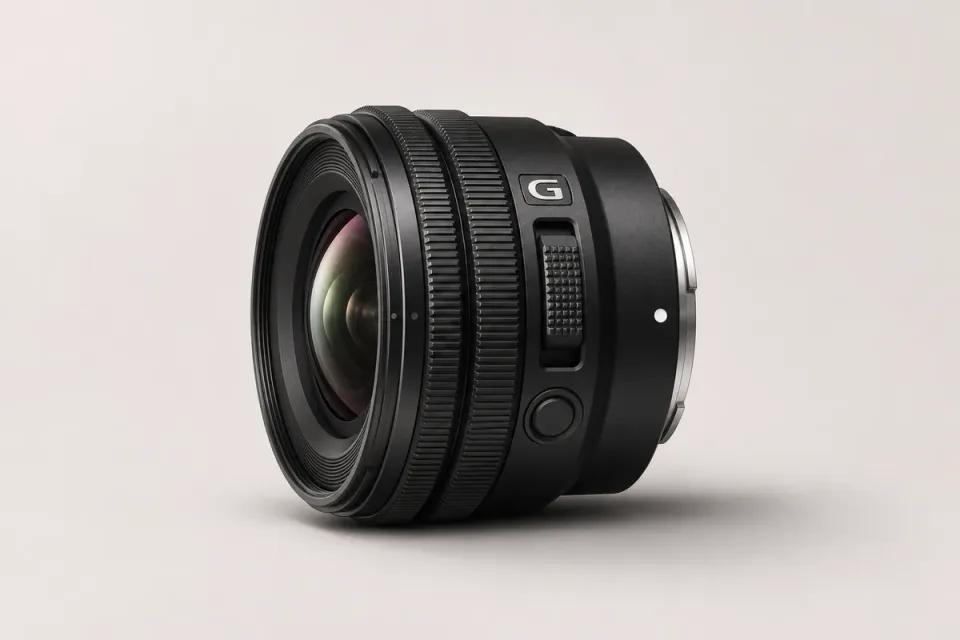
The PZ 10-20mm guide answers a framing problem: the room, building or face-to-camera shot is too tight. Its powered zoom can serve deliberate video moves, but a feature is useful only if your filming style needs it. It does not replace a standard zoom for all subjects.
Record a short sample in the exact resolution, frame rate and stabilization mode you plan to use. Judge the final framing and your distance from the camera, not just the 10mm marking. F4 is less bright than F2.8, and the lens has no optical SteadyShot. A wider lens also does not solve wind noise or distant speech; see our mirrorless versus action-camera guide for the audio and mounting decision.
Birds: Sony E 70-350mm F4.5-6.3 G OSS
The existing 70-350mm product guide covers the longest lens here. Choose it when birds remain too small in the frame and you cannot responsibly move closer. It complements a standard zoom rather than replacing one: 70mm is already a tight starting view on APS-C.
At 350mm the maximum aperture is F6.3. Daylight gives more room to use a shutter speed suited to a moving bird; shade and dawn demand harder exposure compromises. Optical stabilization reduces camera shake, not wing movement. The extra 625 g also counts when you keep the standard lens in the same bag. Borrow or rent a telephoto if you are unsure whether you will carry it regularly.
Check the complete kit before ordering
Confirm the exact Sony E variant, what the seller includes, US warranty terms and return conditions. Check a filter diameter only if a filter is useful to the image; do not buy one automatically. Plan room for the lens you are adding rather than counting only the weight of the one you might remove.
If you are choosing between bodies as well, read Sony a6400 vs a6700 for travel. For other mounts and reach options, use the lightweight wildlife telephoto guide. A compatible lens you already own may be the best way to start.
Sources and limits
We checked Sony’s 18-135mm documentation, Sigma’s US 18-50mm specifications, Sony USA’s PZ 10-20mm specifications and Sony’s 70-350mm page on November 23, 2026. Recommendations interpret those specifications and intended uses; they do not report a simultaneous field test, measured optical ranking or autofocus hit rate. No current retailer price or stock is confirmed.
Compare the exact configurations
| Product | Configuration | Before you choose |
|---|---|---|
| Sony E 70-350mm F4.5-6.3 G OSS | Black Sony E APS-C lens | Confirm the E 70-350mm G OSS model and assess the balance on your camera grip. |
| Sony E 18-135mm F3.5-5.6 OSS | Sony E APS-C, SEL18135; lens only | Confirm SEL18135, Sony E mount, included hood and caps, and whether the focal range solves your actual limitation. |
| Sigma 18-50mm F2.8 DC DN Contemporary Sony E | Sony E APS-C version, C021; not Canon RF, Fujifilm X or L-Mount | Select the Sony E version. Check working distance, included hood and whether F2.8 is bright enough for your subjects. |
| Sony E PZ 10-20mm F4 G | Sony E APS-C, SELP1020G; lens only | Check SELP1020G and test the intended video mode, stabilization crop, camera distance and zoom operation. |
Five key takeaways
- Start with a missed picture, not a shopping list.
- All four selections are Sony E APS-C lenses; choose the Sony E version of the Sigma.
- A brighter standard zoom and a wider video zoom solve different problems.
- The 70-350mm adds reach and weight; it does not replace your standard zoom.
- Recommendations use manufacturer documentation, without a simultaneous field test.
Frequently asked questions
Should I replace the a6700 kit lens immediately?
No. Keep it if its framing, light-gathering ability and handling meet your needs. Identify a repeated limitation before adding another lens.
Does Sigma's 18-50mm F2.8 fit the Sony a6700?
The Sony E-mount version is designed for APS-C E-mount cameras. Other mount versions are different products and do not mount directly on the a6700.
Which lens should I choose for birds?
Among these four, the Sony E 70-350mm G OSS provides the longest reach for daylight birds. Its F6.3 long end still needs sufficient light for moving subjects.
Primary sources
- electronics.sony.com · Verified 2026-11-23
- sigmaphoto.com · Verified 2026-11-23
- sony.com · Verified 2026-11-23
- electronics.sony.com · Verified 2026-11-23